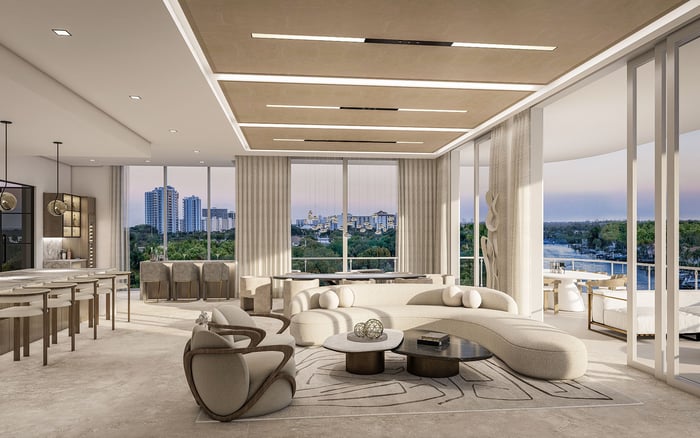
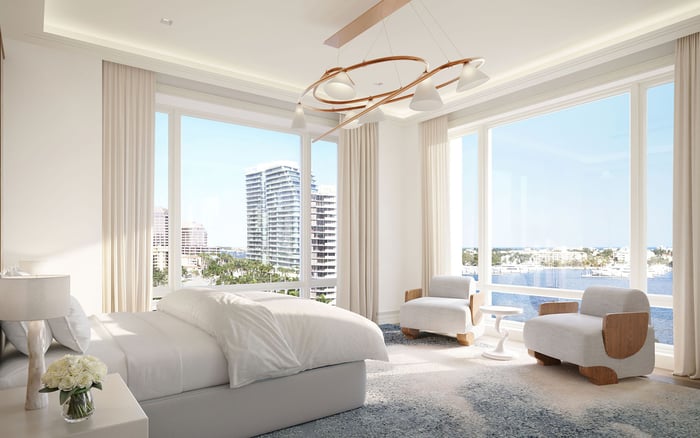
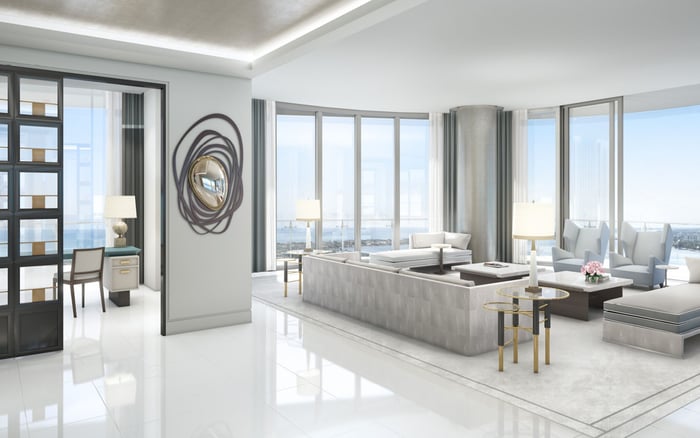
A refined look at gourmet beverage center design for luxury residences, with attention to storage, service flow, finishes, lighting, and the quiet rituals that define entertaining in South Florida.
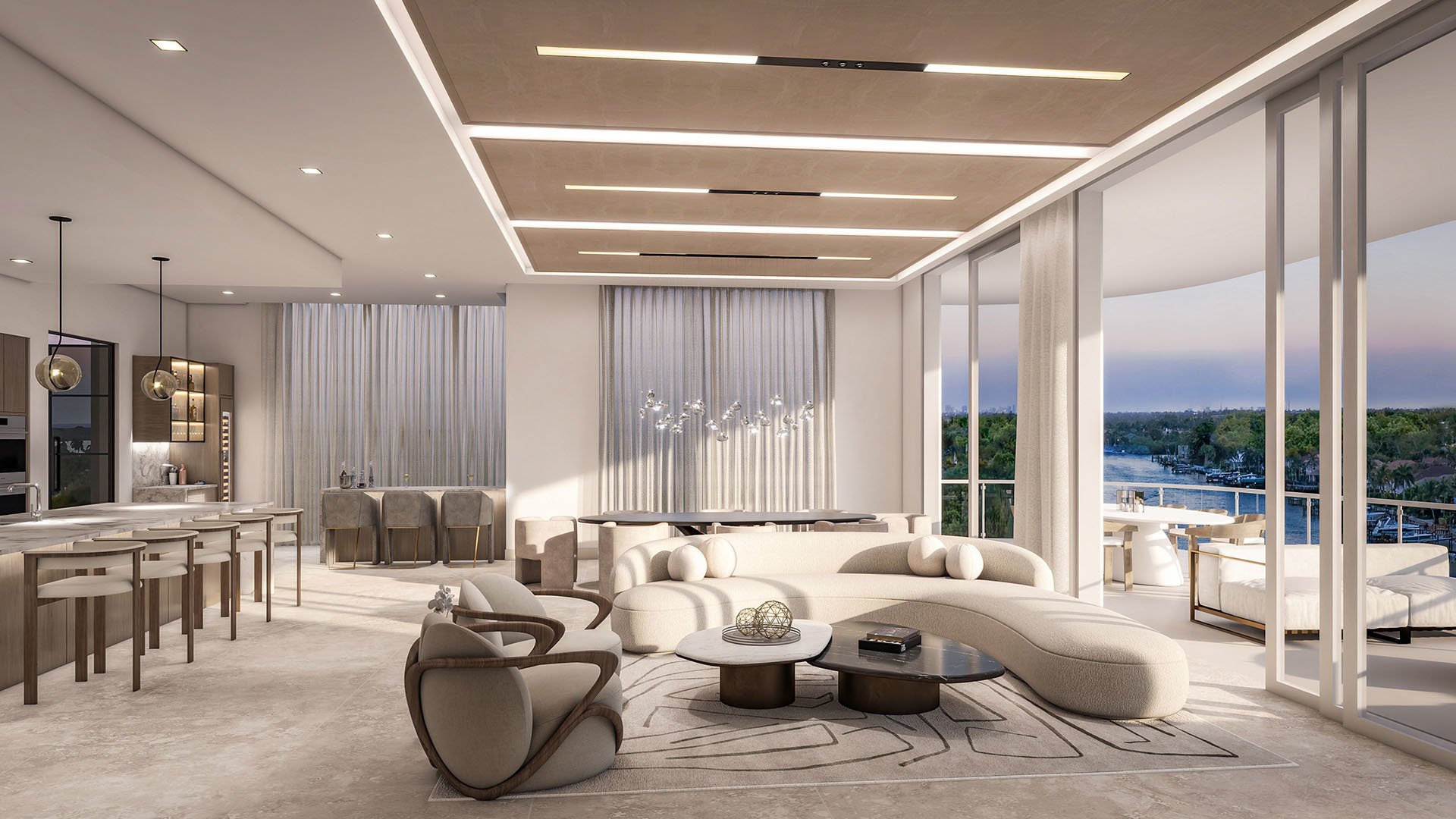
Gourmet beverage center design has moved well beyond the small undercounter wine cooler. In South Florida’s most design-conscious residences, it now reads as a studied hospitality zone: part bar, part pantry, part ritual. For buyers considering MOD West Palm Beach and Vitae Residences Edgewater, the question is less about adding another appliance and more about shaping an architectural moment that supports the way the home is actually lived in.
The best beverage centers are discreet. They do not compete with the main kitchen or announce themselves too loudly. Instead, they create a precise place for chilled water, Champagne, still and sparkling wine, coffee service, glassware, garnishes, and after-dinner spirits. In a high-rise or boutique condominium, where open-plan living often carries the eye from kitchen to dining area to terrace, that quiet coordination matters.
A successful beverage center begins with behavior. Does the owner host seated dinners, casual terrace cocktails, morning espresso, or late-afternoon mineral water after the beach? Each rhythm suggests a different arrangement. A wine collector may prioritize dual-zone refrigeration and stemware storage. A frequent host may want an ice drawer, preparation surface, and concealed waste. A wellness-minded buyer may prefer filtered water, tea storage, and refrigerated space for juices.
In West Palm Beach, a beverage center may need to feel equally natural before a cultural evening, after a marina walk, or during a quiet weekend with guests. In Edgewater, the design may be more vertical, urban, and closely tied to skyline living. Those distinctions should influence placement. Near the dining area, the beverage center becomes a service station. Near the primary suite, it becomes a private morning and evening convenience. Near the terrace, it supports outdoor entertaining without drawing guests through the main kitchen.
This is where luxury is revealed: not in excess, but in the absence of friction.
The most elegant beverage centers are edited with precision. Too much visible inventory can make even expensive millwork feel commercial. Too little storage turns the space into a decorative gesture. The balance lies in giving every element a purpose.
Wine and Champagne require stable temperature, controlled light, and thoughtful bottle orientation. Spirits may be better displayed behind reeded glass, bronze mesh, or softly lit shelving. Coffee and tea need shallow drawers, outlets, and room for accessories without crowding the counter. Glassware should be close enough to use, yet protected from dust and fingerprints. If the residence has an open kitchen, a separate beverage center can also reduce traffic around the cooking zone, a meaningful advantage when entertaining.
Buyers often underestimate acoustics. Refrigeration hum, ice production, and cabinet closure should be considered before the layout is finalized. In a refined residence, mechanical performance should feel nearly invisible. Soft-close hardware, integrated panels, and carefully selected appliances help the beverage center disappear until it is needed.
A beverage center does not need to match the kitchen exactly. In fact, the strongest designs often create a subtle shift in tone. A kitchen may use pale stone and lacquered cabinetry, while the beverage center introduces smoked oak, leathered quartzite, dark bronze, or fluted glass. The goal is continuity without repetition.
For an ultra-modern interior, slab doors, minimal pulls, and integrated refrigeration can keep the composition clean. For a warmer coastal residence, natural stone, ribbed timber, and soft metal accents can temper that precision. Lighting is essential in both cases. A concealed LED strip beneath a shelf can make a bottle collection feel architectural, while overly bright lighting can flatten the mood. The best effect is closer to candlelight than retail display.
The vocabulary often attached to this design conversation includes West Palm Beach, Edgewater, new construction, ultra-modern, bars, and waterview, but the actual design should feel less like a category and more like a private signature.
South Florida residences are often designed around arrival: the elevator opens, the view appears, and the room unfolds toward water or skyline. A beverage center should enhance that sequence without making the home feel like a hospitality venue. Proportion is critical. A compact, beautifully detailed niche can be more persuasive than a large bar that dominates the living area.
Consider sightlines first. If the beverage center is visible from the main seating area, the materials must be furniture-grade. If it is tucked into a secondary corridor or pantry edge, function can take priority. Either way, clutter control is non-negotiable. Integrated outlets, hidden charging, lined drawers, and a defined place for cocktail tools are small details that make the space feel composed.
For buyers comparing different residences, the right question is not simply whether a beverage center can be added. It is whether the floor plan gives it a natural role. The finest examples feel inevitable, as if the architecture had been waiting for that exact gesture.
Before committing to a design, ask how the beverage center will perform during three moments: a normal weekday, a dinner with six guests, and a larger evening gathering. If the layout works across all three, it is likely to age well.
Also consider reversibility. A highly specialized installation may delight one owner and limit the next. Flexible refrigeration, adaptable shelving, and timeless finishes help preserve long-term appeal. In a luxury market, personalization is most valuable when executed with restraint.
The most desirable beverage centers are not merely places to store bottles. They are small acts of choreography. A guest is offered a glass without disrupting the kitchen. A host reaches for chilled Champagne without leaving the conversation. Morning coffee is prepared without waking the rest of the residence. These quiet efficiencies separate decorative design from lived-in luxury.
What is a gourmet beverage center? It is a dedicated residential zone for wine, spirits, coffee, water, glassware, and service accessories, designed with both storage and hospitality in mind.
Where should a beverage center be placed? The strongest locations are near dining, living, terrace, or private-suite areas where service feels natural and does not interrupt the main kitchen.
Should it match the kitchen cabinetry? It should relate to the kitchen, but it can introduce a slightly richer or more intimate material palette for distinction.
What appliances matter most? Wine refrigeration, beverage drawers, ice storage, filtered water, and coffee equipment are common priorities, depending on the owner’s routine.
Is a visible bottle display always best? Not always. Concealed or semi-concealed storage can feel more refined and may better protect wine from light exposure.
How important is lighting? Lighting is critical because it sets mood, improves usability, and prevents the area from feeling either too dark or overly commercial.
Can a small residence still have a beverage center? Yes. A compact niche with refrigeration, storage, and a small counter can be more elegant than an oversized installation.
What makes the design feel luxurious? Quiet operation, precise storage, refined materials, integrated hardware, and intuitive placement create the luxury experience.
Should buyers customize immediately after purchase? Buyers should first study daily habits, entertaining patterns, and the floor plan so the design supports real use rather than impulse.
Does a beverage center add resale appeal? A well-executed, flexible beverage center can enhance perceived quality, especially when it is integrated with restraint and durable finishes.
To compare the best-fit options with clarity, connect with MILLION.
If branded residences are on your mind — as a home or as an allocation — we would be glad to share what we are seeing, privately.
Begin a quiet conversation