A discreet buyer’s guide to evaluating full-floor privacy at Turnberry Ocean Club Sunny Isles, including elevators, amenity circulation, visual exposure, and the real meaning of density in a serviced oceanfront tower.
For privacy-oriented buyers, Turnberry Ocean Club Sunny Isles occupies a distinct tier of South Florida luxury: an oceanfront condominium tower where the value proposition is not only view, service, or finish level, but separation. Its luxury promise centers on exclusivity, private-club-style living, and large-format residences, with full-floor and half-floor layouts forming the core of its privacy narrative.
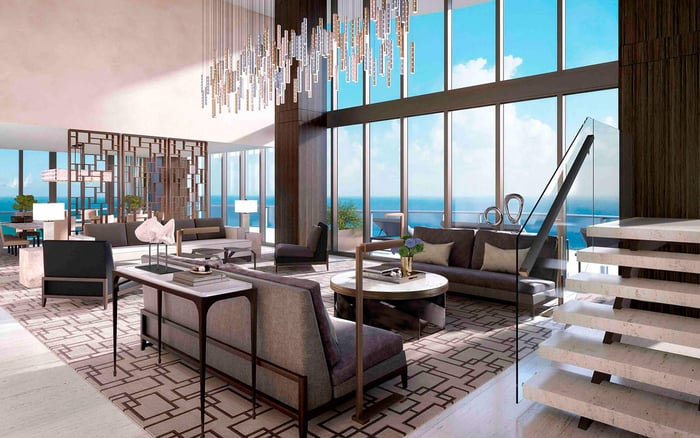
A full-floor residence changes the daily rhythm of condominium life. It can reduce same-floor neighbor exposure, shared corridor traffic, and the casual encounters that define more conventional multi-unit floors. For buyers accustomed to estate living, that single-household-per-floor arrangement can feel closer to a vertical private home than a standard high-rise apartment.
But the premium deserves careful scrutiny. Privacy in a serviced tower is never just a matter of square footage or floor plate. It is also a question of who moves through the building, how elevators are controlled, where amenities are located, how guests are received, and whether service routes preserve discretion.
The difference between full-floor and half-floor living is meaningful for a buyer who values quiet arrival and low incidental contact. A half-floor residence still offers lower density than a typical condo floor, but it does not create the same single-residence separation. Depending on the specific layout and access configuration, another household may still share part of the same vertical address experience.
Full-floor living is most compelling when the buyer wants fewer same-floor variables. There is less chance of encountering another owner just outside the residence, less corridor activity, and a more direct psychological transition from elevator to home. That matters for public figures, collectors, executives, families with staff, and second-home owners who want the tower to feel managed without feeling communal.
Still, a full floor is not an invisibility cloak. Staff, vendors, guests, amenity users, and other residents remain part of the building ecosystem. The buyer’s question should be precise: privacy from whom, and in which spaces?
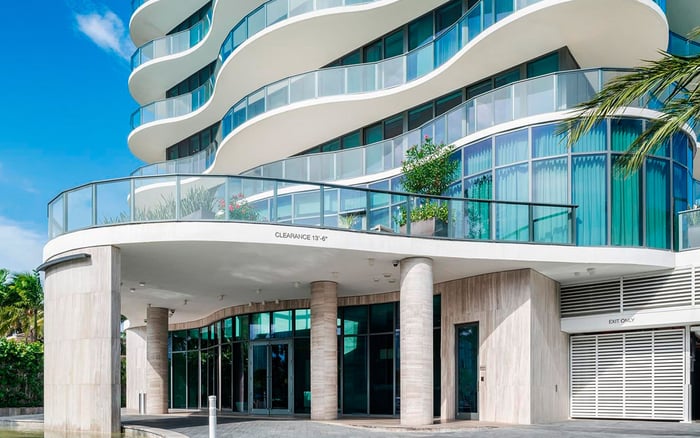
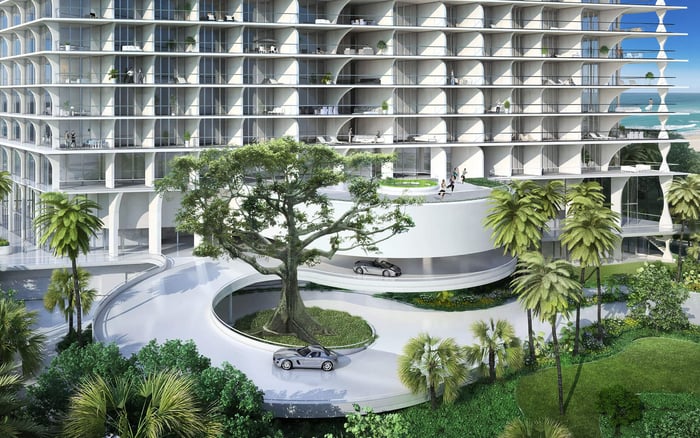
Oceanfront positioning is a meaningful part of the privacy equation at Turnberry Ocean Club. Long water views can reduce the sense of looking directly into another residence, especially when the primary living areas face outward to the Atlantic rather than inward toward dense urban exposure. For many waterfront buyers, that visual relief is one of the reasons Sunny Isles Beach remains so attractive.
Yet Sunny Isles Beach is also a dense oceanfront tower environment. Visual privacy should be tested not only from inside the residence, but from neighboring buildings, terraces, amenity decks, and approaching sightlines. High floors can improve the feeling of openness, but height alone does not guarantee discretion if nearby towers align with bedrooms, terraces, or living spaces.
Buyers comparing Turnberry Ocean Club with other Sunny Isles addresses such as Bentley Residences Sunny Isles or The Ritz-Carlton Residences® Sunny Isles should look beyond the brand and study how each tower handles view corridors, balcony exposure, and arrival choreography.
In any slender luxury high-rise with large-format residences, vertical circulation becomes central. Before paying a full-floor premium, buyers should verify whether the residence has private elevator access, shared elevator access, or any service or equipment adjacency that could affect discretion. The details matter because the elevator experience is often where privacy either feels effortless or breaks down.
The private arrival test is simple. How many people might share the same elevator bank? Where do guests wait? Can staff move separately? Are service calls routed through the same spaces owners use? Is there a distinction between formal entry, family entry, and service movement? These questions are not aesthetic; they shape daily life.
A full-floor residence may offer a more secluded threshold, but buyers should not assume that every full-floor plan performs identically. The corridor, elevator vestibule, service door, and mechanical adjacencies deserve the same attention as the ocean view.
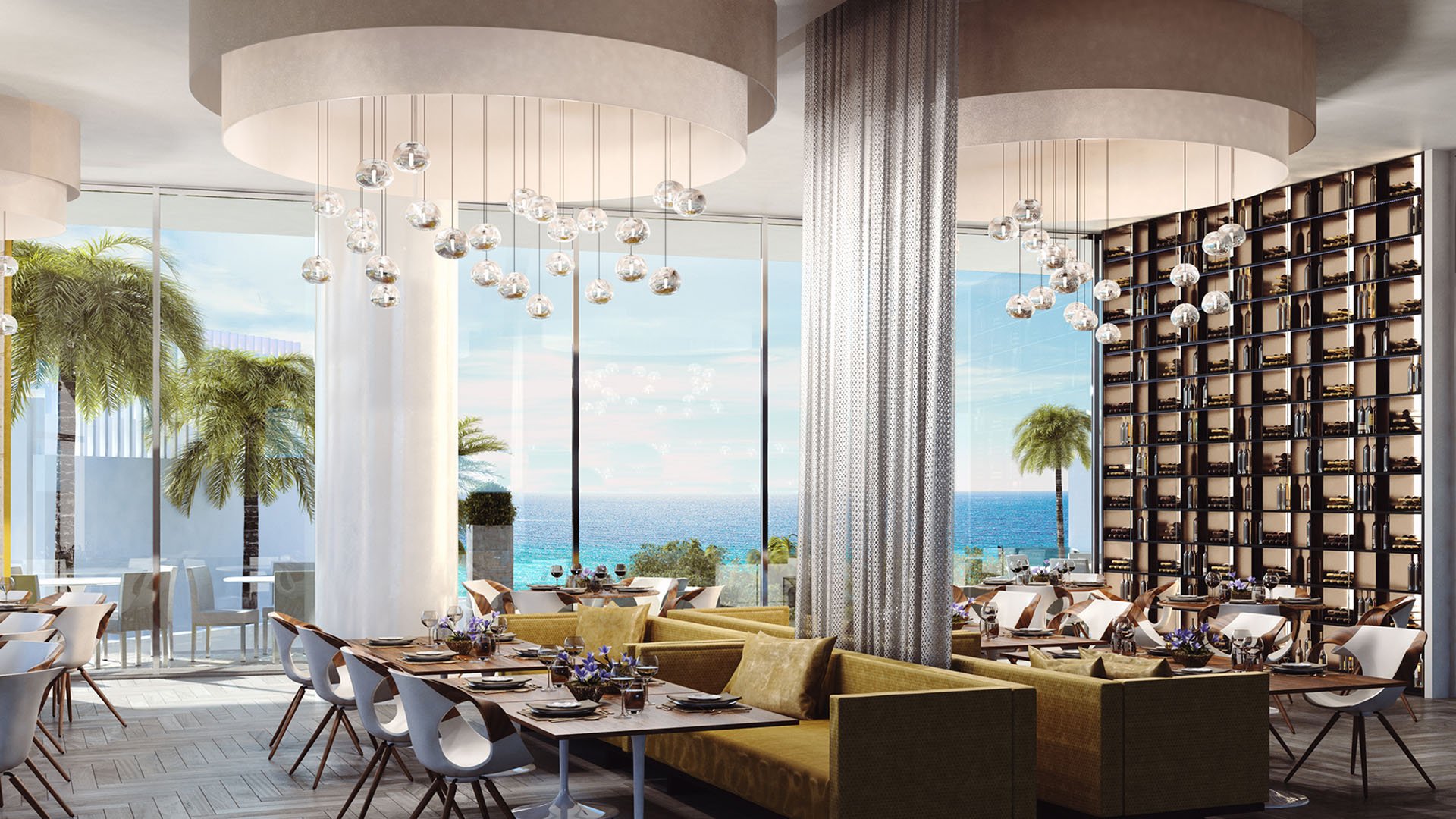
Turnberry Ocean Club includes a multi-level private Sky Club, making amenities part of both the luxury promise and the privacy analysis. For owners who want resort-style services without leaving the building, this is a major convenience. It can reduce the need to travel elsewhere for wellness, dining, leisure, or social time.
At the same time, amenities create movement. Even in a private-club-style environment, residents, guests, staff, and service teams circulate through the tower. A privacy buyer should understand where that traffic flows relative to private residence levels, elevator banks, and lobby spaces.
This is not a criticism of amenity-rich living. It is the core tradeoff of serviced luxury. A buyer drawn to the social polish of buildings like St. Regis® Residences Sunny Isles may want a different balance than a buyer prioritizing near-total residential quiet. The strongest approach is to define the desired level of interaction before touring.
A polished daytime showing rarely reveals the full privacy profile. Buyers should tour at different times of day to assess elevator wait times, lobby activity, amenity traffic, service movement, and sightlines. Early morning, late afternoon, weekend, and evening visits can feel very different in the same building.
During the tour, pause in the elevator vestibule. Listen for corridor noise. Observe how staff interact with residents. Study whether guests are visible from primary owner pathways. Stand on the terrace and look diagonally, not only straight ahead. Walk amenity routes and ask how owners, guests, vendors, and staff are separated.
For oceanfront buyers comparing Sunny Isles Beach inventory, including established high-privacy references such as Regalia Sunny Isles Beach or Jade Signature Sunny Isles Beach, the most important insight is experiential. The best privacy is felt before it is explained.
The full-floor premium at Turnberry Ocean Club Sunny Isles is most defensible when the buyer values reduced neighbor density, controlled access, expansive water views, and a more house-like residence within a serviced condominium tower. It is especially compelling for those who want the ease of building management without the atmosphere of a crowded condominium floor.
The premium is less automatic for buyers who spend most of their time in shared amenities, frequently host guests, or are less sensitive to corridor exposure. In that case, a half-floor residence or another large-format plan may deliver enough privacy without paying for the psychological and practical benefit of occupying the entire floor.
Ultimately, full-floor living is not simply bigger living. It is more controlled living. The buyer should be paying for a specific reduction in friction: fewer same-floor interactions, clearer arrival sequences, stronger visual calm, and a better match between private domestic life and full-service tower convenience.
Is a full-floor residence at Turnberry Ocean Club automatically private? It can reduce same-floor neighbor exposure, but privacy still depends on elevators, staff routes, guest access, amenity circulation, and sightlines.
How does a full-floor layout differ from a half-floor layout for privacy? A full-floor home typically offers single-household-per-floor separation, while a half-floor home still shares some floor-level context with another residence.
Does the Sky Club improve or reduce privacy? It improves convenience by keeping resort-style services in the building, but it can also increase in-building movement and social contact.
What should buyers ask about elevator access? They should verify whether access is private or shared, how guests arrive, and whether service or equipment areas affect the residence.
Why does Sunny Isles Beach require extra visual privacy review? Its dense oceanfront tower setting means buyers should evaluate views from neighboring buildings as well as from inside the residence.
Are high floors always more private? High floors may create more openness, but privacy depends on tower alignment, terrace exposure, and nearby sightlines.
Should privacy buyers tour more than once? Yes. Different times of day can reveal elevator patterns, lobby activity, amenity use, service movement, and noise levels.
Who benefits most from a full-floor premium? Buyers who value reduced neighbor density, controlled access, broad views, and a house-like feel within a serviced tower benefit most.
Can full-floor living eliminate staff or vendor exposure? No. It may reduce neighbor interaction, but staff, vendors, guests, and amenity users remain part of the building environment.
What is the most important due diligence step before paying the premium? Walk the full arrival sequence, amenity route, and terrace sightlines as if living there daily, not merely touring a showpiece.
For a tailored shortlist and next-step guidance, connect with MILLION.
If branded residences are on your mind — as a home or as an allocation — we would be glad to share what we are seeing, privately.
Begin a quiet conversation