Five Edgewater developments merit a collector’s attention for different reasons, from Cove Miami’s advertised wine storage to Villa Miami’s expansive layouts. The decisive next step is confirming the security, climate, power and receiving provisions behind the presentation.
For a collector, a residence must do more than frame beautiful objects. It should accommodate the arrival of a vintage automobile, the custody of a wine allocation and the installation of a substantial design piece without leaving essential protections to assumption. In Edgewater, the distinction between an attractive amenity and a documented operating commitment warrants close attention.
These five projects form an editorial shortlist-not a certification that each provides secure wine storage, backup cooling, monitored environments or controlled deliveries. Cove Miami has the clearest advertised wine amenity; the others merit investigation for their layouts, service positioning or architecture. Dedicated collector-car facilities and collection-specific resilience remain unconfirmed across the shortlist. For buyers pursuing all three passions, the strongest choice will depend as much on written specifications as on the floor plan.
1. Cove Miami: The clearest wine-storage starting point
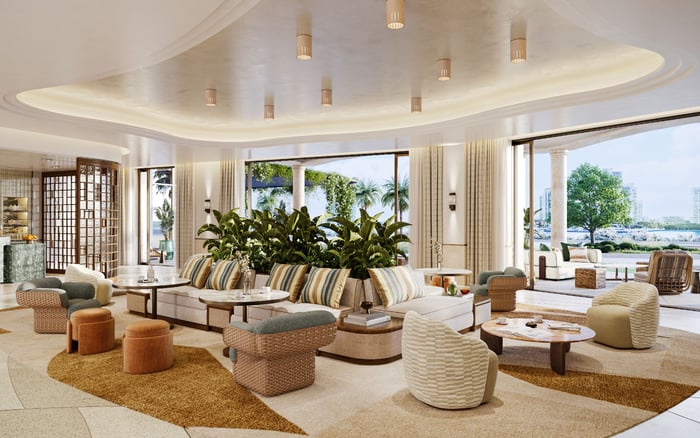
At 456 NE 29th Street, Cove Miami expressly advertises an owner’s lounge with wine storage. That gives it the most direct connection to the wine component of this brief and earns it first place. This is a tangible amenity to investigate, not a benefit inferred from branding or scale.
The distinction matters: wine storage alone does not establish individually secured allocation, temperature and humidity parameters, access logs or backup cooling. Buyers should request the storage agreement and operating specifications before treating the amenity as suitable for a valuable cellar. Cove’s appeal is strongest when wine is the initial screening criterion; it is not proof of comprehensive collection protection.
2. Villa Miami: Large-format layouts for design collectors
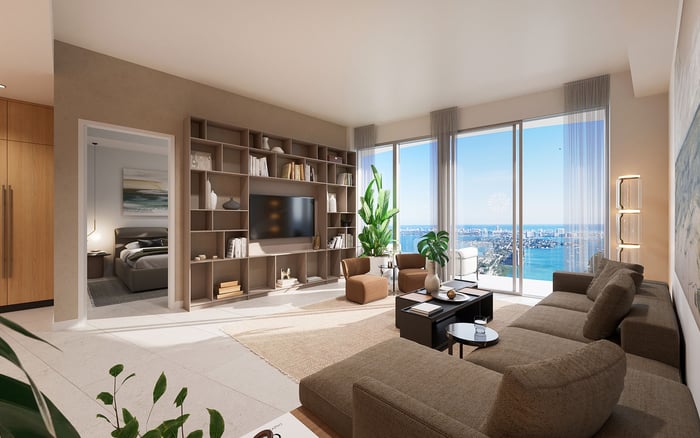
Villa Miami offers half-floor and full-floor residences, making it a compelling layout candidate for furniture and design collectors. The 55-story project is associated with Terra and One Thousand Group, with 64 residences listed and delivery projected for the fourth quarter of 2027.
Those residence formats warrant close study of circulation, display walls and installation routes. They do not establish usable wall dimensions, structural capacity for heavy objects or dedicated automobile storage. A buyer’s designer should test the actual residence plan against the collection, while the logistics team checks how the largest piece would reach the apartment.
3. EDITION Residences Edgewater: A service proposition to examine
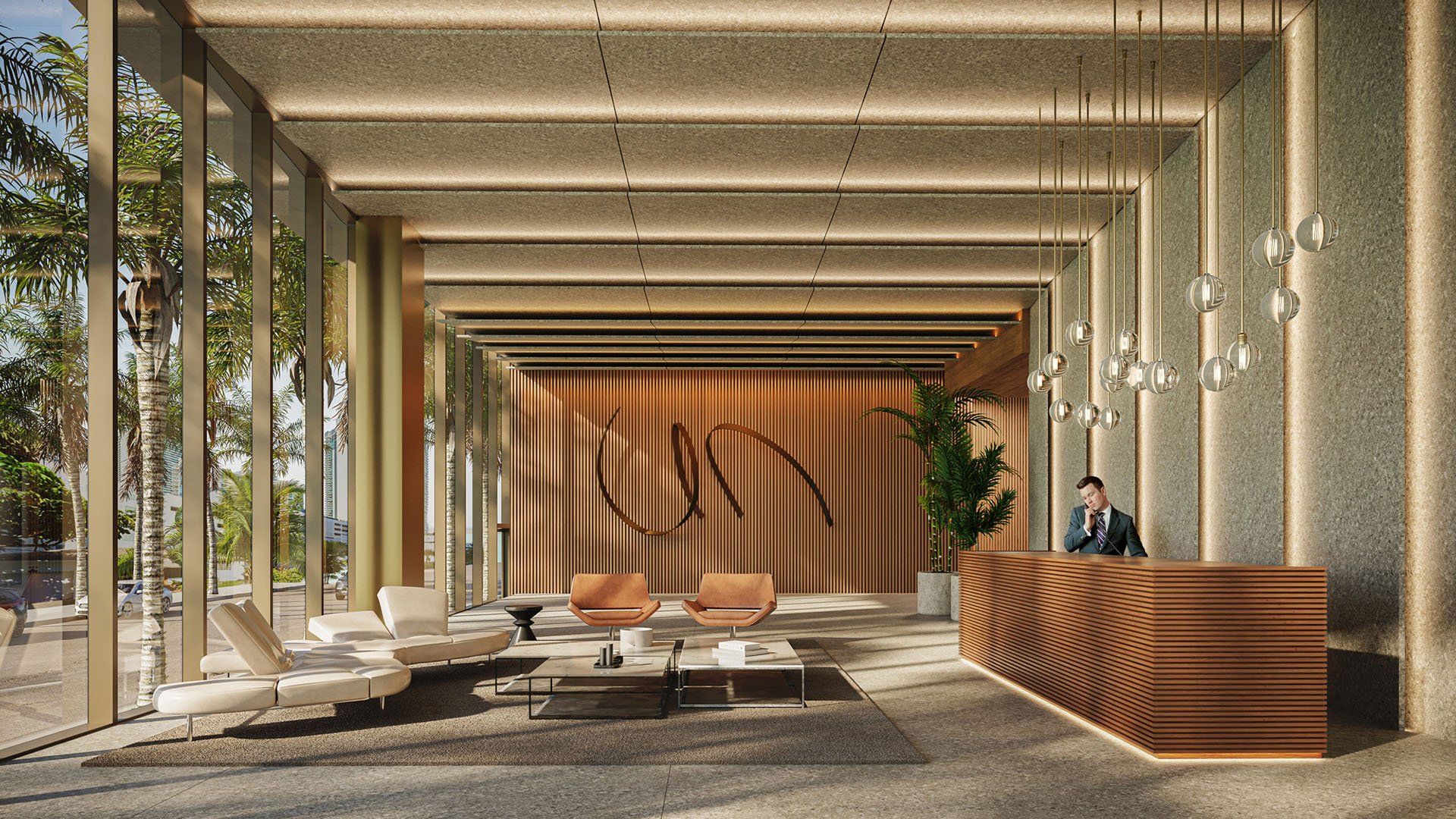
At 2121 N Bayshore Drive, EDITION Residences Edgewater is listed with 185 residences across 55 floors. Its place in this ranking rests on its branded-residential service positioning, making it relevant for owners who want to explore how day-to-day assistance might support life at home.
The brand itself does not establish controlled receiving, specialist collection handling or insured custody. Before assigning value to those possibilities, request written delivery procedures, staffing responsibilities and exclusions. For a collector who is frequently away, the decisive questions are who may accept an object, where it waits and when responsibility transfers.
4. Aria Reserve North Tower: Waterfront scale and terrace depth
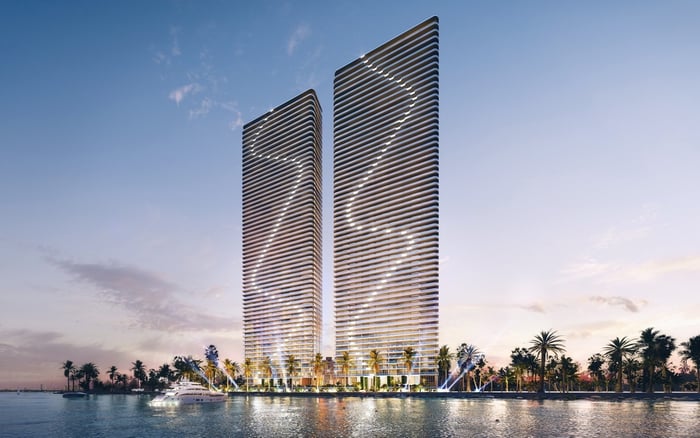
Aria Reserve North is part of a 62-story twin-tower waterfront development with 11-foot-deep terraces. Developed by The Melo Group, North is listed with 390 residences. Its place here rests on its waterfront setting and design, not verified collector-storage or emergency-power credentials.
Terrace depth is a useful dimension when planning furnishings, but it should not be confused with a protected environment for sensitive objects. Buyers should examine interior exposure, shading options and environmental specifications separately, and distinguish North Tower’s residence count and completion terms from those of the wider development.
5. HQ Residences Miami: Architectural authorship first
HQ Residences Miami is an Arquitectonica-designed Edgewater project described as 35 stories with 229 residences. Its documented architectural authorship earns it a place for buyers whose collections and homes are closely connected aesthetically.
That is a design rationale, not evidence of specialized wine, vehicle or delivery infrastructure. The next conversation should move from architectural identity to practical accommodation: parking rights, environmental controls, loading access and service-elevator dimensions. HQ merits investigation, but its collection-specific suitability remains to be established.
The owner’s lounge at Cove Miami is a sensible starting point for wine-focused buyers. The next step is to distinguish shared amenity access from an enforceable storage entitlement.
Ask whether capacity is individually allocated and secured, who can enter and whether access is recorded. Request temperature and humidity specifications, monitoring arrangements, alarm escalation procedures and maintenance responsibilities. Establish who responds while the owner is traveling and whether the storage agreement addresses loss or damage.
Backup power deserves a separate inquiry. Request a generator load schedule identifying whether the relevant cooling equipment, controls and monitoring systems are covered. A general statement about emergency power does not confirm that a wine environment will remain protected.
The half-floor and full-floor formats at Villa Miami invite a collection-led review of the plan. Have the designer map display locations and circulation before deciding that an expansive layout is sufficient.
For the North Tower candidate within Aria Reserve Miami, evaluate the interior display environment separately from the appeal of deep terraces. Ask about glazing, shading and permitted interior modifications rather than assuming suitability from the waterfront setting.
In either case, trace the complete installation route: loading position, door clearances, service-elevator dimensions and final apartment entry. Confirm reservation rules and requirements for specialist installers before committing to pieces that may be difficult to move.
For vehicle collectors, request parking allocations, bay dimensions, access arrangements, ramp clearances and EV provisions. Confirm whether spaces are assigned or dependent on valet operations, who may move a vehicle and what restrictions apply to long-term parking. On the information available, none of the five should be treated as a verified collector-car facility.
At EDITION Edgewater, make receiving procedures an explicit part of the service discussion. Ask about scheduled acceptance, identity checks, secure holding areas, delivery logs and responsibility for unattended shipments. These are questions to resolve, not services established by the name.
Public delivery estimates differ materially. Cove has been listed with both 116 and 134 residences and delivery estimates of 2026 and 2028. Aria Reserve North has carried estimates of both the third quarter of 2026 and 2027. These figures are no substitute for current contractual information.
Before arranging collection transport, obtain updated completion expectations and distinguish residence handover from amenity readiness. The best fit is the project whose documented arrangements suit the collection, not simply the one with the most persuasive presentation.
For a discreet conversation about matching an Edgewater residence to your collection, connect with MILLION.
If branded residences are on your mind — as a home or as an allocation — we would be glad to share what we are seeing, privately.
Begin a quiet conversationCove Miami advertises an owner’s lounge with wine storage. Individual security, environmental monitoring and backup cooling remain unconfirmed.
No. The ranking identifies candidates for different reasons, not five verified solutions for wine security, collector-car facilities, backup power and controlled deliveries.
Its half-floor and full-floor residences make it a strong layout candidate for design collectors. Those formats do not establish installation access or specialized storage.
No. Buyers should obtain written procedures for acceptance, secure holding, handling responsibilities and liability rather than infer them from the brand.
It belongs to a 62-story twin-tower waterfront development with 11-foot-deep terraces. Its ranking reflects that design proposition, not verified collector protection.
Arquitectonica is identified as the architect. The project is described as having 35 stories and 229 residences.
Request parking allocations, bay dimensions, ramp clearances, access rules and EV provisions. Confirm who may move the vehicle and whether long-term parking restrictions apply.
Request a generator load schedule identifying coverage for cooling equipment, controls and monitoring. A general emergency-power statement does not confirm protection for the wine environment.
Public estimates conflict for both projects. Obtain updated contractual information and distinguish residence handover from the readiness of collection-related amenities.
Confirm the entire installation route, including loading access, door clearances and service-elevator dimensions. Review display conditions and permitted modifications with the buyer’s designer.