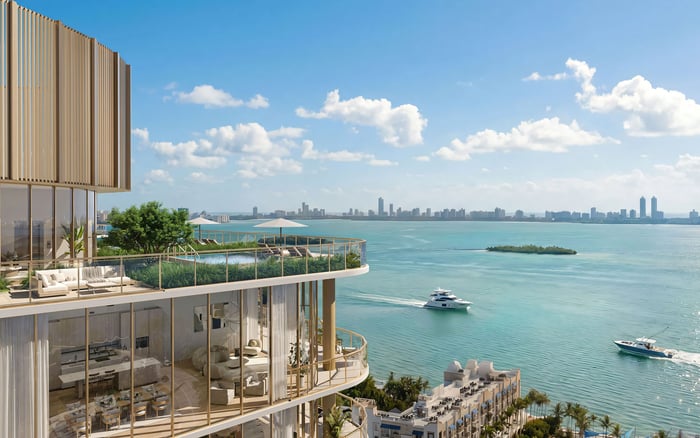
A yacht owner's residence purchase and marina agreement deserve coordinated, but distinct, diligence. Understand project reserves, personal liquidity, review waivers, lender certification and the note-date checkpoint before arranging a synchronized closing.

For a yacht owner, the ideal South Florida residence is part of a larger arrangement: a home, a berth and a schedule that allows both to become usable together. A disciplined purchase treats residence financing and marina rights as coordinated transactions, not interchangeable approvals.
Fannie Mae evaluates condominium and cooperative project eligibility separately from the borrower's financial qualifications. Strong personal liquidity does not resolve an association's financial or physical-condition concerns. Nor does residence financing approval confirm marina rights.
For buyers considering St. Regis® Residences Bahia Mar Fort Lauderdale, the starting point is a document-led conversation, not an assumption about financing or dockage. No project mentioned here should be understood as having a particular eligibility status or contractual berth entitlement.
The 2026 planning lens is practical: confirm the requirements that apply to the transaction. It does not mean every rule discussed here was newly introduced in 2026.
Before relying on a closing timetable, ask the proposed lender to identify the applicable project-review method, required documents and financing limits. Depending on that method, condominium financing may carry lower loan-to-value, combined loan-to-value or home-equity combined loan-to-value limits.
This matters when comparing residences such as Una Residences Brickell with another purchase opportunity. The comparison should account for the review route and required cash commitment, not simply the residence price or monthly payment.
Request written clarification of any lender-specific conditions. Do not assume higher reserve percentages, litigation restrictions or concentration limits apply universally. Ask whether each condition comes from the applicable project standard or the selected lender's own policy-and what evidence will satisfy it.
Under Full Review, the project budget generally must allocate at least 10% to replacement reserves for capital expenditures and deferred maintenance. Those funds serve common-area needs. Special assessments cannot substitute for the required 10% budget reserve allocation.
An acceptable reserve study may offer an alternative to the standard calculation when funded reserves provide equivalent financial protection and meet or exceed the study's recommendations. This is a documented alternative, not permission to disregard future capital needs.
A qualifying study addresses major common-area components, their condition and remaining useful life, replacement costs, existing reserves, annual funding needs and a recommended funding plan. The buyer's focus should be the connection between those findings and actual funding, not merely the existence of a study.
Whether evaluating Onda Bay Harbor or another residence, request the budget and reserve documentation early enough for lender review before key contractual deadlines. Appearance and financial eligibility answer different questions.
Association replacement reserves are not the borrower's post-closing mortgage reserves. Keep them as separate lines in the acquisition plan, alongside the residence cash requirement and any marina commitments identified in the actual agreement.
Borrower-reserve rules specify two months of reserves for a second-home transaction, subject to applicable underwriting requirements. Six months apply to certain transactions, including two- to four-unit principal residences, investment properties and specified cash-out refinances.
Do not choose an occupancy description merely because its reserve requirement appears more convenient. Ask the lender to confirm the transaction classification, required reserve amount and acceptable documentation. Settle the liquidity calculation before making commitments that depend on the same funds.
For the yacht owner, the objective is clarity: identify what must remain available after closing without confusing personal mortgage reserves with money held by the association.
Detached condominium units may qualify for a waiver of comprehensive project review. Project review is also waived for units in eligible two- to four-unit condominium projects, whether new or established. Certain attached units in five- to ten-unit projects may qualify for review relief when the project is not part of a larger development or master association.
These categories are not a blanket exemption for a residence marketed as boutique. A waiver does not remove applicable property eligibility, appraisal, insurance, assessment-priority or other requirements.
Waiver exclusions include condo hotels or motels, houseboat projects, timeshare or segmented-ownership projects, and projects marked Unavailable in Condo Project Manager. For anyone considering a floating residence, the legal structure is therefore material, not a semantic distinction.
Fannie Mae will not purchase or securitize mortgages secured by units in condominium or cooperative projects classified as ineligible under its standards. A review waiver does not cure ineligibility.
Newly converted, non-gut-rehabilitation condominium or cooperative projects submitted through the Project Eligibility Review Service require a current independent reserve study and an engineer's report or equivalent addressing structural integrity and major components' remaining useful life.
Those projects must budget reserves consistently with the study. When utilities are not separately metered, they also require a utility contingency of at least 10% of the prior year's utility costs.
Components requiring replacement within five years must have their total replacement cost deposited into the association's reserve account, in addition to ordinary reserve funding. These requirements apply to that specific review category; they are not a universal formula for every South Florida condominium.
A residence purchase and a marina arrangement warrant separate legal and documentary reviews. Ask counsel, the title team, appraiser and lender, as applicable, to establish the berth arrangement's legal form, transferability, collateral treatment, valuation, any cross-default provisions and recording requirements. None should be assumed from the residence's project eligibility.
For a buyer considering Vita at Grove Isle, the same principle applies: examine the actual documents rather than infer marina rights from a project's name or setting.
Have advisers compare deposit deadlines, termination provisions and closing conditions across both agreements. Identify dependencies before either commitment becomes difficult to unwind, without presuming both contracts follow the same approval process.
Under Full Review, the applicable project status must be valid and unexpired as of the note date-not the deed-recording date. A coordinated schedule should preserve that distinction rather than use recording as a substitute eligibility checkpoint.
A Certified by Lender status establishes eligibility for sale by the certifying lender, not blanket approval for every lender. If the financing institution changes, ask the new lender to confirm its own review and requirements.
Before signing, request confirmation of the residence financing conditions and a separate explanation of how the marina agreement will become effective. The strongest closing plan makes each dependency explicit.
For a discreet conversation about coordinating your South Florida residence search, connect with MILLION.
If branded residences are on your mind — as a home or as an allocation — we would be glad to share what we are seeing, privately.
Begin a quiet conversationNo. Association replacement reserves fund common-area needs, while borrower reserves are the personal funds required to remain available after mortgage closing.
The project budget generally must allocate at least 10% to replacement reserves for capital expenditures and deferred maintenance.
No. Special assessments cannot replace the required 10% budget reserve allocation under Full Review.
Yes, an acceptable study may provide an alternative when funded reserves offer equivalent financial protection and meet or exceed its recommendations.
The borrower-reserve rules specify two months for a second-home transaction, subject to applicable underwriting requirements.
Certain transactions require six months, including two- to four-unit principal residences, investment properties and specified cash-out refinances.
No. Applicable property eligibility, appraisal, insurance, assessment-priority and other requirements remain in place.
Houseboat projects are excluded from the waiver. A yacht owner considering a floating residence should establish its legal structure before assuming eligibility.
The Full Review requirement uses the note date: the applicable project status must be valid and unexpired then. Recording is a distinct checkpoint.
It should not be treated as confirmation of marina rights. Transferability, collateral treatment, valuation, cross-default provisions and recording requirements need separate review of the actual arrangement.