A buyer-focused look at Kempinski Residences Miami Design District, distinguishing its announced residential program from unresolved questions about façade sealant cycles, balcony waterproofing, warranties, and wind-driven-rain coverage.
For a luxury residence, the transition from offer to ownership is also a move from presentation to precision. The address, residential program, and private amenities establish the appeal. Façade maintenance, balcony waterproofing, and the treatment of wind-driven rain raise a different set of questions-and deserve equally careful language.
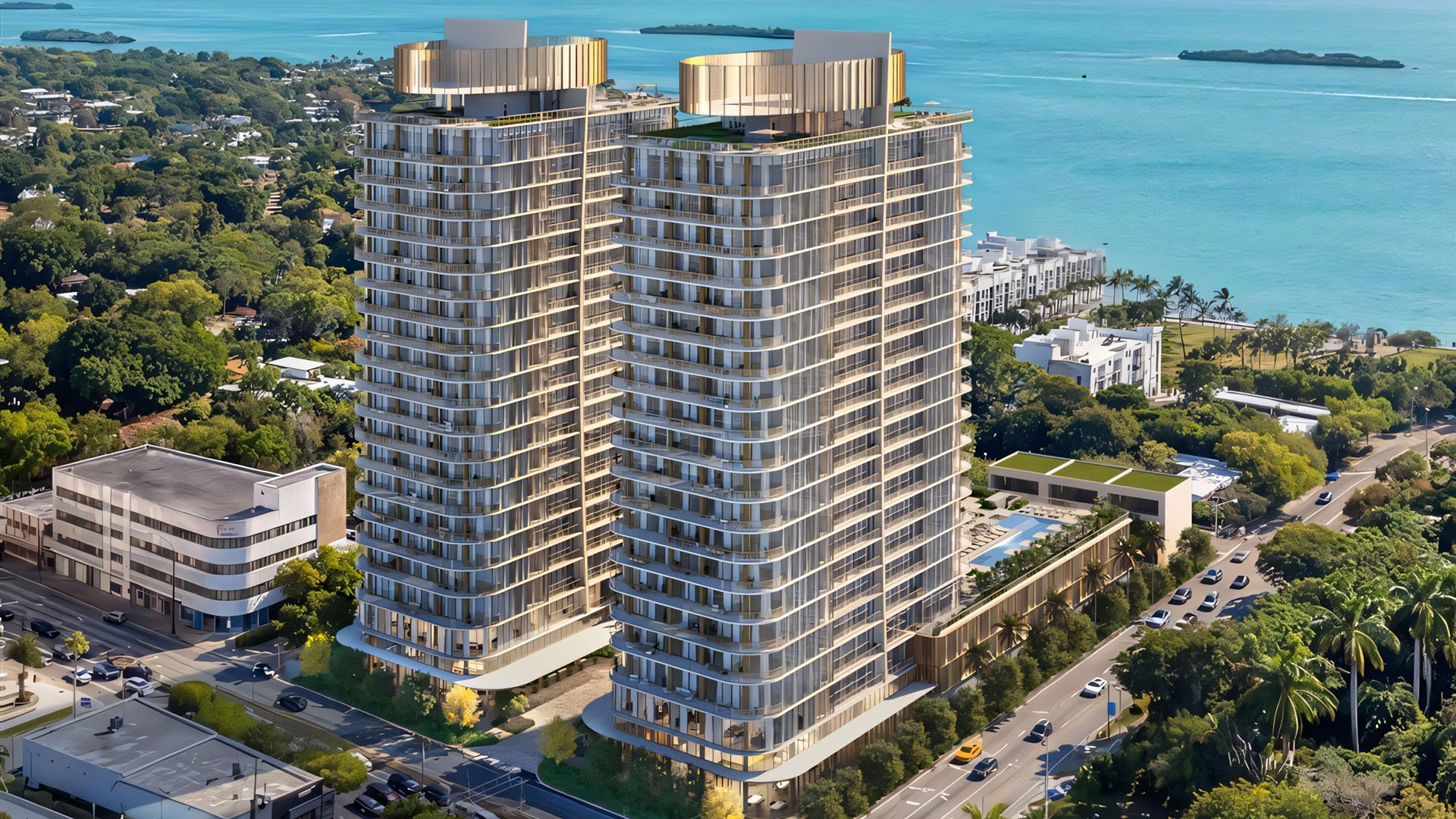
Kempinski Residences Miami Design District is planned at 3801 and 3883 Biscayne Boulevard, at the entrance to the Design District. Its announced program spans two towers, with 132 private residences, six townhomes, and 17 guest suites reserved exclusively for residents. The sales gallery is at 455 NE 38th Street, separate from the development site.
Those details establish what is being presented to buyers. They do not establish a sealant replacement schedule, identify a balcony membrane, or determine how a future rain-intrusion claim would be resolved. A compelling residential program and documented building performance are distinct considerations. Keeping them separate is a mark of informed ownership, not a judgment against the project.
A Kempinski-specific façade sealant replacement interval has not been publicly established. The balcony membrane product, waterproofing assembly, and project-specific water-infiltration test results remain unverified, as do a project-specific façade warranty and a history of completed wind-driven-rain claims.
These are limits on what can responsibly be stated, not findings of defective construction. Nor does the absence of publicly verified specifications establish that internal documentation is missing. Buyers should avoid both assumptions: that the brand assures performance, or that unavailable technical detail signals a problem.
At the offer stage, the useful distinction is between an announced feature and an unresolved technical point. The two-tower program belongs in the first category. A numerical sealant cycle belongs in the second. Treating both as settled facts would imply a level of certainty about ownership that is not yet supported.
The phrase “sealant cycle” suggests a predictable timetable. Here, however, no particular number of years can be assigned to Kempinski on the basis of publicly established information. There is no basis for presenting a standard interval as this development’s actual replacement requirement.
That distinction matters when buyers look beyond the purchase. An assumed cycle can make an ownership plan feel complete even when its central maintenance premise remains unconfirmed. The disciplined position is to leave the interval unresolved rather than turn a generic expectation into a project-specific commitment.
The same restraint applies to warranties. A replacement schedule and a warranty are separate questions; neither is established here. It would be premature to describe the façade as carrying a particular term of protection or to imply that future sealant work would fall within it. For buyers, precision means recognizing that limit before drawing conclusions about future obligations or costs.
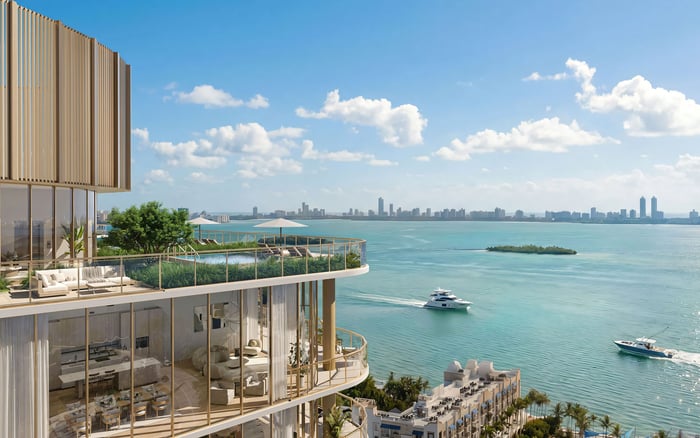
A balcony’s relationship to the interior is an important part of the residential experience. Yet a finished surface or architectural image cannot answer the ownership questions that relationship raises. At Kempinski, the membrane product has not been publicly identified, and the waterproofing assembly and water-infiltration test results remain unverified.
In high-rise buildings generally, sliding- and terrace-door thresholds, tracks, pans, and gaps are inspection targets for wind-driven rain. That is useful context, not evidence that any such component at Kempinski is defective. Nor does it establish which assembly the project will use.
Buyers should therefore avoid turning a general discussion of vulnerable interfaces into a diagnosis of a specific residence. Equally, a polished terrace presentation is not a technical performance guarantee. The conclusion is narrower: the balcony’s appeal can be considered while its underlying waterproofing details remain a separate, unresolved matter.
Curtain walls, windows, and balcony-door assemblies are potential entry points for wind-driven rain in high-rise buildings. That general observation explains why the subject merits attention. It does not establish that Kempinski has experienced water intrusion, that a claim has been made, or that any component has failed.
Insurance introduces another distinction. Rain-intrusion disputes can turn on whether an event is characterized as storm damage or as a maintenance or construction-defect issue. Such disputes in the broader market do not resolve coverage under any policy associated with this development.
The conclusion for buyers must remain precise: neither a project-specific claims history nor a coverage outcome is verified. “Not verified” does not mean “no claims,” just as the possibility of a dispute does not mean a claim will be denied. Identifying a potential water-entry path cannot establish cause, responsibility, or insurance protection.
For a buyer also considering EDITION Edgewater, the useful comparison is not an unsupported ranking of façade resilience. It is whether each property’s appeal is kept distinct from its documented technical commitments. Nothing here establishes equivalence between the projects’ systems, maintenance requirements, or warranties.
The same principle applies if Cipriani Residences Brickell enters the shortlist. A name should not become shorthand for a particular waterproofing assembly or insurance outcome. Comparing residences can clarify personal preferences without supporting a technical comparison that the available facts cannot sustain.
This approach preserves the pleasure of choosing a residence without offering false reassurance. Buyers need not diminish the importance of setting, identity, or privacy. They simply should not ask those qualities to answer engineering and coverage questions that require their own evidence.
At Kempinski, the announced address and residential program provide a clear starting point: two towers, 132 private residences, six townhomes, and resident-exclusive guest suites. The technical conclusions are more limited. No numerical façade sealant cycle, verified balcony waterproofing specification, project-specific façade warranty, or completed wind-driven-rain claims history can be asserted here.
That is the central distinction to carry from offer to ownership. Public information gaps are not defects, and general high-rise concerns are not project findings. An informed purchase can acknowledge the appeal of a residence without converting unanswered questions into either promises or warnings.
For a discreet perspective on South Florida’s luxury residences, explore MILLION.
If branded residences are on your mind — as a home or as an allocation — we would be glad to share what we are seeing, privately.
Begin a quiet conversationThe development is planned at 3801 and 3883 Biscayne Boulevard, at the entrance to the Miami Design District.
The program spans two towers and lists 132 private residences, six townhomes, and 17 guest suites reserved exclusively for residents.
No. The announced sales gallery is at 455 NE 38th Street, separate from the planned Biscayne Boulevard site.
A Kempinski-specific replacement interval is not established here. No numerical cycle can responsibly be assigned from the information available here.
The balcony membrane product and waterproofing assembly are not verified here. That does not establish a defect or missing internal documentation.
Project-specific water-infiltration test results are not verified here. No performance guarantee follows from that information.
A project-specific façade warranty is not verified here. Its existence, terms, or application should not be inferred from the residential brand.
Curtain walls, windows, and balcony-door assemblies can be potential entry points. Thresholds, tracks, pans, and gaps are general inspection targets, not documented Kempinski defects.
No. A history of completed wind-driven-rain claims is not verified, which is different from establishing that no claims exist.
No coverage outcome is established for any Kempinski-related policy. General disputes can involve whether intrusion is storm damage or a maintenance or construction-defect issue.