Kempinski’s resident-only guest-suite offering presents a different way to host in Miami: potentially more separation without expanding the main household. The decision turns on permitted use, ownership structure and total costs, not bedroom count alone.

For a buyer who entertains often, another bedroom does not always mean a better arrangement. It adds sleeping capacity within the household, but visitors still share its rhythms. A separately purchased guest suite raises a different question: would hosting feel more comfortable with a little distance?
At Kempinski Residences Miami Design District, the planned offering includes private guest suites exclusively for sale to residents. They represent an additional purchase, not another room within the principal home. That distinction matters for buyers who want to welcome guests generously while preserving their own routines.
The appeal is separation, not necessarily savings. Suite dimensions, pricing, facilities and permitted uses are not established here, so neither financial efficiency nor independent living should be assumed.
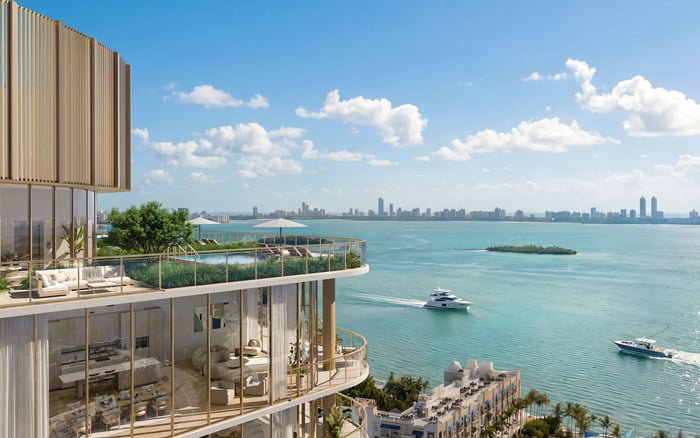
Planned for 3801 and 3883 Biscayne Boulevard, at the gateway to Miami’s Design District, the development combines two residential towers, six townhomes and private guest suites. Main residences range from two bedrooms plus a den to four bedrooms plus a den, with approximately 2,100 to 3,100 interior square feet. Total living areas reach roughly 3,700 square feet.
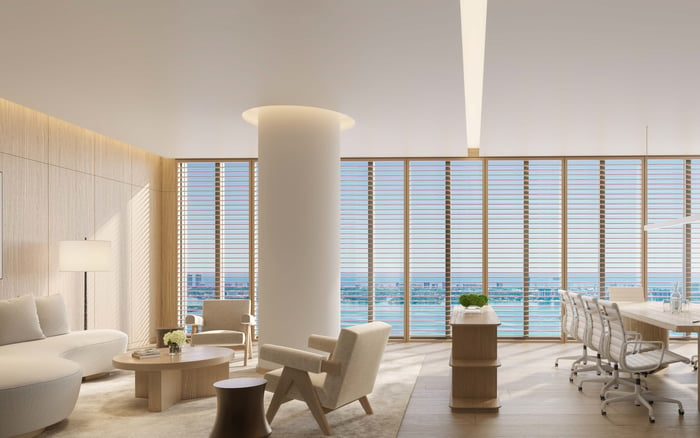
The principal homes are conceived around private elevator vestibules and expansive great rooms integrating kitchen, dining and living spaces. Terraces and outlooks toward Biscayne Bay, the skyline and surrounding landscape complete the main residences. Those details should not be assumed to apply to the guest suites.
The suite count is described as both 17 and 18, a discrepancy that needs reconciliation before drawing conclusions about scarcity. More important than the headline number is the specific suite available, its relationship to the main home and the rights attached to its purchase.
An additional bedroom keeps everyone within the same domestic setting. That may be preferable when visitors need frequent assistance, when children should remain close or when a room must serve another daily purpose between visits. Its value comes from integration.
A guest suite could support a more separate visiting arrangement, depending on its configuration and permitted occupancy. Visiting relatives, adult children, staff and business guests are possible uses to investigate, not confirmed permissions. Each calls for a different conversation about access, privacy and length of stay.
Begin with an ordinary visit rather than a floor-plan label. Where would guests have breakfast? Could they return without passing through the primary residence? Would they need to enter the main home for laundry or meals? Kitchens, laundry facilities and independent entrances have not been established for these suites.
If most activity still leads back to the principal residence, the purchase may provide sleeping separation rather than a self-contained guest household. That can be worthwhile, but it is a different benefit.
A useful shortlist compares how each home would function, not simply how many bedrooms appear in its description. Buyers also considering EDITION Edgewater can apply the same discipline: identify which spaces serve everyday life, which serve visitors and which would sit unused between stays. This is a comparison framework, not a claim of equivalent guest-suite offerings.
For Kempinski, sketch two scenarios: the preferred primary residence plus a guest suite, and a larger primary residence without one. Compare the actual plans, circulation and storage rather than combining square footage into a single total. Space outside the household does not perform every function of space within it.
The same questions belong in a review of The Residences at Mandarin Oriental, Miami. A brand name is no substitute for written confirmation of the specific accommodation and services being purchased.
Kempinski’s planned amenity program encompasses approximately 70,000 square feet, with the towers connected by a private amenity bridge. Lounges, library and game spaces, private dining and an outdoor theater suggest settings for time together beyond the principal home.
For hosts, that distinction could matter. A visit might revolve around shared activities rather than constant use of the living room. Yet an amenity’s existence does not establish who may use it, whether a resident must accompany a guest or whether reservations and charges apply.
A 24-hour concierge trained by Kempinski is planned. That does not establish guest-suite housekeeping, linen changes, arrival assistance or any other suite-specific inclusion. Request the service schedule and fee structure rather than treating hospitality language as an operating agreement.
The planned facilities include an 85-foot lap pool with a sun shelf, a beach-entry resort pool, fitness facilities and a padel court. Wellness offerings include a co-ed spa, cold plunge, dry and infrared saunas, private treatment rooms and recovery spaces. Children’s play areas and shaded outdoor spaces add another dimension for family visits.
These features may enrich hosting, but guest eligibility requires separate review. Confirm access credentials, booking rules, supervision requirements and any treatment or activity charges. The question is not merely what the development offers, but what a suite occupant may actually enjoy.
Released main residences have been advertised from $3,761,200. That is not guest-suite pricing and does not establish the cost of the combined purchase or any savings against a larger home.
Build two complete ownership budgets. For each, request purchase and closing costs, furnishings, assessments, taxes, insurance, utilities, housekeeping and any hospitality fees. Determine whether each expense applies separately to the suite, is incorporated elsewhere or does not apply. Duplicated charges should neither be assumed nor overlooked.
Ownership structure is equally consequential. Do not presume a separate deed, independent resale rights, rental permission or hotel rental-pool eligibility. Have counsel establish whether the suite must remain attached to the main residence and what happens when either is sold. Financial flexibility depends on those terms, not the guest-suite label.
A guest suite may suit frequent hosts who value a boundary between welcoming visitors and sharing every domestic routine. A larger primary residence may be better when proximity, flexibility and continuous household use matter more.
Before committing, obtain the suite plan, written occupancy rules, ownership documents and a complete cost schedule. Test them against the visits you actually expect. The strongest purchase is the one whose permissions and practical details support the life you intend, without relying on assumptions about savings or investment performance.
For a discreet assessment of your South Florida residential options, connect with MILLION.
If branded residences are on your mind — as a home or as an allocation — we would be glad to share what we are seeing, privately.
Begin a quiet conversationThe development is planned for 3801 and 3883 Biscayne Boulevard, at the gateway to Miami’s Design District.
The guest suites are offered exclusively for sale to residents. They are an additional purchase rather than another bedroom within the principal home.
The stated count varies between 17 and 18. Confirm the final count and actual availability before making a scarcity-based decision.
Main-residence configurations range from two bedrooms plus a den to four bedrooms plus a den. Approximate interior sizes range from 2,100 to 3,100 square feet.
Guest-suite pricing is not established here. The advertised starting price of $3,761,200 applies to released main residences, not guest suites.
Kitchens, laundry facilities, dimensions and independent entrances have not been established. Review the specific suite plan before assuming self-contained accommodation.
Independent rental permission and hotel rental-pool eligibility are not established. Confirm permitted uses in the governing documents before planning any rental activity.
Separate deeds and independent resale rights are not established. Counsel should confirm any requirement to retain or transfer the suite with the main residence.
A 24-hour concierge trained by Kempinski is planned, but that does not establish suite housekeeping or linen service. Obtain written service inclusions and charges.
That cannot be established without suite pricing, ownership costs and a specific larger-home comparison. The clearest potential benefit is separation, subject to layout and permitted use.