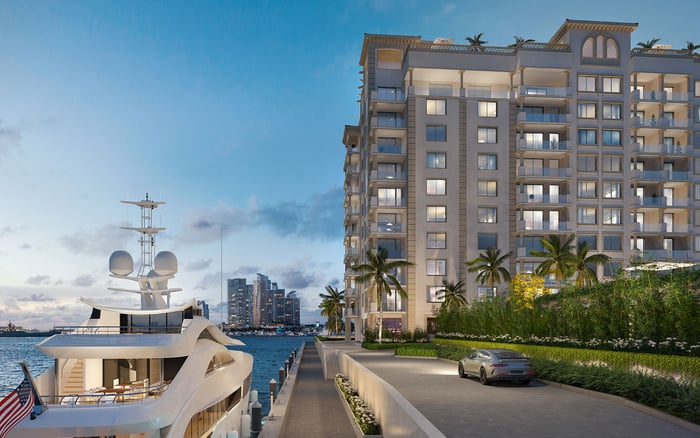
For Los Angeles buyers, Fisher Island requires more than a residence selection. Schools, household staffing, insurance, club obligations, building documents, and seasonal care should all be tested as one operating plan.

Fisher Island offers a rare degree of privacy, but that defining advantage also shapes everyday logistics. For buyers arriving from Los Angeles, the central question is not simply which residence feels most compelling. It is whether the family, staff, advisers, and property can function smoothly within a private-club community accessible by ferry.
That distinction matters. Education and routine healthcare are off-island, household access is controlled, and ownership costs extend beyond condominium charges. Before treating the purchase as complete, a careful buyer should model an ordinary Tuesday, a summer absence, and a storm event.
Residences such as Palazzo del Sol and Palazzo della Luna belong in a building-by-building comparison, not an island-wide generalization. The governing documents, reserves, insurance position, assessments, leasing rules, and lender eligibility of the exact condominium remain decisive.
Fisher Island has no K-12 schools. Families therefore use mainland public or private schools and must account for ferry travel in school runs, after-school activities, schedule changes, and emergency planning. Private-school calendars are only one part of the analysis. The commute itself should be tested under realistic weekday conditions.
Map who handles morning departures, late pickups, athletics, tutoring, and illness. Because routine healthcare is also off-island, determine how caregivers will respond when a child must leave school early or needs an appointment. A workable plan requires alternatives, not merely an ideal timetable.
The essential principle is to test the lifestyle as it will actually operate. Privacy is valuable, but families should understand the coordination required to preserve it.
Gated-community living becomes tangible through access procedures. A family office, estate manager, nanny, chef, housekeeper, driver, contractor, and delivery provider may each interact differently with community and club requirements. Buyers should plan these workflows with an island-experienced agent or attorney before closing.
Create a written access map covering recurring staff, occasional vendors, guest approvals, deliveries, and urgent repairs. Confirm procedures rather than assuming practices from another luxury building will transfer. Community rules also govern common-area behavior, including the use of condominium lawns. Fishing, swimming, boating, wading, and other water activities are prohibited in lakes on the properties.
For larger household programs, The Links Estates at Fisher Island may require a different staffing review than a condominium residence. The same discipline applies: identify every person who needs access and verify the applicable process.
Waterfront ownership demands unit-specific insurance analysis. Identify the residence’s exact flood zone and price both flood and windstorm coverage before committing. Combined HO-6 and flood insurance may range from approximately $15,000 to $75,000 annually across different property tiers. This range is a planning reference, not a substitute for current quotations on the selected unit.
The association’s position matters alongside the owner’s policy. Buyers should review insurance materials, budgets, reserve information, meeting minutes, assessment disclosures, and structural obligations. Florida condominium owners have encountered assessments reaching tens of thousands of dollars as associations absorb higher insurance expenses and reserve requirements.
Financed purchases add another layer. Confirm that the specific condominium satisfies lender standards for reserves, insurance, and broader project eligibility. A strong personal balance sheet does not cure an ineligible project.
Fisher Island should be evaluated as a private-club community rather than a conventional condominium acquisition. Property purchases generally require Fisher Island Club enrollment and completion of membership and financial requirements. Club access can include the beach club, golf, tennis, spa, restaurants, and marinas.
A planning benchmark places the equity-membership initiation fee at $250,000 and annual dues at approximately $19,260 to $25,520, with golf potentially additional. These figures can change and should be reconfirmed before contract execution.
Illustrative total annual ownership expenses range from roughly $215,000 to nearly $1 million, depending on the residence and service level. The total can include condominium fees, community association dues, club expenses, property taxes, insurance, utilities, and island-specific services. Buyers considering The Residences at Six Fisher Island should still build a residence-specific annual budget rather than apply a generalized island estimate.
Before closing, obtain and review the declarations, bylaws, rules, budgets, reserves, insurance materials, minutes, and assessment disclosures. This document package reveals the operating system behind the address.
Seasonal use requires a formal absence plan. Address flood exposure, storm procedures, insurance reviews, and post-storm property checks. Assign responsibility for preparation, communications, inspections, remediation decisions, and access while the owner is away.
Do not assume occasional occupancy creates automatic rental flexibility. Leasing restrictions vary by condominium. Verify minimum lease periods, approval procedures, guest policies, and rental rights in the exact governing documents. In Miami-Dade County, a short-term vacation rental is occupancy for less than 30 days or one calendar month, whichever is less. Condominium associations can restrict short-term rentals through binding covenants and governing documents.
The result should be a single operating brief shared by the owner, estate manager, insurance adviser, attorney, and property team. On Fisher Island, discretion is most effective when supported by exact planning.
Does Fisher Island have K-12 schools? No. Families use mainland public or private schools and incorporate ferry travel into daily routines.
Should families test the school commute before buying? Yes. Test realistic weekday travel, including morning departures, activities, late pickups, and backup arrangements.
Can household staff access the island automatically? Buyers should verify community and club procedures for recurring staff, guests, vendors, deliveries, and urgent repairs.
Is Fisher Island Club membership generally required? Property ownership generally requires enrollment and completion of the club’s membership and financial requirements.
What association documents should a buyer review? Review declarations, bylaws, rules, budgets, reserves, insurance materials, meeting minutes, and assessment disclosures.
Which insurance categories require early pricing? Identify the exact flood zone and obtain unit-specific pricing for flood and windstorm protection.
Can an association assessment arise after purchase? Yes. Insurance expenses and structural-reserve obligations can contribute to substantial unexpected assessments.
Does financing depend only on the buyer’s qualifications? No. The condominium must also satisfy lender requirements involving insurance, reserves, and project eligibility.
Can a seasonal owner offer short-term rentals? Not necessarily. Rental rights, minimum terms, approvals, and guest rules depend on the exact governing documents.
What should an absence plan cover? It should assign responsibility for storm preparation, insurance review, access, communications, and post-storm property checks.
When you're ready to tour or underwrite the options, connect with MILLION.
If branded residences are on your mind — as a home or as an allocation — we would be glad to share what we are seeing, privately.
Begin a quiet conversation