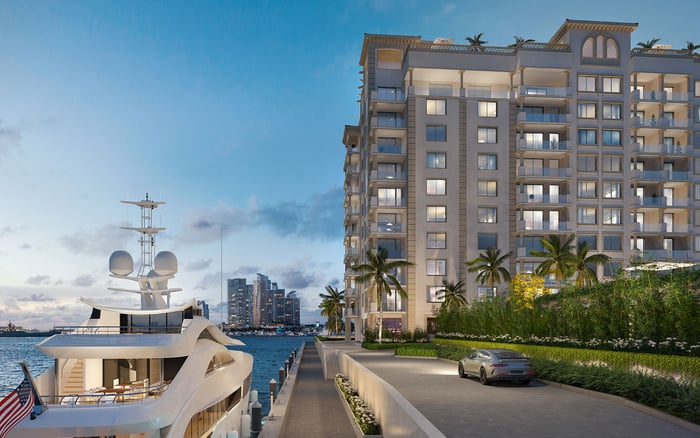
For San Francisco buyers considering Fisher Island, elegant interiors and privacy are only part of the acquisition calculus. Master-policy replacement cost, storm deductibles, HO-6 loss assessment coverage, and coordinated umbrella liability deserve equal attention before closing.

A move from San Francisco to Fisher Island involves more than a change of coasts. For buyers accustomed to evaluating seismic risk, sophisticated construction, and high-value personal property, Florida presents a different set of questions centered on wind exposure, condominium governance, master-policy deductibles, and the division between association and owner coverage.
The first distinction is fundamental: the association insures condominium property, while the owner’s HO-6 policy addresses owner-responsible interiors, personal property, loss assessment exposure, and personal liability, subject to its terms. These policies should be evaluated together, not purchased as unrelated products.
This matters whether the buyer is considering an established residence at Palazzo del Sol or another Fisher Island building. Florida associations must insure condominium property at full replacement cost, supported by an independent appraisal at least once every 36 months. Compliance, however, is no substitute for document review.
The decisive question is not what the residence cost, but what every covered element would cost to replace now.
Market price and insurance replacement cost answer different questions. A residence’s purchase price reflects location, scarcity, views, amenities, and demand. Replacement cost reflects the current expense of labor, materials, and code compliance required to reconstruct covered property after a loss.
Before completing insurance diligence, request the full master-policy schedule, declarations, endorsements, current insured value, latest replacement-cost appraisal, and deductible provisions. A certificate of insurance is not enough. If the association participates in a qualifying group insurance program covering multiple communities, buyers should still isolate the terms applicable to the specific building, including its valuation, deductible, and method of allocating losses.
The same discipline applies to the unit. Florida owners are generally responsible for personal property and interior components such as floor, wall, and ceiling coverings; appliances; electrical fixtures; built-in cabinetry; countertops; and window treatments. A highly customized residence at Palazzo della Luna may therefore require a detailed, room-by-room valuation. Imported stone, bespoke millwork, integrated lighting, specialty appliances, and tailored window treatments should be priced at realistic current replacement cost-not the original renovation budget.
Wind and named-storm deductibles can equal 2% to 5% or more of a building’s insured value. Because deductibles for damage to condominium property are generally common expenses, a major claim can result in a meaningful owner assessment. Additional assessments may arise when a stale valuation leaves the property underinsured or required work falls outside the policy’s covered scope.
A useful first-pass calculation is straightforward: multiply the building’s total insured value by the wind or named-storm deductible percentage, then divide by the number of units. The result is only a rough estimate of per-unit exposure. The declaration may allocate costs by ownership percentage or another formula rather than equally, materially changing the buyer’s share.
For any candidate residence, including The Residences at Six Fisher Island, counsel and the insurance adviser should confirm whether the deductible applies per occurrence, per calendar year, per building, or across a broader program. They should also review the declaration, amendments, board materials, and applicable policy language to determine who pays, how the amount is allocated, and whether reserves could absorb any portion.
This analysis belongs in both primary-home and second-home purchases. It is equally central to investment discipline, even when the buyer has no intention of renting the residence. The obligation follows ownership, not occupancy.
Loss assessment coverage is typically added to an HO-6 policy. It can reimburse an owner for an association assessment arising from a covered property loss or liability judgment, subject to the endorsement’s language, limits, deductible, exclusions, and the cause of the assessment.
Florida’s statutory minimum is $2,000, but that baseline may be inadequate in a high-value Fisher Island building. A more rigorous approach models plausible assessment exposure from the master-policy deductible, valuation shortfalls, and uncovered portions of a loss, then selects a limit aligned with the building’s documents and the owner’s risk tolerance.
Coverage should never be assumed simply because an assessment follows a storm. The event must satisfy the HO-6 endorsement’s requirements. Buyers should ask how the policy treats assessments generated by a master-policy deductible, whether special sublimits apply, and how coverage responds when an association’s insured value proves insufficient.
The association’s financial controls also warrant scrutiny. Florida requires specified insurance and fidelity-bonding protections for those who control or disburse association funds. Buyers should verify these protections as part of the broader governance review, particularly when reserves and post-loss expenditures could be substantial.
The HO-6 should be tailored to the actual residence, not a generic condominium template. For waterfront properties and custom homes, the schedule should address owner-responsible interiors, personal property, art, jewelry, wine, collectibles, additional living expenses, water-related risks, personal liability, and loss assessment coverage, as applicable. High-value items may require separate scheduling or specialized coverage.
The exercise is especially relevant when comparing condominium ownership with an estate format such as The Links Estates at Fisher Island. The insurance architecture may differ by property form and governing documents, so buyers should not transfer assumptions from one acquisition to another. Palazzo del Sol Fisher Island and other building-specific opportunities each require an individual policy and declaration review.
For readers of buyer’s guides, the practical lesson is straightforward: obtain replacement estimates early enough to revise limits before closing. An adviser should reconcile the association’s covered property with the proposed HO-6 schedule line by line, reducing both duplication and gaps.
Umbrella insurance should sit above properly structured underlying policies. For high-net-worth households, $1 million is commonly treated as a floor, with many affluent households carrying $2 million to $5 million. The appropriate amount depends on assets, exposures, household drivers, properties, watercraft, employees, and other liability considerations.
Underwriting may require auto bodily-injury limits of $250,000/$500,000 or $500,000/$500,000 before the umbrella attaches. Florida uninsured and underinsured motorist coverage is not mandatory, but it must be offered. Affluent households often consider matching UM/UIM protection to bodily-injury liability limits and evaluating excess UM through the umbrella. Excess UM may be available up to $1 million, subject to carrier terms and Florida acceptance or rejection forms.
The cleanest structure places the HO-6, valuables coverage, auto insurance, and umbrella with one coordinating adviser, even if multiple carriers are ultimately involved. This makes it easier to identify inconsistent named insureds, insufficient underlying limits, excluded exposures, and gaps between primary and excess coverage.
Before closing, the buyer’s team should be able to explain the association’s insured value, appraisal date, deductible structure, loss-allocation formula, and relevant endorsements in plain language. The personal program should then reflect current interior replacement cost, a deliberately selected loss assessment limit, and umbrella coverage supported by compliant underlying policies.
To evaluate Fisher Island opportunities with insurance diligence integrated into the acquisition, connect with MILLION.
If branded residences are on your mind — as a home or as an allocation — we would be glad to share what we are seeing, privately.
Begin a quiet conversationRequest the declarations, schedules, endorsements, current insured value, latest appraisal, and all deductible terms. A certificate of insurance alone does not show the full coverage structure.
The association’s full replacement-cost coverage must be based on an independent appraisal performed at least once every 36 months.
No. Replacement cost reflects current labor, materials, and code-compliance expenses rather than the residence’s purchase price or original renovation budget.
They generally include personal property, coverings for floors, walls and ceilings, appliances, electrical fixtures, built-in cabinets, countertops, and window treatments.
Multiply the building’s insured value by the deductible percentage, then divide by unit count for a rough estimate. The declaration’s actual allocation formula controls.
An assessment can result from the master-policy deductible, underinsurance, or work outside the policy’s covered scope.
This HO-6 endorsement can reimburse an owner for certain association assessments arising from a covered property loss or liability judgment, subject to policy terms.
It may be inadequate for a high-value building. The selected limit should reflect modeled deductible exposure and the association’s allocation method.
High-net-worth guidance commonly treats $1 million as a floor, while many households carry $2 million to $5 million based on their exposures.
Yes. Umbrella carriers may require specific underlying auto limits, and coordinated review can reveal gaps involving liability and UM/UIM coverage.