Choosing between Bay Harbor Islands and Sunny Isles Beach requires more than a waterfront address. Evaluate documented yacht access, exact airport transfers, driver coordination, and seasonal route performance before committing.

For a buyer moving between a residence, a yacht, and a private aircraft, luxury is partly a question of continuity. An exceptional apartment is only as useful as the arrangements connecting the front door, the dock, and the terminal. An elegant address becomes a liability when daily logistics demand more coordination than the household is willing to absorb.
Bay Harbor Islands and Sunny Isles Beach should therefore be compared through specific properties and actual routines, not broad promises of proximity. Neither merits an automatic advantage for airport transfers or yacht access. The meaningful comparison is residence to confirmed berth, residence to the correct aviation terminal, and the reliability of both journeys during the season you intend to live there.
The best choice is the address whose logistics remain acceptable on an inconvenient day, not merely an effortless one.
Miami-Opa Locka Executive Airport, commonly identified as OPF, is a general-aviation airport approximately 12 miles northwest of Miami’s city center. Its address is 14201 NW 42 Avenue, Opa-locka. That establishes orientation, not a dependable transfer time from either coastal community.
Even the nine-mile proximity figure associated with Bal Harbour is not a Bay Harbor Islands residence-to-terminal driving estimate. A household considering Bay Harbor Towers should commission a timed transfer from the actual residential entrance to the intended fixed-base operator, or FBO. Apply the same test to a Sunny Isles Beach candidate.
Terminal selection matters. One OPF aviation facility spans 52 acres and offers dual terminal access-a reminder that an airport name alone is an incomplete chauffeur instruction. Confirm the terminal entrance, passenger meeting point, vehicle staging arrangements, and luggage requirements before departure.
Customs hours are 9 a.m. to midnight daily, while control-tower hours are 7 a.m. to 11 p.m. local time. These are separate schedules, not interchangeable definitions of airport availability. Have the flight team reconfirm customs, tower, and FBO arrangements for the intended flight, particularly when an international arrival or schedule change is involved.
Waterfront appeal and yacht utility are different purchase criteria. A view does not establish a right to berth, and a nearby marina does not establish that a suitable slip will be available when ownership begins.
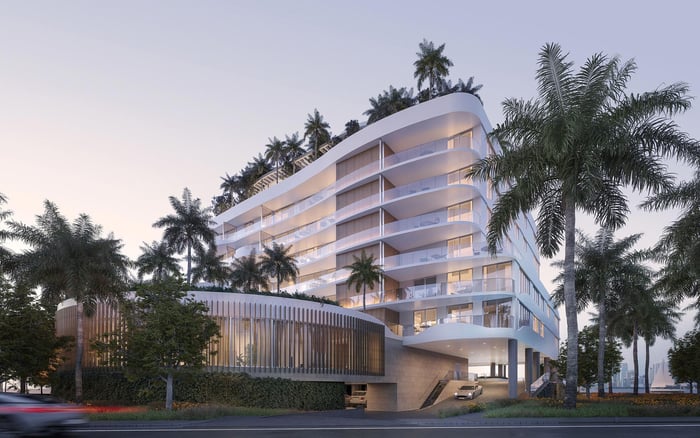
For a buyer evaluating Onda Bay Harbor, the useful question is not whether the address feels connected to boating. It is whether the proposed ownership and berthing arrangements accommodate the buyer’s actual vessel. Apply the same standard to every Sunny Isles Beach evaluation, however compelling the water views.
Begin with documentation: dock rights, current slip availability, allocation terms, and any restrictions relevant to the intended use. Then ask the captain to verify length, beam, draft, bridge clearances, turning space, and the route to open water. Shore power, seawall condition, and insurance requirements deserve their own review.
If considering Bal Harbour Yacht Club, verify its current dockage terms and vessel compatibility directly, and have the captain assess the intended Atlantic route via Haulover Inlet. Proximity to that option guarantees neither a berth nor suitability.
Finally, time the residence-to-dock journey, including boarding preparation. A marina arrangement that works on paper must also work for guests, provisions, and the household’s preferred departure schedule.
A chauffeur can remove the responsibility of driving and parking; that does not mean a shorter journey. Separate comfort from speed when deciding whether to retain a driver by the hour or arrange individual transfers.
For a household considering Bentley Residences Sunny Isles, evaluate the proposed pickup sequence rather than assuming the project name answers operational questions. Where may the driver wait? How is an early arrival handled? Can luggage be loaded without disrupting departure? What happens when the flight schedule changes?
Ask the same questions in Bay Harbor Islands. Confirm permitted staging with building management and coordinate those instructions with the driver and aviation team. For multi-stop days, compare an hourly arrangement with separate bookings on waiting terms, availability, and itinerary flexibility. The benefit is a better-coordinated day, not an unsupported promise to bypass congestion.
November through April is Miami’s private-aviation season. February and March stand out for aviation arrivals, but that distinction does not establish which local roads are most congested or which neighborhood offers the faster transfer.
Treat seasonality as a reason to test, not a substitute for testing. Run the exact residence-to-FBO and residence-to-marina routes during weekday peaks, weekends, and winter evenings. Record the departure time, terminal or dock entrance, journey duration, and any waiting at either end.
Repeat the exercise rather than treating a single favorable drive as representative. If evaluating Turnberry Ocean Club Sunny Isles, compare the proposed household itinerary from that residence with the same itinerary from the Bay Harbor Islands alternative. Consistent destinations and departure windows make the comparison more useful than competing assurances of convenience.
The question is how much variability your schedule can comfortably absorb.
Start with the least flexible obligation. For an owner whose yacht dictates weekend plans, documented berth suitability may be the first filter. For a frequent flyer, tested terminal access and dependable pickup coordination may carry more weight. For a household with several daily stops, driver availability and workable staging may matter more than an attractive distance figure.
Bay Harbor Islands is the stronger personal choice if the specific residence, confirmed berth, and tested airport routine better meet those priorities. Sunny Isles Beach is the stronger choice if its property-specific arrangements perform better under the same conditions. Neither conclusion should rest on neighborhood identity alone.
Create a concise decision sheet for each finalist: confirmed dock rights, captain-approved vessel fit, observed transfer range, terminal instructions, driver terms, and unresolved conditions. Ask the attorney, captain, building management, and flight team to address the items within their respective responsibilities before relying on those arrangements in a purchase decision.
Do not confuse an unanswered question with a minor inconvenience. A missing dock right differs fundamentally from a longer drive, just as uncertain pickup access differs from a planned waiting period. Resolve feasibility first, then compare comfort. The most persuasive residence supports the life you intend to lead without depending on optimistic assumptions.
For a discreet, property-specific search in Bay Harbor Islands or Sunny Isles Beach, connect with MILLION.
If branded residences are on your mind — as a home or as an allocation — we would be glad to share what we are seeing, privately.
Begin a quiet conversationNeither has an established overall advantage. Compare timed transfers from each exact residence to the intended OPF terminal during the departure windows you expect to use.
OPF is at 14201 NW 42 Avenue, Opa-locka, approximately 12 miles northwest of Miami’s city center.
On-site customs has published hours of 9 a.m. to midnight daily. Reconfirm arrangements with the flight team before an international movement.
No; published control-tower hours are 7 a.m. to 11 p.m. local time, distinct from the customs schedule. Reconfirm each relevant service separately.
No. Establish dock rights, slip availability, and compatibility with the intended vessel before treating a property as suitable for yacht ownership.
Have the captain assess vessel length, beam, draft, bridge clearances, turning space, and the route to open water. Include shore power, seawall condition, and insurance requirements in the broader review.
No. Confirm current dockage terms, availability, and vessel compatibility directly, and have the captain assess the intended route via Haulover Inlet.
No. A chauffeur can handle driving and parking, but the decision should rest on coordination, staging, availability, and waiting terms rather than an assumed speed advantage.
Test weekday peaks, weekends, and winter evenings within the November-through-April private-aviation season. February and March aviation demand does not establish a ranking of local road congestion.
Include documented dock rights, vessel suitability, observed transfer ranges, exact terminal instructions, driver arrangements, and unresolved conditions. Resolve feasibility before comparing comfort.