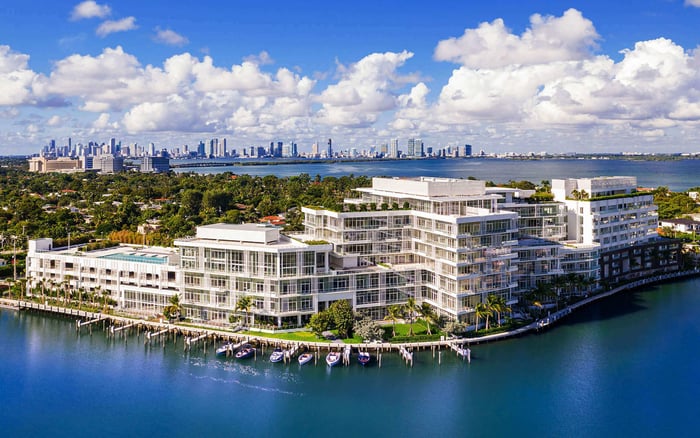
Private dining is a compelling part of branded residential life, but access is not the same as inclusion. A buyer-focused guide to dining arrangements, event permissions, and ownership costs at W Pompano Beach and The Ritz-Carlton Residences® Miami Beach.

The appeal of a serviced residence is especially tangible around the dining table: an intimate supper without the preparation, visiting family welcomed with a stocked kitchen, or a celebration coordinated without leaving home. For a buyer, however, the essential distinction is between a service that can be arranged and one included in ownership.
At W Pompano Beach Hotel & Residences and The Ritz-Carlton Residences® Miami Beach, private dining deserves the same disciplined review as the residence itself. Availability, eligibility, event permissions, and billing should be understood before signing a contract, then revisited throughout ownership. Access is not the same as inclusion.
The objective is not to diminish the hospitality proposition, but to make it dependable: clear expectations, written terms, and a budget that reflects how an owner intends to entertain.
At 20 North Ocean Boulevard, the advertised offering at W Pompano Beach Hotel & Residences includes private residences with access to hotel services, including valet parking, housekeeping, and in-residence dining. In-residence catering and personal-chef services are also part of that offering.
Fully furnished one- and two-bedroom hotel suites are marketed separately, with services including personal chefs, housekeeping, grocery shopping, and in-suite dining. Buyers should not treat the private residences and hotel suites as interchangeable ownership products. Request the assessment schedule, service eligibility, and agreements for the exact unit being purchased rather than relying on a project-wide description.
The distinction matters because some amenities and hotel-style services carry additional charges and are not included with purchase or ownership. The referenced beach-club amenities, hotel amenities, and services require fees beyond regular assessments. A dining offering should therefore not be read as unlimited meals or assessment-inclusive catering.
The advertised amenities also include a private resident-only lobby and a 12,000-square-foot outdoor pool deck with a dedicated spa, private cabanas, and a chef’s grilling station. These features describe the setting, not permission to reserve an area for a private event. Confirm entertaining rights separately.
At The Ritz-Carlton Residences® Miami Beach, in-residence dining and catering are described among concierge services available on request. That supports a dining proposition but does not establish current pricing, operating hours, guaranteed availability, or inclusion in assessments.
Ask management to explain how a request becomes a confirmed booking: who provides the food, who coordinates the service, and which party issues the invoice. Request current written terms rather than assuming a concierge arrangement operates like a hotel room-service department.
The same discipline applies if Setai Residences Miami Beach is also on a buyer’s shortlist. Compare written service terms residence by residence, without transferring dining arrangements or fee assumptions between properties. A brand name alone is not a dining agreement.
Ask for the declaration, operating budget, unit-specific assessment schedule, applicable hotel-services agreement, and any separate club or hotel-access charges. Have your advisers reconcile those documents with the lifestyle being presented.
Organize the review around three categories: recurring assessments for the selected unit; separate access or membership charges; and transaction-specific hospitality costs, such as a dinner delivery, chef engagement, or catered gathering. Ask where each proposed service belongs and whether one category must be paid before another becomes available.
At W, the additional-fee provisions make this separation particularly important. At Miami Beach, the available-on-request description makes written confirmation of scope and charges equally valuable. Neither description establishes a complete current dining or event fee schedule. No verified service-charge percentage is established here for either property.
Before signing, identify who can amend each fee, what notice owners receive, and whether any advertised benefit is reflected in the applicable agreement. Treat unresolved items as questions for written clarification, not favorable assumptions.
A useful dining quote should explain the full transaction, not simply the menu price. Request current menus, minimum spending requirements, delivery charges, staffing rates, administrative fees, and the service-charge formula. Ask explicitly whether gratuity is included or additional.
If a percentage-based charge applies, have the provider identify the calculation base. Does it apply to food and beverages, staffing, or other line items? Request an itemized total showing applicable taxes and charges before approval. These are questions to resolve, not fees to presume at either property.
For a personal chef, clarify the scope of the engagement. Ask whether the quote covers groceries, preparation, serving, and cleanup, and whether the kitchen requires advance review. Specify dietary needs and the intended guest count when requesting the quote.
For repeat entertaining, retain approved quotes and invoices. Comparing like-for-like requests over time can help distinguish a changed menu or staffing requirement from a change in the underlying fee structure.
A private dinner inside a residence and a gathering in a shared amenity space call for separate questions. Before selecting a date, confirm permitted venues, capacity restrictions, advance notice, and whether a reservation grants exclusive use.
Ask whether outside caterers are permitted, what insurance they must carry, and how vendor access is managed. Request written clarification of any corkage, kitchen-use, loading, security, or vendor-access fees, along with cancellation terms. These are due-diligence items, not confirmed charges at either address.
At W, the advertised chef’s grilling station should not be treated as an automatically reservable event kitchen. At Miami Beach, an in-residence catering arrangement should not be assumed to include access to another entertaining venue. Have the location, service scope, and permissions confirmed together.
After closing, maintain a current service file rather than relying on the original sales presentation. Keep assessment schedules, access agreements, menus, event rules, and management contacts together. Review them before a significant gathering and whenever updated terms arrive.
Confirm eligibility separately for owners, tenants, occupants, and guests. If family members will use the residence without the owner present, ask who can authorize services and whose account is charged. For a second home, align service expectations with intended visits rather than assuming availability on every requested date.
The strongest ownership experience pairs ease with clarity. The advertised hospitality offering at W and on-request dining at Miami Beach may appeal to different routines, but both deserve unit-specific financial review and event-specific confirmation. The meaningful comparison is the service you can arrange, under terms you understand, at a cost you have approved.
For a considered approach to South Florida residential ownership, connect with MILLION.
If branded residences are on your mind — as a home or as an allocation — we would be glad to share what we are seeing, privately.
Begin a quiet conversationYes. Its advertised services include in-residence dining/catering and personal-chef services, but access does not establish that these are included in assessments.
No. Some amenities and hotel-style services cost extra, with referenced beach-club and hotel amenities and services requiring fees beyond regular assessments.
Yes. Request the unit-specific assessment schedule and applicable service agreements rather than assuming both products carry identical costs or entitlements.
In-residence dining/catering is described among concierge services available on request. Current availability, scope, and pricing should be confirmed in writing.
No verified percentage or complete current dining and event fee schedule is established here for either property. Obtain a current itemized quote before approving service.
Request the declaration, operating budget, unit-specific assessment schedule, applicable hotel-services agreement, and details of separate club or hotel-access charges.
It should clarify menu pricing, minimum spending, delivery, staffing, administrative fees, and any service-charge formula. It should also state whether gratuity is included or additional.
No. The advertised amenity does not by itself establish reservation rights, exclusive use, or permission for a catered gathering.
No. Confirm outside-caterer rules, insurance requirements, vendor access, and any related charges before making arrangements.
Keep service terms and fee schedules current, and confirm eligibility for owners, tenants, occupants, and guests. Recheck event permissions and obtain an updated quote before a significant gathering.