A buyer-focused look at published connectivity features, unconfirmed backup systems, and workspace expectations at two Boca Raton developments, with practical diligence from contract through long-term ownership.
For a buyer whose home also supports confidential calls, investment decisions, or a geographically dispersed business, luxury includes the ability to work without interruption. A beautiful lounge may offer a welcome change of scenery. It does not, by itself, establish acoustic privacy, reliable upload capacity, or connectivity during a power outage.
At Mr. C Residences Boca Raton and Glass House Boca Raton, the distinction between an advertised feature and an operational commitment matters. Mr. C has explicit connectivity specifications. Glass House has a described co-working amenity. Mission-critical connectivity and guaranteed private workspace remain publicly unconfirmed at both.
The buyer's task is not to assume these capabilities are absent. It is to establish which will be delivered, how they will operate, and who will maintain them after closing.
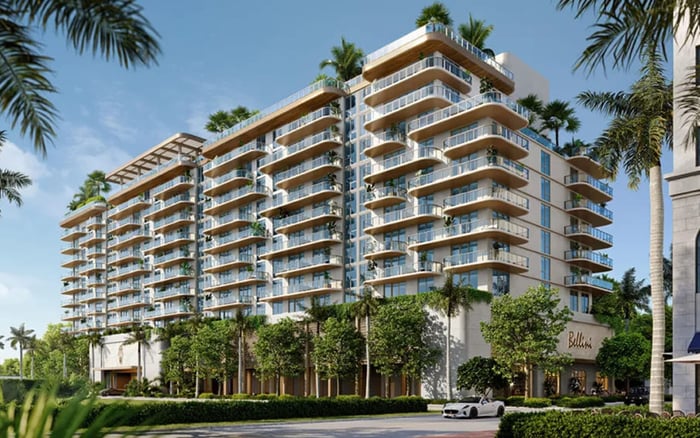
Planned as a 12-story building with 133 private residences at 41 SE 4th Street, Mr. C advertises fiber-optic infrastructure intended to provide high-quality Wi-Fi throughout the property. Residences are also advertised as pre-wired for high-speed internet. These are meaningful specifications for a connected household, but they do not establish contracted service speeds.
Providers, bandwidth guarantees, service-level agreements, redundant carrier connections, and telecommunications failover remain unspecified in the advertised connectivity features. Buyers should separate three questions: what infrastructure reaches the building, what service reaches the residence, and what performance the service agreement actually promises.
Request the proposed provider arrangements, upload and download tiers, fiber termination points, and installation responsibilities. Clarify whether property-wide Wi-Fi and residential internet are separate services, whether either carries additional fees, and who responds when a connection fails. Pre-wiring answers a physical installation question, not every operational one.
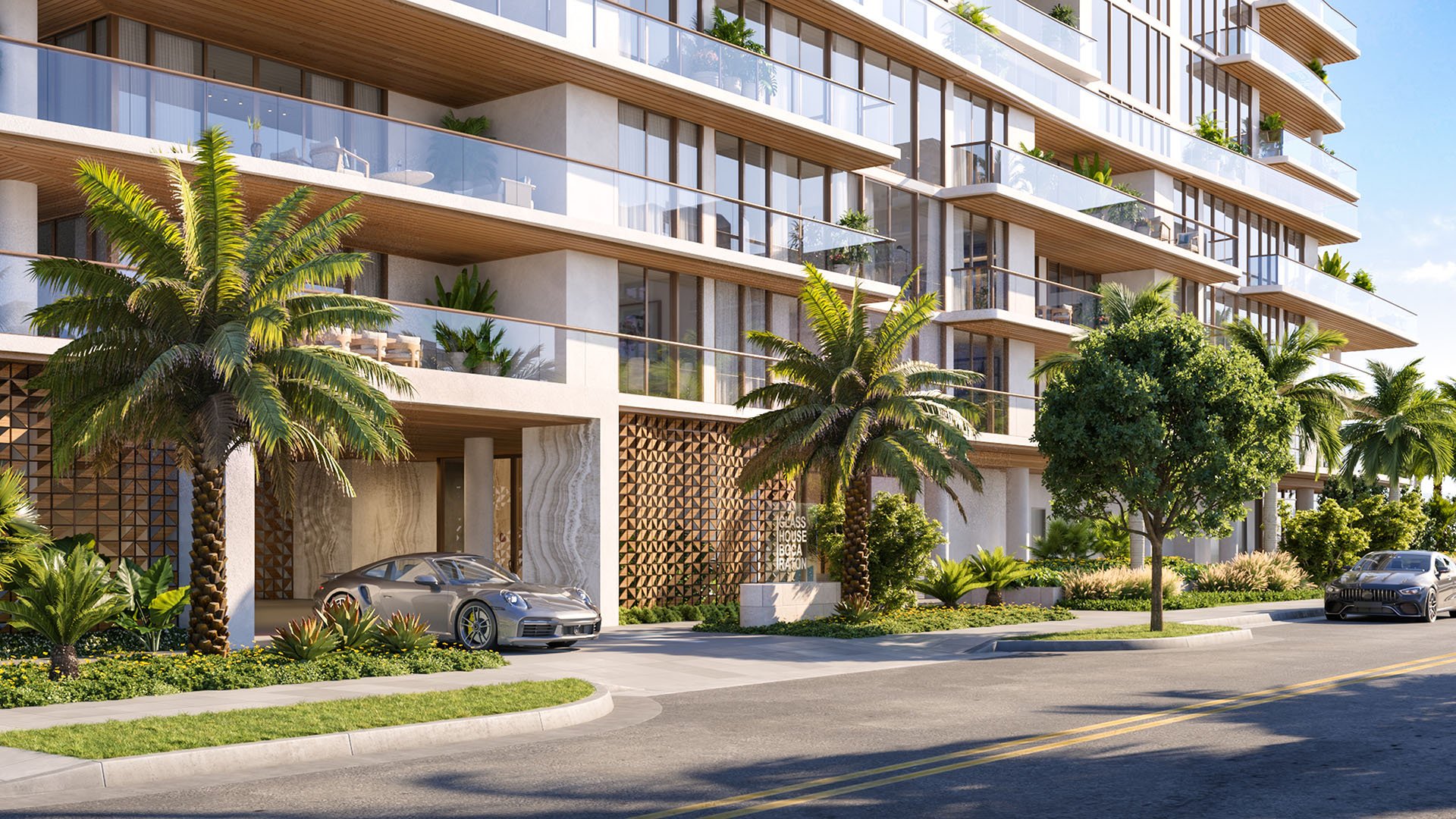
Glass House is marketed as a collection of 28 residences in downtown Boca Raton, with approximately three to four residences per floor. That smaller scale may appeal to buyers seeking a more intimate residential setting. It does not establish dedicated bandwidth, fewer competing network users, or superior outage protection.
A fiber-optic provider, guaranteed broadband speeds, redundant telecom carriers, and a dedicated resident network remain publicly unspecified. Integrated smart-home technology has also been described, but that feature does not establish communications failover or independent emergency power.
For a household managing work across multiple devices, ask where wired connections will be available and how owner-selected networking equipment can be installed. Obtain a technology specification for the actual residence rather than treating the broader smart-home description as an internet-service commitment. The useful comparison with Mr. C concerns the specificity of disclosed features, not a conclusion about which network will perform better.
Whole-building emergency-generator coverage and generator-backed resident connectivity remain publicly unconfirmed at both developments. Unconfirmed is not the same as nonexistent. Buyers should request generator schedules and a written explanation of the equipment and circuits intended to receive emergency power.
The question is more precise than whether a generator exists. Ask whether backup coverage includes the network equipment serving residences, shared Wi-Fi equipment, and the outlets needed for an owner's router and workstation. Clarify any battery backup and how the system transitions when utility power is interrupted.
Carrier resilience deserves separate attention. Ask whether multiple providers are available, whether their entrances are physically diverse, and whether a backup connection requires manual intervention. A second service option should not be treated as confirmed automatic failover. The goal is a documented explanation of continuity and its limitations, rather than a general assurance that the building is connected.
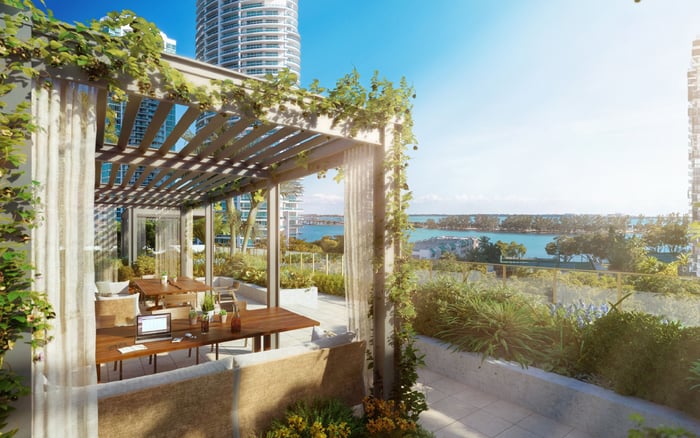
Mr. C's advertised amenities include social lounges, a golf simulator, rooftop amenities, wellness facilities, dining, and concierge services. A private office suite is not explicitly established among those amenities. A business-center amenity label is also used, but its configuration and privacy are not established.
Glass House has a described communal co-working space, without specified enclosed offices, conference rooms, acoustic separation, reservation rules, printing facilities, or operating hours. Buyers should treat it as an amenity requiring further confirmation, not a guaranteed venue for confidential meetings.
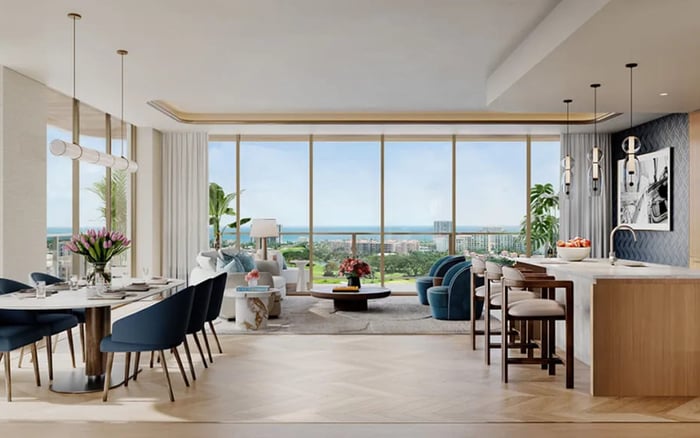
Ask for final plans and operating rules. Can a resident reserve an enclosed room? Are calls audible outside it? Are client visits permitted? Is access restricted during events? For in-residence work, Mr. C's open floor plans, floor-to-ceiling windows, balconies, and solid-core interior doors are useful design details, but none promises a dedicated home office. Evaluate the specific floor plan against the way you actually work.
Before signing, request the offering and governing documents, technology specifications, generator schedules, and final amenity plans. Have counsel review how any work-critical feature is addressed in the transaction documents and whether the relevant descriptions permit changes.
A practical brief should identify your requirements without assuming the developer has promised them: a particular service tier, wired connectivity in a chosen room, an enclosed shared workspace, or emergency power for specified equipment. Seek written answers tied to the residence and applicable building systems.
Apply this discipline to broader buyer's guide comparisons as well. If your Boca Raton shortlist includes Alina Residences Boca Raton, ask the same questions rather than transferring assumptions from another development. A comparison becomes useful when each answer addresses the same requirement and its supporting documentation.
After closing, the focus shifts from promised infrastructure to service administration. Clarify who maintains networking equipment, which components belong to the owner, and who manages shared systems. Ask how service contracts are renewed and whether association budgets cover connectivity and backup-system maintenance.
Request clarity on equipment replacement, generator servicing, and the process for communicating outages. Establish the support contact and the boundary between association responsibilities and the resident's service provider. Where shared workspace matters, review how reservation policies, access hours, and professional-use restrictions can change.
The same ownership questions are appropriate when considering The Residences at Mandarin Oriental Boca Raton. This is a diligence framework, not an assertion about that project's systems. Across a shortlist, enduring value lies in responsibilities that remain clear beyond the sales presentation.
Mr. C offers a specified starting point for connectivity diligence; Glass House offers a smaller residential collection and a described co-working amenity. Neither should be selected on an unverified assumption of uninterrupted internet or private office access.
Choose the residence whose documented capabilities fit your work, then confirm the maintenance and operating arrangements that will sustain them. The most discreet form of convenience is knowing what your home can reliably support.
For a considered approach to your next South Florida residence, explore MILLION.
If branded residences are on your mind — as a home or as an allocation — we would be glad to share what we are seeing, privately.
Begin a quiet conversationMr. C advertises fiber-optic infrastructure intended to support high-quality property-wide Wi-Fi and residences pre-wired for high-speed internet. Contracted service speeds are not established by those specifications.
The advertised connectivity specifications do not establish guaranteed bandwidth, named providers, or service-level agreements. Buyers should request the proposed service terms in writing.
A fiber-optic provider, guaranteed broadband speeds, redundant carriers, and a dedicated resident network remain publicly unspecified. Those details require further confirmation.
Generator-backed resident connectivity and whole-building emergency-generator coverage remain publicly unconfirmed at both developments. This does not establish that such equipment is absent.
A private office suite is not explicitly established among the described amenities. A business-center label does not establish the space's configuration or privacy.
A communal co-working space has been described, but enclosed offices, conference rooms, and acoustic separation are not specified. Buyers should request final plans and operating rules.
No; Glass House's described integrated smart-home technology does not establish communications failover or independent emergency power.
Request offering and governing documents, technology specifications, generator schedules, and final amenity plans. Obtain written confirmation of features essential to your work.
Confirm enclosure, acoustic privacy, reservations, access hours, client-visit restrictions, and permitted professional use. An amenity label alone does not answer those questions.
Clarify who maintains equipment, renews service contracts, and handles outages. Ask whether association budgets cover shared connectivity and backup-system maintenance.