Formula 1 creates a concentrated opportunity for eligible luxury rentals across Miami, but location, group-ready layouts, operating costs and rental restrictions determine whether event interest translates into meaningful income.

Formula 1 brings a particular kind of visitor to South Florida: internationally mobile, often traveling with friends or family, and receptive to accommodation that offers more privacy than separate hotel rooms. For owners of eligible luxury homes, this creates a concentrated opportunity. The appeal is not simply a bed near the circuit, but a residence where a group can gather between race commitments.
Geography matters. The Miami Grand Prix takes place at Hard Rock Stadium in Miami Gardens, not in central Miami or Miami Beach. A property's relevance therefore depends on the guest's itinerary, preferred residential setting and transport arrangements-not a Miami address alone.
F1 can be an annual revenue and marketing catalyst, but it cannot substitute for a sound ownership proposition. Buyers should distinguish visitor interest from bookable demand, and bookable demand from income retained after operating expenses.
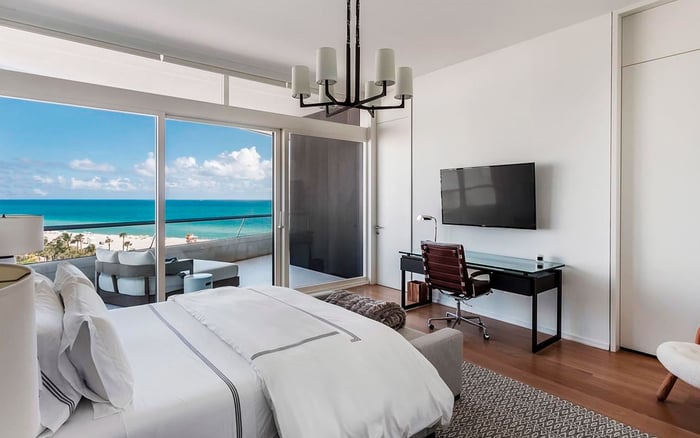
Race visitors often travel in groups, making villas and multi-bedroom homes credible alternatives to several hotel rooms. Shared living areas, private outdoor space and flexible sleeping arrangements can make a residence particularly well suited to this audience.
The strongest presentation explains how the home works. Can guests spend time together without compromising privacy? Is there a dedicated lounge? Are parking arrangements clear? Pools, terraces, outdoor kitchens and security are useful features to emphasize where they exist, but the listing should describe them precisely rather than rely on broad luxury language.
For an owner, the distinction is practical: a large home is not automatically a well-organized group stay. Sleeping capacity, permitted occupancy and the way guests use common areas should be evaluated together. A compelling offer aligns the residence's actual capabilities with the booking, rather than maximizing headcount at the expense of comfort.
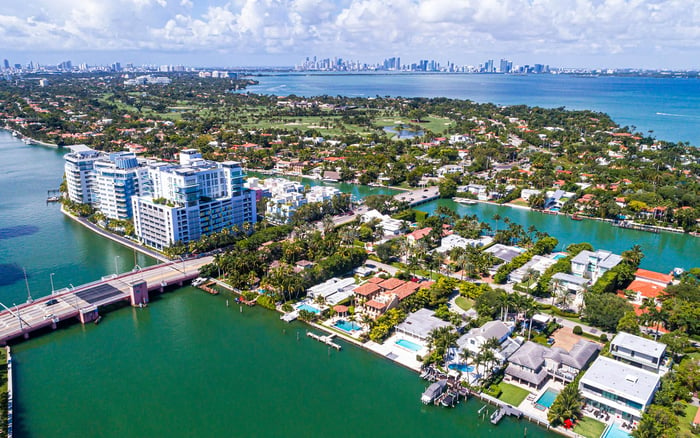
Short-stay interest extends beyond the stadium area to eligible properties in Brickell, Edgewater, Wynwood and Miami Beach. These are distinct accommodation choices, not interchangeable locations. A buyer should consider whether the intended guest prioritizes the circuit or a broader Miami stay, without assuming either preference guarantees a reservation.
In Brickell, buyers considering The Residences at 1428 Brickell should separate residential appeal from any proposed rental strategy. Neighborhood demand does not establish a particular building's short-stay permissions, and a project's inclusion in a buyer's search is not evidence of event-rental eligibility.
The same discipline applies in Edgewater when evaluating Aria Reserve Miami. The relevant question is not whether race visitors consider the neighborhood, but whether the specific residence can legally and operationally accommodate the intended booking. Event demand is useful context, not a substitute for property-level diligence.
Miami Beach belongs in the wider accommodation discussion, but its appeal should not be confused with proximity to the venue. Buyers exploring The Perigon Miami Beach should assess the residence on its own merits and examine rental rules separately. No event-related income should be inferred from its location or positioning.
Coconut Grove presents a different possibility: a quieter, waterfront residential setting for affluent visitors who prefer some separation from race activity. Buyers considering Four Seasons Residences Coconut Grove can use that neighborhood preference as context while independently verifying every assumption about leasing.
Spillover is best understood as potential interest, not an occupancy forecast. A uniform F1 rental effect across all of South Florida should not be assumed. A successful strategy must remain specific to the home, its permitted use and the guest it can realistically serve.
Short-stay eligibility is the first investment test, not an administrative detail to resolve after purchase. Municipal rules, licensing, minimum stays, building restrictions, insurance and operating arrangements can determine whether race-week demand is accessible at all.
Condominiums require particular scrutiny. Building-level restrictions can prohibit short stays even where surrounding visitor demand is strong. Buyers should obtain and review the applicable documents and confirm that the proposed rental duration and operating model are permitted before assigning event income to an acquisition.
For a single-family home, the absence of condominium rules does not eliminate the other checks. Municipal requirements, insurance and operating arrangements still matter. The sequence is straightforward: establish permission, confirm the property's suitability, calculate operating costs, and only then consider pricing. Reversing that order risks underwriting revenue the owner cannot legally capture.
Race-week pricing can exceed ordinary seasonal pricing, but there is no universal nightly benchmark for South Florida luxury homes. Broad short-stay averages are not reliable stand-ins for a particular villa or residence. Location, capacity, amenities, eligibility and operating quality all influence the offer.
Premium inventory should be prepared early, with event pricing considered ahead of the booking window for affluent groups. Early preparation establishes readiness; it does not promise that the highest asking rate will be achieved. Owners should distinguish the advertised price from a completed booking and the proceeds ultimately retained.
A useful ownership model separates event-week performance from ordinary seasonal demand. Staffing, cleaning, booking fees, taxes, insurance, maintenance and vacancy all belong in the calculation. The relevant figure is net income, not the most striking nightly rate. Buyers should also test whether the annual ownership plan remains acceptable if race-week results fall short of expectations.
Event attendance should not be treated as a count of unique overnight visitors seeking luxury homes. Likewise, regional economic activity is not rental revenue attributable to a particular residence. Neither measure can be converted directly into a property's occupancy forecast.
An annual event opportunity is not proof of year-round demand. Race visitors may also generate luxury-sales inquiries, but that does not establish that F1 independently raises sale prices. Exposure, bookings and appreciation are different outcomes.
The most defensible approach is selective: buy a residence that works beyond race week, verify any intended rental use, and treat event income as a distinct component of the ownership plan. For a discreet perspective on South Florida residences and the ownership considerations behind them, explore MILLION.
If branded residences are on your mind — as a home or as an allocation — we would be glad to share what we are seeing, privately.
Begin a quiet conversationThe race takes place at Hard Rock Stadium in Miami Gardens, not in central Miami or Miami Beach.
Visitors often travel in groups, making multi-bedroom homes with shared living areas and private outdoor space relevant alternatives to separate hotel rooms.
Pools, terraces, outdoor kitchens, parking, security and dedicated lounge areas can strengthen the offering. Owners should describe only amenities the property actually provides.
Interest extends to eligible properties in Brickell, Edgewater, Wynwood and Miami Beach. Coconut Grove may also appeal to visitors seeking a quieter waterfront residential setting.
No. Building restrictions can prohibit short stays even in neighborhoods with substantial visitor interest, and municipal requirements must also be checked.
There is no universal luxury-home benchmark. Pricing depends on the specific property's location, capacity, amenities, rental eligibility and operating quality.
Owners should prepare premium inventory early and consider event pricing ahead of the booking window for affluent groups. Early preparation does not guarantee occupancy or a particular rate.
Account for staffing, cleaning, booking fees, taxes, insurance, maintenance and vacancy. Evaluate net income rather than advertised nightly rates alone.
Not directly. Attendance does not establish how many unique overnight visitors will seek a particular luxury residence.
No. An annual event opportunity does not establish year-round demand or prove that F1 independently increases property sale prices.