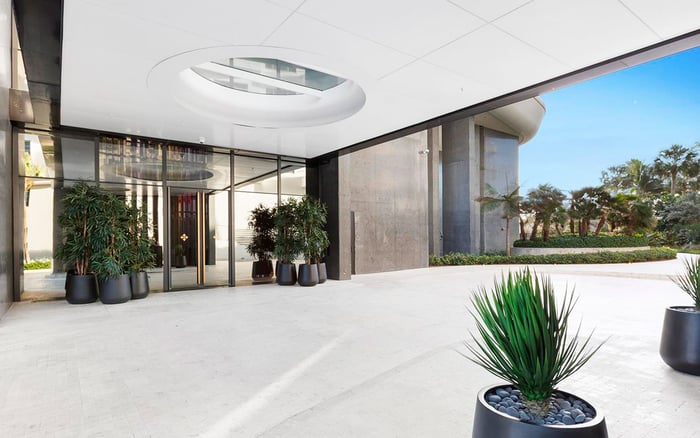
A discreet relocation plan for Stockholm families pairing a Miami Beach residence with yacht dockage, documented marina permissions, and dependable crew access.

For a Stockholm family moving to Miami Beach, the most elegant waterfront arrangement works quietly in the background. The residence should support family life; the berth should suit the yacht; and the crew should operate within clearly documented permissions. Coordinate these decisions, but do not treat them as a single entitlement.
A residential purchase does not, by itself, establish a right to dock a particular yacht, accommodate overnight crew, or admit contractors after hours. Those rights must be established in the relevant property documents and marina agreement-not assumed from a waterfront address.
Before committing to an arrival date, ask the family’s representative, captain, and property adviser to prepare a shared brief. Include the intended residential move, yacht arrival window, vessel dimensions, overnight occupancy plans, and whether use will be private or involve charter activity. Keep travel and vessel-arrival dates provisional until the receiving arrangements are confirmed.
Beside Government Cut, Miami Beach Marina offers a useful starting point for a South of Fifth search, with approximately 400 slips and a stated capacity for yachts up to 250 feet. Facilities include diesel, Rec-90 non-ethanol fuel, a ship’s store, and a dive shop. None of these details guarantees a suitable berth on the family’s chosen dates.
When considering Apogee South Beach, evaluate the residence and marina as separate commitments. Ask the captain to confirm that the proposed berth and approach suit the vessel’s length, beam, and draft. The marina’s headline maximum length is not enough.
Farther along Collins Avenue, KDM Marina is at 5225 Collins Avenue, while Carriage House Marina is at 5401 Collins Avenue on Millionaire’s Row. These are options to investigate, not interchangeable substitutes with established availability or identical operating terms.
For a family considering 57 Ocean Miami Beach, test the actual residence-to-dock journey during a viewing visit. Practical transfers deserve as much attention as the water view.
Treat “marina access” as an invitation to examine documents, not a complete description of a right. Ask whether the proposed arrangement is a separate dockage agreement, a permission linked to ownership, or another form of occupancy. Have counsel identify the contracting party and explain exactly what survives a sale, lease, or change of vessel.
Request written answers on the assigned berth, permitted vessel dimensions, agreement term, renewal, cancellation, insurance, and any relocation provisions. Ask whether a slip can be transferred or assigned; do not assume it accompanies the residence. Obtain a complete quotation rather than building the relocation budget around an advertised or informal rate.
Apply the same discipline when evaluating The Perigon Miami Beach: assess the home on its residential merits and verify any proposed dockage independently. Inclusion in a waterfront property search does not establish a berth entitlement.
Before signing, reconcile the property documents, marina agreement, and captain’s operating requirements. Put any verbal assurance into a written term before the family relies on it.
Distinguish occasional overnight stays from routine crew accommodation and use of the yacht as a primary residence. Describe the intended pattern accurately to the marina and ask which permissions apply. Permission to berth is not sufficient evidence of permission to live aboard.
In 2016, Miami Beach took enforcement action against anchored residential vessels outside permitted locations. That history makes informal long-term anchorage an unreliable relocation fallback, but it does not establish today’s occupancy thresholds. Confirm current requirements for the exact location and intended use.
Keep municipal boundaries explicit. City of Miami Code §50-8 prohibits liveaboard vessels and floating structures from anchoring or mooring in city waters except in marinas, licensed marine facilities, or designated mooring fields. This is City of Miami law, not Miami Beach law, and the exceptions do not establish permission at every marina.
If overnight occupancy remains unresolved, plan accommodation ashore rather than making the yacht the family’s temporary home by default.
Ask the selected marina to confirm who may board, which credentials are required, and how access works outside office hours. Distinguish the captain and permanent crew from relief crew, guests, technicians, and provisioning teams. Security amenities alone do not establish the pass system or authorize overnight crew accommodation.
KDM Marina’s business hours are 9 a.m. to 6 p.m. daily. Treat these as coordination hours, not confirmed dock-access hours. Before scheduling a late arrival, obtain an explicit access procedure and an appropriate contact for problems.
Under Miami Beach Ordinance 2025-4730, “all other commercial vessel activity” is prohibited at public marinas and public marine facilities from 9 p.m. to 7 a.m. That qualification matters: this is not a blanket nighttime boating ban or a universal restriction on crew access. Ask the marina and counsel how the provision applies to the planned activity.
The captain’s arrival file should record authorized names, access instructions, delivery arrangements, and emergency contacts. Assign responsibilities before departure.
Dinner Key Marina in the City of Miami welcomes liveaboards. This makes it a potential alternative outside Miami Beach, not a guarantee of berth availability or approval for a particular vessel and occupancy plan.
If crew accommodation aboard is a deciding factor, compare that option before settling the residential search. A family considering Four Seasons Residences Coconut Grove can evaluate a Coconut Grove home-and-marina arrangement on its own terms, without assuming any connection between the residence and Dinner Key dockage.
The choice is not simply between buildings. It is between daily routines, marina agreements, and municipal settings. Keep Miami, Miami Beach, and North Miami Beach distinct throughout the decision.
Before finalizing the Stockholm departure plan, assemble written berth acceptance, signed dockage terms, occupancy confirmation, crew-access instructions, and the residential handover schedule. Ask the captain to resolve any discrepancy between the vessel details and the marina’s acceptance.
Agree on a contingency if the yacht arrives before the home is ready or the preferred berth is unavailable. The objective is not simultaneous arrival at any cost. It is a family move in which the residence, yacht, and crew can each function from day one.
For a residence search shaped around your family’s waterfront priorities, connect with MILLION.
If branded residences are on your mind — as a home or as an allocation — we would be glad to share what we are seeing, privately.
Begin a quiet conversationDo not assume it does. Verify any dockage entitlement in the property documents and marina agreement, including whether it transfers with ownership.
Miami Beach Marina is listed as accommodating yachts up to 250 feet and having approximately 400 slips. Confirm vessel-specific suitability and availability directly before committing.
Listed facilities include diesel, Rec-90 non-ethanol fuel, a ship’s store, and a dive shop. Confirm the services needed for your arrival with the marina.
KDM Marina lists 5225 Collins Avenue, and Carriage House Marina is identified at 5401 Collins Avenue. Verify berth suitability, availability, and operating terms separately.
No dock-access schedule is established by its published 9 a.m. to 6 p.m. daily business hours. Obtain written instructions for crew access outside those hours.
The cited ordinance does not establish a blanket crew-access ban. Its 9 p.m. to 7 a.m. restriction concerns “all other commercial vessel activity” at public marinas and public marine facilities.
Informal long-term anchorage is an unreliable fallback given Miami Beach’s historical enforcement against anchored residential vessels outside permitted locations. Confirm current rules and arrange accommodation ashore if occupancy permission is unresolved.
Dinner Key Marina in the City of Miami explicitly welcomes liveaboards. That does not guarantee a berth or approval for a particular yacht and occupancy arrangement.
No, it is a City of Miami provision. Evaluate the requirements of the municipality governing the actual berth or anchorage.
Secure written berth acceptance, dockage terms, overnight occupancy permission, and crew-access instructions alongside the residential handover schedule. Agree on a contingency if either the home or berth is not ready.