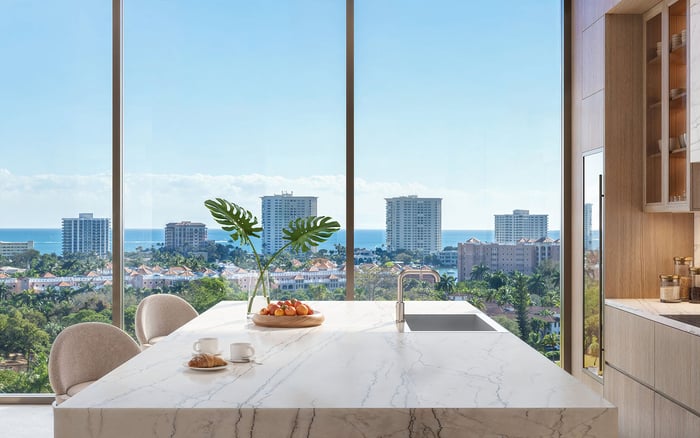
A buyer-focused framework for deciding whether Glass House Boca Raton can evolve from a seasonal retreat into a private, dependable full-time residence.

The transition from occasional owner to full-time resident changes the standard by which a condominium should be judged. A seasonal property can succeed on atmosphere, convenience, and a compelling sense of arrival. A primary residence must also perform on an ordinary Tuesday, during a crowded holiday week, through a weather disruption, and as household needs evolve.
That distinction is central to evaluating Glass House Boca Raton. For a second-home owner considering permanent residency, the decisive questions extend beyond aesthetics and amenities to privacy, operational dependability, governance, storage, work, entertaining, and the mechanics of daily life.
The objective is not to predict every future circumstance. It is to determine whether the residence, building operations, and community framework can comfortably support an owner through changing routines and life stages.
Privacy experienced during a short stay may differ from privacy under continuous occupancy. Buyers should listen for noise from neighboring residences, corridors, elevators, amenities, and exterior activity. The relevant test is not whether a home feels peaceful during a scheduled viewing, but whether its position and construction are likely to preserve calm throughout mornings, evenings, weekends, and high-occupancy periods.
Circulation deserves equal attention. Trace the complete sequence from vehicle arrival to the residence. Then examine how guests, deliveries, vendors, household staff, and building personnel move through the property. Parking access, visitor authorization, package handling, elevator use, and service routes can either reinforce discretion or create repeated points of contact.
Ask for clear explanations rather than broad assurances. Who can access residential floors? How are unexpected guests handled? Where do food deliveries wait? What happens when multiple vendors arrive simultaneously? A credible privacy assessment follows people and objects through the building, step by step.
A polished amenity program does not, by itself, establish reliable service. Full-time owners should examine staffing levels, operating hours, response expectations, escalation procedures, and after-hours coverage. Concierge reliability becomes materially more important when the condominium is an everyday base rather than an intermittently used retreat.
Buyers should ask who handles a late-night access issue, delivery problem, urgent maintenance request, or elevator interruption. They should also understand how management intends to maintain continuity during storms, disruptions, and periods of high occupancy. The strongest answers define responsibility, communication, and backup procedures with precision.
This operational review can be sharpened by comparing other Boca Raton residential options. Alina Residences Boca Raton, The Residences at Mandarin Oriental Boca Raton, and Mr. C Residences Boca Raton can serve as useful reference points as buyers define their expectations. The purpose is not to assume equivalence, but to clarify which service model is most compatible with permanent occupancy.
A primary home must accommodate the unglamorous volume of real life. Review storage for clothing across seasons, luggage, sports equipment, household supplies, and personal archives. Consider whether the kitchen, utility areas, closets, and secondary spaces remain functional after extended occupancy rather than simply appearing generous when sparsely furnished.
Work patterns require similar scrutiny. Identify where private calls can occur, whether two people can work simultaneously, and how professional activity affects household circulation. If entertaining is important, test the route from the entry to the living areas, the separation between public and private rooms, and the practical movement of catering or household support.
Apply the same exercise to changing needs. A room used as an office today may later need to accommodate guests or care. Household staffing may expand or contract. Owners should assess whether the plan offers sufficient flexibility without forcing daily compromises. Long-term fit is often revealed through adjacencies, doors, storage, acoustics, and circulation rather than a dramatic first impression.
Condominium governance shapes what residents may do, how consistently standards are maintained, and how shared expenses are planned. Buyers should review the offering documents, proposed budget, management plan, rules, insurance information, and purchase contract with qualified legal, financial, and insurance advisers.
Questions should cover guest procedures, renovations, deliveries, pets if relevant, household employees, leasing, amenity access, and enforcement. Owners also need to understand how operating standards may be sustained over time and how decisions affecting service or privacy are made.
This is where lifestyle expectations meet institutional reality. An elegant residence can be personally suitable yet governed in ways that do not align with an owner’s routines. Conversely, clear rules and disciplined operations can protect quiet enjoyment and consistency. The goal is not to find the fewest rules, but a framework that matches how the buyer intends to live.
The neighborhood assessment should extend beyond leisure. A prospective full-time resident should test weekday traffic, healthcare access, local services, errands, appointments, and regular social commitments. Routes that feel effortless during a weekend visit may operate differently during the working week.
Create a realistic schedule and run it from the property. Include morning departures, evening returns, grocery needs, medical visits, airport trips, dining, exercise, and visits from family or service providers. The exercise should reflect the buyer’s actual habits, not an idealized vacation itinerary.
For Glass House Boca Raton, the ultimate question is whether location, residence, privacy, service, and governance work together as a dependable whole. Views and amenities remain important, but permanent residency elevates consistency. The property must feel composed not only when everything is quiet, but also when the household and building are fully active.
A disciplined decision separates what is visible from what must be verified. Finishes, spatial character, and immediate atmosphere can be experienced directly. Staffing, after-hours procedures, budgets, rules, insurance, and management continuity require documentary review and specific answers.
Buyers should convert priorities into written questions, assign each answer to a document or responsible party, and identify unresolved assumptions before committing. Privacy should be traced through acoustics and circulation. Service should be tested through scenarios. Residential fit should be measured against actual possessions, work habits, entertaining patterns, and future needs.
The best outcome is not simply a condominium that works today. It is a home capable of remaining comfortable, discreet, and operationally dependable as ownership shifts from seasonal enjoyment to year-round life.
Why does full-time occupancy change the evaluation of Glass House Boca Raton? Everyday residency places greater weight on noise, circulation, service reliability, storage, governance, and practical routines.
What should buyers examine first when assessing privacy? Review sound exposure from neighbors, corridors, elevators, amenities, and outside activity, then trace the circulation of guests, deliveries, staff, and residents.
How can a buyer evaluate concierge reliability? Ask about staffing levels, operating hours, response expectations, escalation routes, and after-hours procedures.
What operational questions matter during disruptions? Request details on communication, backup responsibilities, access, staffing continuity, and response procedures during storms or other interruptions.
Which documents deserve close review? Examine the offering documents, proposed budget, management plan, community rules, insurance information, and purchase contract with appropriate advisers.
How should buyers test a residence for remote or daily work? Confirm that private calls, focused work, household movement, and simultaneous work by more than one resident can occur comfortably.
Why is storage central to long-term fit? Extended occupancy introduces clothing, luggage, equipment, supplies, and personal belongings that may be less apparent during seasonal use.
How should entertaining influence the floor-plan review? Consider guest arrival, separation of private rooms, kitchen access, catering movement, acoustics, and cleanup logistics.
What neighborhood routines should a full-time buyer test? Drive weekday routes for healthcare, errands, appointments, dining, airports, and regular social commitments at realistic times.
What is the central purchase question? Decide whether the home can remain comfortable, private, and operationally dependable through changing routines and life stages.
If you'd like a private walkthrough and a curated shortlist, connect with MILLION.
If branded residences are on your mind — as a home or as an allocation — we would be glad to share what we are seeing, privately.
Begin a quiet conversation