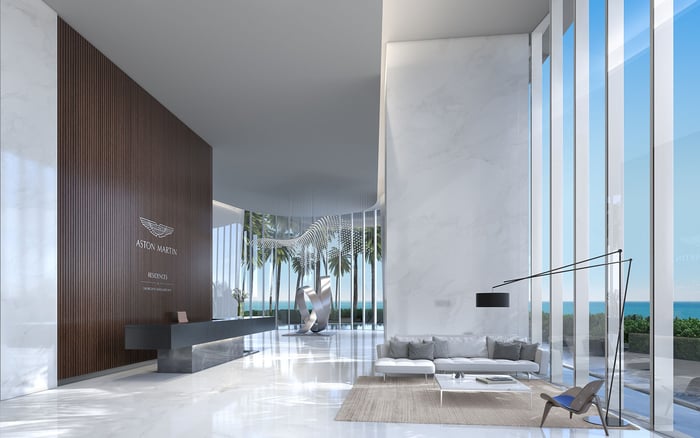
A discreet buyer’s framework for evaluating Aston Martin Residences Downtown Miami as a primary home, with attention to privacy, daily service, association governance, and year-round suitability.

A second home can work well for occasional stays while leaving operational questions unanswered. A primary residence receives a more demanding test because access, deliveries, maintenance, household staff, and association decisions become part of everyday life.
A buyer considering Aston Martin Residences Downtown Miami should therefore look beyond the initial presentation. The central question is whether the specific residence and the building’s current procedures support the owner’s routines, privacy expectations, and long-term plans.
Privacy should be evaluated as a complete route rather than a single feature. Ask management to explain the path from vehicle arrival to the residence for owners, guests, household staff, contractors, deliveries, and valet personnel.
Confirm which entrances, elevators, corridors, parking areas, and service routes apply to the residence under consideration. Request the current condominium rules and written procedures for guest authorization, vendor access, package handling, food delivery, and after-hours entry.
Digital access also deserves careful review. Ask what information access systems collect, who may review it, how it is protected, and what procedure applies when an owner reports a concern. Written answers can help distinguish general impressions from residence-specific operations.
For a full-time resident, service is part of the home’s operating framework. Concierge coverage, maintenance response, package handling, and coordination with household staff can influence the ease and discretion of daily life.
Test ordinary scenarios before making a decision. Ask how a time-sensitive delivery is handled, how recurring vendors are authorized, and whom an owner contacts when an access system, elevator, or in-residence component requires attention outside standard hours.
Buyers should also clarify how requests are recorded, escalated, and closed. Predictable procedures matter more than broad service language when the residence will be occupied throughout the year.
Association due diligence is essential for a primary residence. With appropriate legal, financial, and technical advisers, review the declaration, current rules, budgets, reserves, financial statements, insurance materials, meeting minutes, engineering documents, maintenance plans, and available warranty information.
Ask whether there are pending claims, disputes, planned repairs, or proposed assessments, and verify the current status through appropriate professional review. The purpose is not to assume a problem exists, but to understand whether any known issue could affect cost, access, noise, common areas, or daily operations.
Responsibility should also be clear. Determine how the governing documents allocate repair obligations, legal expenses, insurance responsibilities, and costs associated with common elements or residence-specific components.
A Downtown Miami comparison may include Waldorf Astoria Residences Downtown Miami, while a broader urban search may include The Residences at 1428 Brickell. The useful comparison is how each candidate addresses circulation, staffing, deliveries, maintenance, governance, and owner privacy.
Tour at different times when possible and follow the routes a resident would use. Observe vehicle arrival, lobby activity, elevator transitions, and package procedures. Request relevant documents before allowing finishes or views to dominate the decision.
Long-term suitability depends on the specific residence, the governing documents, and current building operations. A buyer should consider whether arrival feels discreet, staff and vendors can work without disrupting private circulation, maintenance procedures are dependable, and association obligations are clearly understood.
For someone converting an occasional South Florida address into a full-time home, repeated daily experience is the most meaningful measure of fit.
What changes when a second home becomes a primary residence? Access, deliveries, service, maintenance, staffing, and governance become recurring parts of daily life.
How should a buyer evaluate privacy? Trace the complete route used by owners, guests, staff, vendors, deliveries, and valet personnel for the specific residence.
Which access procedures should be requested in writing? Request current rules for guest authorization, vendor entry, household staff, deliveries, packages, valet service, and after-hours access.
What should buyers ask about digital access systems? Ask what information is collected, who may review it, how it is protected, and how reported concerns are handled.
Why does service consistency matter to a full-time owner? Routine requests, urgent deliveries, visitors, and maintenance needs depend on predictable procedures throughout the year.
Which association records deserve close review? Review governing documents, budgets, reserves, financial statements, insurance materials, meeting minutes, and relevant engineering records.
How should pending claims or disputes be assessed? Verify their current status with appropriate advisers and consider any possible effect on cost, access, repairs, or operations.
What should buyers ask about maintenance response? Ask how requests are documented, escalated, assigned, and closed, including issues reported outside standard hours.
How should competing Downtown Miami residences be compared? Compare residence-specific circulation, staffing, delivery procedures, governance, maintenance, and privacy rather than presentation alone.
What is the clearest test of long-term fit? Decide whether the residence and its operating procedures can support the owner’s normal routines discreetly and consistently.
For a discreet conversation and a curated building-by-building shortlist, connect with MILLION.
If branded residences are on your mind — as a home or as an allocation — we would be glad to share what we are seeing, privately.
Begin a quiet conversation