For seasonal owners combining Wellington’s equestrian calendar with time aboard, the most useful property questions concern confirmed berth access, crew arrangements, provisioning and dependable ground transport, rather than water views alone.

For a seasonal owner balancing Wellington’s equestrian calendar with time aboard a yacht, the most consequential luxury may be a seamless transition: from residence to showgrounds, from an evening competition to dinner, and from a morning departure to a vessel ready for guests. That ease belongs in the property brief, not among the operational details left until after purchase.
Build the seasonal calendar from the household’s confirmed equestrian commitments rather than an assumed high-season window. Include the time needed for riders, trainers, family members and guests, not just competition days. Verify event dates for the intended season before committing to accommodation or yacht arrangements.
For households combining equestrian and yachting interests, the planning implication is straightforward: align the residence, berth, crew and ground transport with confirmed dates. This does not establish that equestrian attendance is driving marina demand. It does make a case for assessing how well a prospective home supports the season its buyer intends to live.
Before comparing residences, divide the household’s calendar into three categories: fixed competition commitments, flexible leisure days and arrival or departure days. Treat any evening competition the household plans to attend as a fixed engagement around which to arrange a yacht outing-not the reverse.
Then decide which location will serve as the household’s anchor. A show-centered stay and a coastal stay with selected competition visits require different transport arrangements. Neither should rest on an assumed marina-to-Wellington travel time. Test the actual routes at the hours the household expects to use them, including evening returns.
For a buyer considering Alba West Palm Beach, the useful question is not simply whether the residence works as a winter address. It is whether the proposed home, independently confirmed berth and show schedule support a workable daily routine. Evaluate the project as a residential option, not as evidence of docking rights or yacht services.
A coastal address does not settle the vessel’s arrangements. Before committing to a seasonal plan, ask the marina to confirm compatibility with the yacht’s dimensions and draft, intended dates, utility requirements and any operational restrictions. Obtain the applicable terms in writing, including cancellation, extension and vessel-movement provisions.
Boat-slip arrangements should remain a separate line item in the acquisition or rental review. If access is described as part of a residential offering, establish exactly what is included, who controls allocation and whether any right transfers with the residence. A general amenity description is no substitute for vessel-specific confirmation.
The distinction also matters when a yacht arrives before its owner. Identify who can accept the vessel, coordinate access and respond if the intended berth changes. The captain or yacht manager should have a named marina contact and a clear decision process. A confirmed apartment and an anticipated slip do not yet constitute a complete seasonal plan.
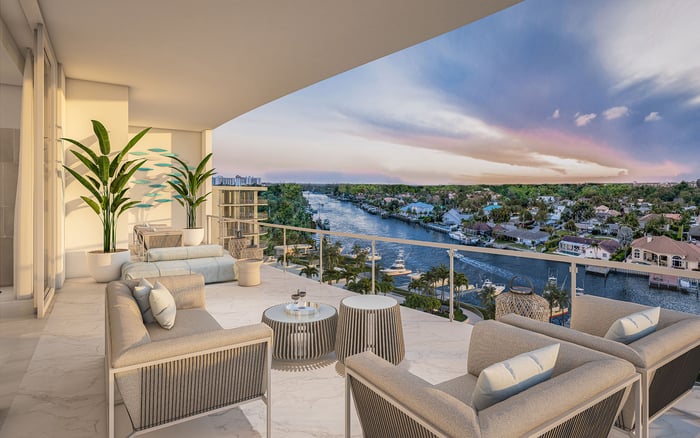
Evaluate the visual pleasure of a coastal home separately from the practical requirements of keeping a yacht ready. A residence can satisfy the first brief beautifully without resolving the second. Ask where guests will board, where supplies will be received and how luggage will move between home, vehicle and vessel.
When reviewing Forté on Flagler West Palm Beach, apply the same discipline to the residence: confirm delivery procedures, contractor access, guest arrivals and any relevant parking arrangements directly. These are due-diligence questions, not assumptions about the project’s services.
Map the complete journey, not just the distance between addresses. A useful rehearsal includes leaving the residence, reaching the boarding point and returning after an equestrian evening. Allow a practical margin rather than scheduling every movement around the shortest possible journey. That margin is a household decision informed by actual conditions, not a universal travel-time promise.
An extended season requires clarity about who is responsible when the owner is elsewhere. Define the captain’s remit, maintenance authorization limits, guest-readiness expectations and the process for approving changes. Distinguish yacht duties from household errands and equestrian support so that an apparently simple request does not leave an essential task unattended.
If crew require accommodation ashore, confirm it separately from the owner’s residence. Check the specific options, dates and occupancy terms relevant to the crew’s assignment rather than assuming that suitable lodging will be available near either the showgrounds or the marina.
If relying on South Florida yacht management, maintenance or delivery providers, confirm their capacity for the particular weeks required. Agree on scope and timing before relying on outside support. The operating plan should also identify a backup contact, transport arrangements and the person authorized to respond when the owner is occupied at competition.
Provisioning should follow the yacht’s intended use, not simply the owner’s arrival date. Begin with confirmed guest numbers, meal plans, dietary requirements and expected time aboard. Separate durable supplies from perishables, and identify who will receive, inspect and stow each delivery.
Fueling, engine checks, navigation-system checks and provisioning belong in a coordinated pre-departure readiness review. Groceries alone do not make a yacht ready to leave. Ask the captain to set deadlines for guest requests and a clear confirmation point before the household leaves for the dock.
Align deliveries with both residential and marina procedures. If an outing changes because a competition commitment takes priority, specify who adjusts the orders and informs the crew. A modest amount of advance planning preserves flexibility without assuming that suppliers, drivers or marina personnel can accommodate every last-minute change.
For a buyer assessing Mr. C Residences West Palm Beach, this operational perspective complements the usual residential considerations. Assess the proposed home against the household’s actual pattern of show attendance, guest stays and yacht departures, while independently verifying building policies, berth access and service arrangements.
Before finalizing the season, consolidate the calendar, transport plan, crew responsibilities and provisioning schedule in one shared document. Assign responsibility for each decision and distinguish confirmed arrangements from preferences. That distinction can reveal an unresolved berth or staffing question before it disrupts a carefully planned stay.
The strongest seasonal choice is not necessarily the address that promises the most. It is the one whose verified arrangements allow equestrian commitments and time on the water to coexist with the least unnecessary friction.
Explore South Florida residences suited to your seasonal priorities with MILLION.
If branded residences are on your mind — as a home or as an allocation — we would be glad to share what we are seeing, privately.
Begin a quiet conversationStart with confirmed competition commitments and the household’s arrival and departure needs. Verify event dates for the intended season before committing to accommodation or yacht arrangements.
Choose the household’s anchor location according to its actual pattern of show attendance and yacht use. Test the relevant routes before deciding which residence best supports that routine.
Treat planned evening attendance as a fixed commitment when arranging yacht departures, dinners and return transport. Allow a practical margin rather than relying on the shortest possible journey.
A marina-demand increase attributable to equestrian owners is not established here. Coordinating horse and yacht commitments is a practical planning recommendation, not a measured market trend.
A coastal address should not be treated as confirmation of docking rights. Verify any berth entitlement, allocation process and vessel compatibility independently.
Confirm vessel compatibility, dates, utilities, restrictions and written terms. Clarify cancellation, extension and arrival procedures before relying on the arrangement.
Test the actual routes at the intended travel hours, including evening returns. Assess the complete journey and allow a practical margin rather than relying on an assumed transfer time.
Yes, if crew need lodging ashore, verify their accommodation, dates and occupancy terms separately. Do not assume the owner’s residence can accommodate them.
Include fueling, engine checks, navigation-system checks and provisioning. Confirm who is responsible for each task before guests leave for the dock.
Base orders on confirmed departures, guest counts and meal plans, with a named person responsible for receiving supplies. Establish who changes deliveries if the equestrian schedule takes priority.