A carefully sequenced move from Paris to Bal Harbour brings tax residency, retained French accounts, U.S. banking and property documentation into alignment without confusing their separate requirements.
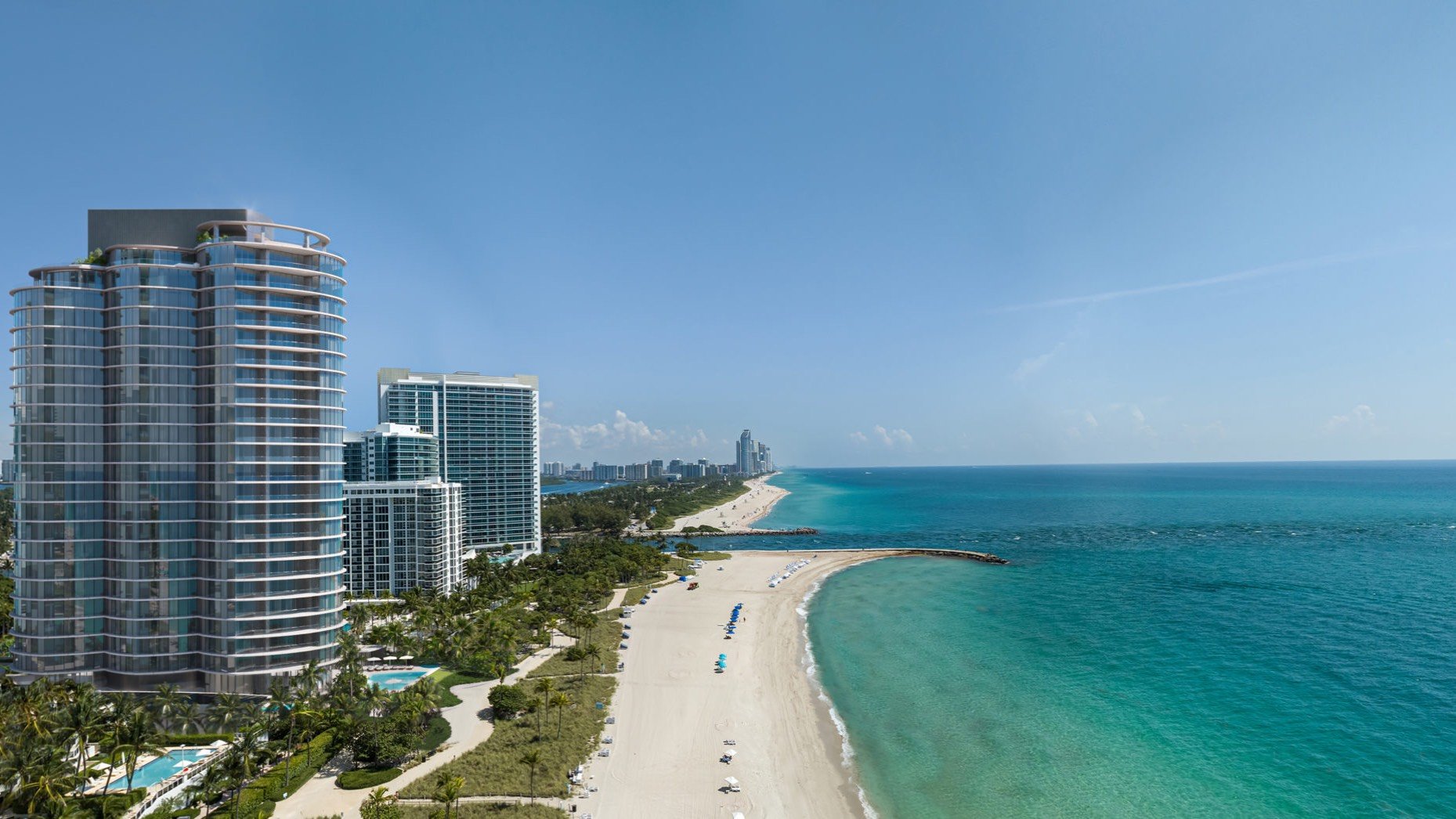
For a Paris family preparing a home in Bal Harbour, the most valuable planning decision may be the sequence of the paperwork. A residence search, cross-border tax review and banking relationship can progress together, but none should be treated as interchangeable evidence of a completed relocation. Buying a home is not a substitute for determining tax residency.
Whether the search centers on Rivage Bal Harbour or another address, begin with a review of each family member’s position. Ask French and U.S. tax advisers to agree on the relevant facts, unresolved questions and filing responsibilities before carrying those conclusions into bank forms or closing instructions.
The U.S.-France income tax treaty provides a framework for allocating taxing rights. When an individual is resident in both countries under domestic law, its tie-breakers consider permanent home, center of vital interests, habitual abode and nationality. A Florida address alone does not resolve that analysis, and a treaty position should not be treated as eliminating all U.S. filing obligations.
Create a shared planning calendar, with one adviser consolidating questions and another confirming the corresponding treatment across the Atlantic. Record the facts advisers need to evaluate, including the move’s timing, homes retained and continuing personal and financial connections. These are planning materials, not a universal statutory checklist.
French tax nonresidency is not automatic upon moving. For a spouse or civil partner who becomes nonresident, the filing in the year after departure goes to the tax office responsible for the former main residence. Confirm how that instruction applies to the household rather than assuming every member has the same position.
The useful deliverable is a written summary that distinguishes residency conclusions, return responsibilities and outstanding documentation. Keep it separate from property preferences so that a change in the home search does not obscure the tax work still required.
Retained French banking and brokerage relationships warrant a separate review. Once a family member becomes a U.S. person, those accounts can fall within foreign-account reporting requirements. Include both financial interests and signature authority in the discussion; reviewing only accounts held in an individual’s name can leave important questions unasked.
U.S. persons generally must file an FBAR when the aggregate value of relevant foreign financial accounts exceeds $10,000 at any time during the calendar year. This is an aggregate threshold, not a separate $10,000 allowance for each account.
FBAR uses FinCEN Form 114. Its annual deadline is April 15, with an automatic extension to October 15. Filing is electronic through the BSA E-Filing System, not with the federal income tax return. Form 8938 does not replace FBAR; the two obligations require separate assessment.
French institutions may also request additional documentation or self-certification when U.S. indicia appear, including a U.S. birthplace, address or telephone number. Valid government-issued identification and tax-residency documentation are recognized forms of documentary evidence for French FATCA purposes. Coordinate truthful, timely account updates with advisers, keeping the bank’s documentation process distinct from personal filing duties.
Do not build the purchase schedule around an assumed account-opening outcome. Ask the selected U.S. institution to confirm its requirements directly: which identity and tax documents it will accept, whether an in-person appointment is needed and how much time to allow before closing funds are required. Obtain transaction-specific answers rather than relying on another family’s experience.
For a purchase under consideration at Oceana Bal Harbour, the practical objective is to align the bank’s confirmed process with closing counsel’s timetable. This is a coordination recommendation, not a statement about a particular bank’s eligibility rules, remote-opening policies or transfer limits.
If an Individual Taxpayer Identification Number is appropriate, Form W-7 is the application. Assistance is available through authorized Certifying Acceptance Agents and Taxpayer Assistance Centers. An ITIN is not automatically required for every relocating family member, nor does obtaining one guarantee eligibility for a bank account.
A discreet relocation benefits from a single document index, not a single packet sent everywhere. Identify each requested item’s purpose, recipient and status. Keep identity evidence and tax-residency documentation organized, and ask each recipient to confirm its own acceptance criteria.
Maintain separate files for tax advice and filings, French-bank self-certification, U.S.-bank onboarding, property closing and municipal residency. A document accepted in one setting is not automatically sufficient in another. Reconcile names and addresses across drafts while preserving legitimate differences between a former residence, current residence and mailing address.
If the search extends to The Delmore Surfside, keep Surfside and Bal Harbour municipal paperwork distinct. A broader property search should not produce a blended residency checklist.
The property file has its own documentary and tax considerations. Florida recording rules generally require the printed names and post-office addresses of people executing instruments affecting real property. Review signature blocks and address information with closing counsel before execution; do not leave corrections as a final administrative detail.
Miami-Dade deed documentary stamp tax is $0.60 per $100 of consideration or fractional part. An additional $0.45 per $100 surtax applies to transfers other than a single-family residence. Have closing counsel confirm the transaction’s classification rather than applying a combined rate indiscriminately.
Mortgage documentary stamp tax is $0.35 per $100, and mortgage intangible tax is $2 per $1,000. Ask counsel to identify which charges apply to the proposed transaction and reconcile them with the closing figures. These rates are specific tax components, not a complete estimate of acquisition costs.
The All Access Card application requires valid photo identification and accepted proof of residency dated within the preceding three months. Accepted evidence includes utility bills, property tax statements, mortgage statements, signed leases, vehicle registrations and insurance bills. A utility account is not the only documentary route.
Keep that checklist separate from bank onboarding and closing. If work is contemplated at the residence, Bal Harbour maintains an online permit-services portal; direct permit inquiries to [email protected] or 305-866-4633. Confirm the relevant requirements before scheduling work.
The sequence is straightforward: establish each person’s tax position, review retained accounts, confirm banking arrangements, reconcile closing documents and complete local residency paperwork. Use this framework with qualified cross-border tax advisers, the selected bank and closing counsel to resolve the family’s specific circumstances.
For a considered approach to your Bal Harbour property search, connect with MILLION.
If branded residences are on your mind — as a home or as an allocation — we would be glad to share what we are seeing, privately.
Begin a quiet conversationNo. French tax nonresidency requires an assessment of the individual’s circumstances rather than an assumption based on the move or property purchase.
The treaty tie-breakers consider permanent home, center of vital interests, habitual abode and nationality. A treaty position should not be assumed to eliminate all U.S. filing obligations.
In the year after departure, a spouse or civil partner who becomes nonresident files with the tax office responsible for the former main residence. Confirm its application to the household with an adviser.
U.S. persons generally must file when relevant foreign accounts exceed $10,000 in aggregate at any time during the calendar year. Both financial interests and signature authority can be relevant.
FBAR uses FinCEN Form 114 and is filed electronically through the BSA E-Filing System, separately from the federal income tax return. The annual deadline is April 15, with an automatic extension to October 15.
No. Form 8938 and FBAR obligations must be assessed separately.
U.S. indicia, such as a U.S. address, telephone number or birthplace, can trigger additional documentation and self-certification procedures under FATCA.
An ITIN is not automatically required for every family member and does not guarantee bank-account eligibility. Confirm tax-identification needs with advisers and account-opening requirements with the selected institution.
No. The $0.60-per-$100 deed tax and additional $0.45-per-$100 surtax should not be combined indiscriminately; closing counsel should confirm the transaction’s surtax classification.
No. Accepted alternatives include property tax statements, mortgage statements, signed leases, vehicle registrations and insurance bills; residency evidence must be dated within the preceding three months, alongside valid photo identification.