A discreet operational guide to moving fine art from Manhattan to Hillsboro Beach, covering specialist transport, building approvals, insurance, climate continuity, storage, and installation readiness.

Moving a significant art collection from Manhattan to Hillsboro Beach is not simply a more delicate version of a household move. It is a distinct logistical operation with its own carrier, insurance review, building approvals, access plan, environmental controls, and delivery threshold.
Fragile and high-value works should travel separately from furniture and ordinary possessions. Ask a dedicated fine-art carrier to document its vehicle specifications, environmental controls, monitoring practices, handling procedures, and chain-of-custody process before the itinerary is approved.
Environmental continuity matters through pickup, transit, unloading, staging, and installation. The plan should address what happens whenever a crate leaves a conditioned vehicle, including time spent in a loading area, service corridor, storage facility, or residence awaiting installation.
The safest art move is planned around the collection, not around the furniture truck.
The family office or move coordinator should obtain current written moving instructions directly from the Manhattan building. Confirm required approvals, insurance documentation, freight-elevator availability, permitted operating hours, service-entrance procedures, common-area protection, and crew-access protocols before committing to a pickup date.
Before approving a crate design, record the freight elevator's clear height, width, depth, door opening, and weight capacity. Apply the same scrutiny to apartment doors, corridors, corners, loading areas, service entrances, ramps, and truck access. A work may fit within an elevator car but still fail to clear its doorway or navigate the route leading to it.
Assign each building requirement to a named party and include it in the crew's work order. Written confirmation reduces the risk that the carrier, building staff, art adviser, and family office are working from different assumptions.
Large-format paintings, sculpture, glass, and works unsuitable for standard cartons may require custom crating. Fabrication should begin only after measurements have been verified at both residences, including the Hillsboro Beach unloading point and final installation room.
The collection inventory should identify each work, its dimensions, medium, packing method, crate dimensions, handling orientation, and installation destination. Every oversized piece warrants an individual route plan. If a work cannot clear the destination elevator or corridor, the solution should be settled before pickup rather than improvised upon arrival.
Condition documentation is equally important. Photograph each work before packing and after delivery, retaining relevant appraisals and existing condition reports. Match images consistently to the inventory so that the records remain usable during the move and any insurance review.
At the destination, ask management about gate and lobby access, unloading locations, service-elevator windows, scheduling restrictions, key-fob procedures, common-area protection, and authorization for each crew member. Obtain the current requirements in writing and confirm the reservation before dispatching the truck.
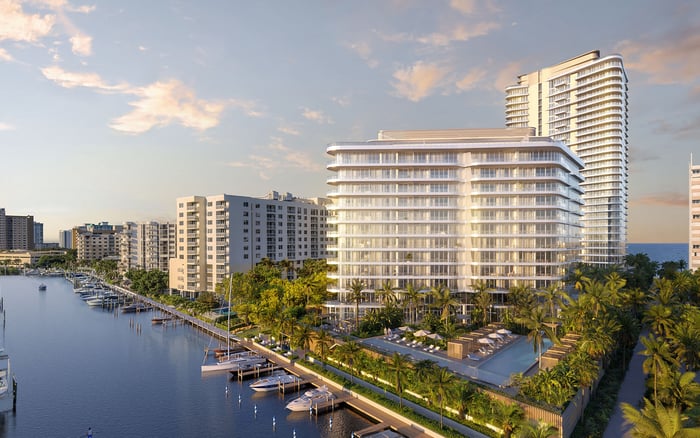
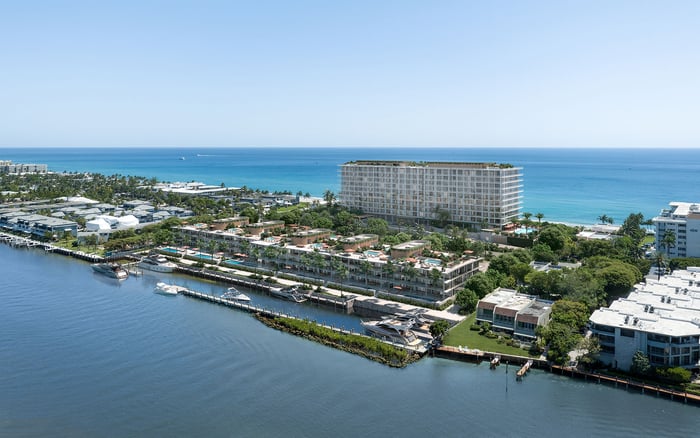
Families considering Rosewood Residences Hillsboro Beach should request the property's current written procedures before committing to a delivery date. The same discipline applies when comparing nearby coastal options such as Armani Casa Residences Pompano Beach and The Ritz-Carlton Residences® Pompano Beach. Requirements should be verified directly for the selected property.
A dedicated art truck may need access approval, an elevator reservation, and insurance documentation separate from the household shipment. If the carriers use different vehicles or crews, confirm that each can provide documents matching the origin and destination buildings' current wording.
Families extending their search along the Broward coast to W Pompano Beach Hotel & Residences or Auberge Beach Residences & Spa Fort Lauderdale should follow the same process: verify moving hours, loading access, elevator dimensions, protection standards, and insurance-document requirements before scheduling either truck.
Standard moving terms should not be assumed to provide the same protection as dedicated fine-art and collectibles insurance. Before release, ask the appropriate insurance adviser to review transit, accidental-damage, theft, valuation, deductible, exclusion, and claim-documentation provisions applicable to the collection.
Provide the insurer with the current inventory, appraisals, condition reports, route, carrier information, storage plan, and anticipated dates as appropriate. Review every transfer between the fine-art vehicle, storage facility, and residence for potential gaps in custody, environmental control, or coverage.
If construction continues, environmental conditions are unsettled, wall finishes are incomplete, access is obstructed, or installers cannot proceed, consider routing the collection to secure, climate-controlled South Florida art storage rather than delivering it to the residence.
Final delivery should occur only after the receiving environment and installation route have been confirmed. Avoid leaving works aboard a vehicle while unresolved access questions are addressed. Temporary storage should also have a documented intake process, condition check, release procedure, and confirmed final-delivery reservation.
For a move scheduled during hurricane season, establish a contingency for delays or temporary inaccessibility. Ask the storage provider and carrier to explain their procedures, then document who has authority to pause, reroute, store, or reschedule the shipment.
Consolidate the collection inventory, appraisals, condition records, oversized-item measurements, crate dimensions, access routes, building rules, elevator confirmations, approved hours, carrier contacts, insurance documents, storage instructions, and contingency decisions into a single move brief.
Circulate only the operational information each participant requires while keeping valuations and sensitive collection details controlled. Give one coordinator authority to resolve timing conflicts among building management, the art carrier, household mover, insurer, storage provider, and installers.
Finally, verify applicable Hillsboro Beach requirements alongside the selected property's procedures. Do not assume that one approval resolves every question concerning access, loading, noise, protection, or scheduling.
For discreet guidance on selecting a South Florida residence suited to a carefully managed collection, connect with MILLION.
If branded residences are on your mind — as a home or as an allocation — we would be glad to share what we are seeing, privately.
Begin a quiet conversationReserve it before finalizing the carrier itinerary. Obtain written confirmation from building management because availability and procedures vary by property.
Fragile and high-value works should generally have a dedicated plan, specialist packing, and an appropriately equipped fine-art carrier.
Review vehicle specifications, environmental controls, monitoring practices, handling procedures, insurance documents, and chain-of-custody protocols.
Custom crating may be appropriate for large-format works, sculpture, glass, and pieces that cannot travel safely in standard cartons.
Confirm elevator dimensions and capacity, then measure relevant doors, corridors, loading areas, ramps, and turns along the complete route.
They may if different trucks or crews are involved. Confirm that each carrier can satisfy the current requirements of both buildings.
Do not assume it offers the same protection as dedicated fine-art insurance. Ask the appropriate insurance adviser to review the applicable terms and potential gaps.
Photograph each work before packing and after delivery, and retain relevant appraisals, inventories, and existing condition reports.
Consider secure climate-controlled art storage until environmental conditions, access routes, finishes, and installation readiness are confirmed.
It should assign decision-making authority and address delays, temporary inaccessibility, storage, rerouting, and rescheduling.