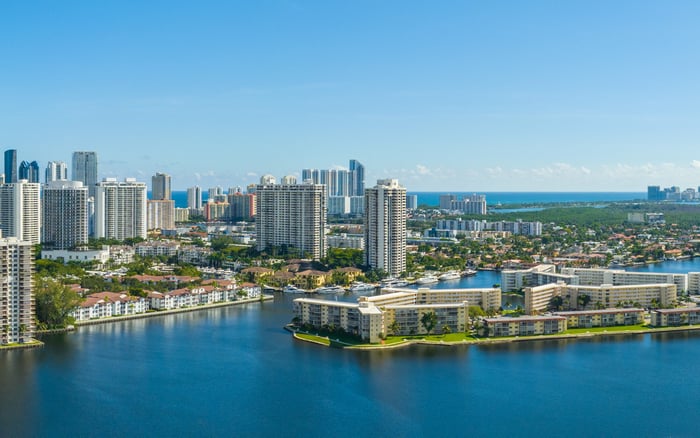
A discreet relocation plan for Doha families coordinating an Aventura residence with documented berth rights, vessel arrival requirements, and lawful, practical crew access.

For a Doha family moving to Aventura, the residence and yacht should be coordinated together, but never treated as a single transaction. A waterfront address does not establish berth rights, and a confirmed berth does not settle vessel entry or crew admission. The goal is a household that functions smoothly ashore and afloat, without burdening the property purchase with assumptions it cannot support.
Organize the move around three parallel workstreams: documented marina rights, vessel customs and registration, and crew immigration and physical access. Appoint one family representative to coordinate them, with the captain, property adviser, and appropriate legal specialists responsible for their respective decisions. Each file should record its own written approvals and unresolved questions.
When considering Avenia Aventura, keep the residential evaluation distinct from the yacht’s berthing plan. This is a planning principle, not a statement about the project’s marina rights or amenities. Any claimed connection requires its own documentary review.
Build a shortlist of marinas serving the family’s proposed Aventura residence, and ask each operator to confirm current availability and vessel suitability. Treat each inquiry as a vessel-specific application, not a general lifestyle conversation.
For a condominium-linked berth, request the condominium declaration, marina rules, and documents defining the proposed right of use. Ask whether the arrangement is ownership, a lease, an assignment, or access subject to a separate agreement. Have counsel determine precisely what, if anything, is conveyed with the residence.
Obtain written answers to practical questions before relying on a berth:
Does the right transfer with a residential sale, and what approvals are needed?
Is there a waiting list, and does any priority attach to the residence?
What insurance requirements, charges, and renewal conditions apply?
What dockmaster services and security arrangements are available?
Can the nominated captain and crew receive independent access credentials?
These are diligence questions, not established policies at any particular facility. Where the home and slip involve separate counterparties, have advisers examine how to coordinate their commitments without assuming either is guaranteed by the other.
Advertised slip length is only the starting point. Give the marina a vessel specification sheet and ask it to confirm usable dimensions against the yacht’s length, beam, and docking layout. Have the captain review depth, maneuvering space, and other vessel-specific requirements directly with the operator. A promising address is no substitute for operational acceptance.
For ocean access, have the captain assess the proposed route, including any fixed-bridge clearances and drawbridge procedures. If considering a route through Baker’s Haulover Inlet, review the entire journey rather than simply the marina’s position on a map. Record any constraints that could affect departures or returns before committing to the berth.
Ask each operator to confirm which storage, lifting, and support services are available and suitable for the yacht. Do not treat an advertised facility or capacity figure as evidence of an available berth.
If the residential search extends to Sunny Isles Beach and Bentley Residences Sunny Isles, evaluate the home-to-berth journey independently. Do not infer dock rights, a marina affiliation, or crew privileges from residential positioning.
Before selecting an arrival date, establish the vessel’s flag, ownership documentation, intended private or commercial use, and arrival method. A yacht transported as cargo and one arriving under its own power each require a separate logistical review. Obtain route proposals, quotations, insurance terms, and timing directly from the relevant transport providers rather than planning around assumed Doha-to-Florida schedules.
Identify the appropriate federal arrival-reporting and clearance contacts before departure. Have the captain and entry adviser confirm current procedures for the vessel and its arrival method, including who will make each notification and when. Ask them to distinguish initial arrival reporting from any subsequent entry requirements.
Florida titling and registration warrant a separate review. Ask qualified advisers whether any visiting-vessel allowance applies to the yacht’s documentation and the family’s relocation circumstances; do not plan around an assumed exemption or deadline.
Have advisers identify the ownership papers, import documentation, and any inspections needed for this vessel. Resolve the documentation requirements before assuming the yacht can move directly from arrival to routine local use.
A Doha address does not determine a crewmember’s nationality or immigration category. Review each person’s passport, intended duties, vessel flag, private versus commercial operation, and arrival method with qualified immigration counsel. Do not apply one answer to the entire crew solely because they serve the same family.
Ask counsel to confirm the appropriate visa or admission pathway, its conditions, and whether the intended duties are permitted for each individual before booking travel. Do not treat possession of a visa as confirmation that all admission and work-related questions are resolved.
Separately, ask the marina to document its credential process. Cover identification, owner authorization, access hours, replacement crew, contractors, and procedures when the family is absent. Clarify whether residential credentials also permit marina entry. These arrangements require confirmation, not assumption: physical access permission does not resolve immigration status.
For families also comparing Rivage Bal Harbour, apply the same discipline: assess the residence on its merits and verify the yacht arrangements independently. Geographic proximity alone should not determine the purchase.
Before committing to interdependent dates, assemble a single readiness file containing the proposed berth agreement, vessel-fit confirmation, route review, arrival instructions, registration advice, and individual crew plans. Keep outstanding approvals visible, with a named person responsible for each. Ask advisers which commitments can proceed independently and which should wait.
The most useful contingency is specific: identify an alternative facility to approach if the preferred berth falls through, without treating it as reserved. Align the family’s expectations with what is documented. Luxury, in this setting, is not merely a water view; it is the confidence that the home, yacht, and people supporting both can operate together.
For a discreet residential search coordinated with your waterfront priorities, connect with MILLION.
If branded residences are on your mind — as a home or as an allocation — we would be glad to share what we are seeing, privately.
Begin a quiet conversationNo berth entitlement should be assumed from a waterfront address. Review the residential documents and any separate marina agreement to establish the actual right of use.
Ask operators serving the proposed residence to confirm availability and suitability for the specific yacht. Evaluate the home-to-berth journey independently of the residential purchase.
Request the condominium declaration, marina rules, and documents defining the berth arrangement. Obtain written clarification of transferability, approvals, insurance requirements, and any waiting list.
No; confirm usable dimensions against the yacht’s length, beam, and docking layout. Have the captain review vessel-specific operational requirements with the operator.
Review the entire proposed route, including any fixed-bridge clearances and drawbridge procedures. Record constraints that could affect departures or returns before committing to a berth.
No; ask the operator to confirm current availability and the yacht’s suitability. Advertised services or capacity do not establish a reservation.
No; have qualified advisers review the yacht’s documentation and the family’s relocation circumstances. Confirm applicable titling, registration, and timing requirements before planning local use.
Ask advisers to identify the ownership papers, import documentation, and any inspections needed for the specific vessel. Resolve those requirements before assuming routine local use can begin.
Do not assume one pathway fits the entire crew. Have qualified immigration counsel review each person’s nationality, intended duties, vessel circumstances, and arrival method.
No; confirm marina credentials separately, including identification, owner authorization, and access hours. Also clarify arrangements for replacement crew and contractors.