A buyer-focused comparison of 619’s planned resident-oriented wellness program and Waldorf Astoria’s hotel-linked spa benefits, with emphasis on co-owner eligibility, appointment capacity, service charges, and outside-practitioner permissions.

For a buyer sharing a Miami residence with family or another owner, a beautiful spa is only the beginning. The more consequential question is whether each intended user can reserve the right service, at the right time, with the right practitioner. An impressive amenity does not necessarily provide the predictable access that makes it useful across several households.
The distinction between 619 Residences and Waldorf Astoria Residences Downtown Miami is principally one of positioning. The former emphasizes a planned resident-oriented wellness and longevity environment in Brickell. The latter offers hotel-linked spa access, personalized programs, and preferred owner rates. Neither project's disclosed wellness details establish superior booking capacity or guaranteed appointments.
Shared ownership here means buyers evaluating use by multiple owners or households. It should not be mistaken for a confirmed fractional-ownership offering: the available details do not establish such a program at either property.
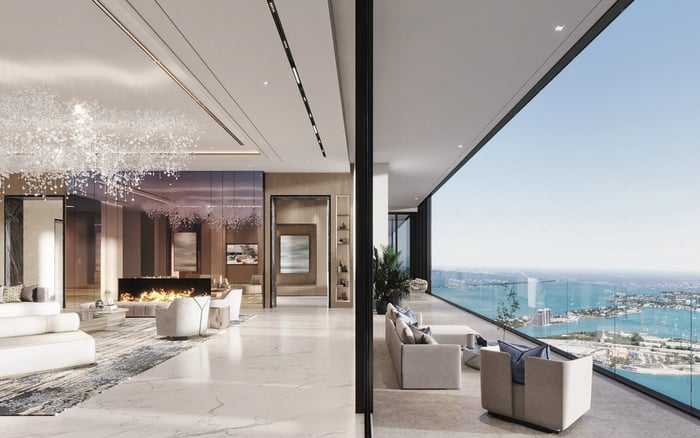
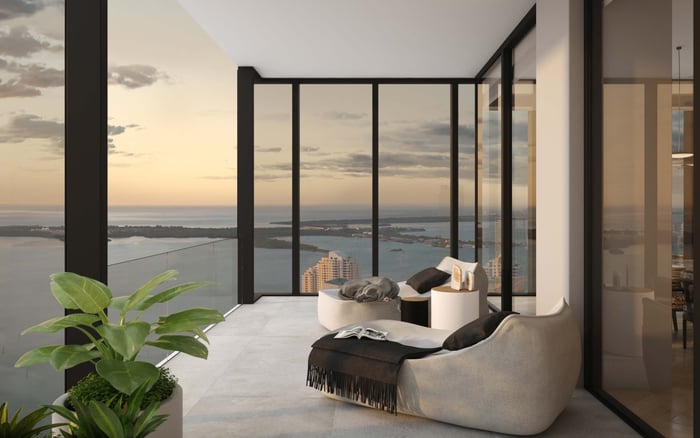
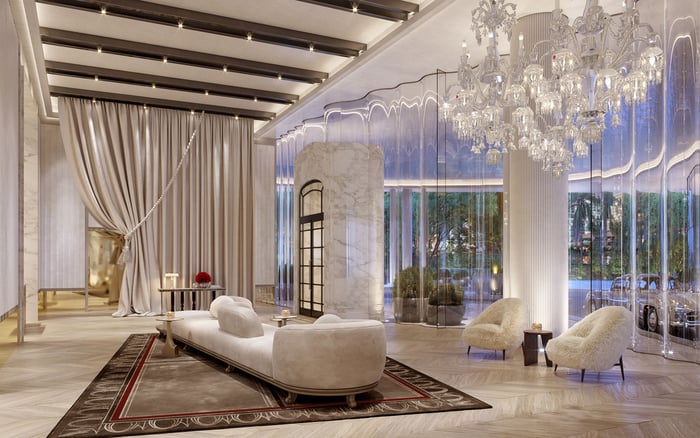
At 619 Residences by Foster + Partners + Nobu Hospitality, the planned offering extends beyond a residential fitness room. Developed by 13th Floor Investments and Key International, with Foster + Partners collaborating with Sieger-Suarez Architects, the project plans a Nobu Spa and Wellness & Longevity Center within a substantial private amenity program.
The approximately 90,000 square feet of private amenities include the spa and wellness retreat. That figure covers the broader amenity program; it is not a measure of treatment capacity. The stated residential count also varies between approximately 300 and 296 residences. Neither figure resolves how many residents might seek appointments simultaneously.
The planned wellness program spans two dedicated floors, with treatment rooms, a hammam, steam and sauna facilities, aromatherapy, and cryo showers planned for the Level 3 spa. Advanced offerings include cryotherapy, hyperbaric therapy, and infrared sauna. These remain planned amenities; their inclusion does not establish final operators, clinical credentials, or opening-day availability.
The Wellness and Longevity Center is designated residents-only. That is a meaningful eligibility distinction, not a reservation guarantee. A wellness concierge is also planned, but the disclosed details do not clearly distinguish included services from separately charged appointments.
At Waldorf Astoria Residences Downtown Miami, the advertised offering includes access to a signature spa and fitness center, wellness lounges, saunas, steam rooms, and treatment rooms. Personalized health, nutrition, and fitness programs are also part of the offering, although practitioner identities, credentials, and consultation inclusions remain unspecified in the disclosed amenity details.
The owner-benefit language matters. Exclusive owner access and benefits include preferred spa and restaurant rates and access to à la carte hotel services. This is a hotel-linked service relationship, not a promise that every wellness treatment is included in ownership.
Nor does exclusive owner-benefit language establish that the spa itself is residents-only. Eligibility for co-owners, household members, overnight guests, and tenants remains a separate question. Buyers should distinguish facility access, discounted services, and appointment priority. These are three different benefits; one does not automatically confer the others.
For both projects, the disclosed details leave treatment-room totals, daily appointment availability, staffing levels, and booking guarantees unresolved. There is no established basis for declaring either property the stronger choice for peak-season reservations.
A useful capacity discussion starts with the expected service schedule: operating hours, treatment duration, turnover time between sessions, and the number of practitioners available at once. Room count alone is insufficient. Several rooms cannot deliver several simultaneous treatments if staffing or equipment limits the schedule.
Request projected resident demand and details of any other eligible user groups, alongside booking windows, resident priority, cancellation rules, waitlist procedures, and simultaneous-user limits. Ask whether recurring appointment blocks are available and whether each co-owner may book independently or must share a residence-level allowance.
A buyer who values a regular weekly treatment should also ask what happens when a practitioner is unavailable. A substitution policy, rescheduling arrangement, or written availability commitment would be more useful to the decision than a broad promise of personalized service. None should be assumed to exist without confirmation.
The practical test is not simply whether owners have access. It is whether the property's definition of an eligible user matches the household's intended use.
At 619, residents-only language for the Wellness and Longevity Center does not expressly settle the status of every co-owner, visiting family member, tenant, or owner's guest. The broader designation of private amenities likewise does not fully define access for hotel visitors or outside club members. At Waldorf, the disclosed owner-benefit language leaves comparable eligibility questions open.
Ask for a written distinction among titled owners, registered residents, household members, overnight guests, and tenants. If ownership will be held through an entity or trust, ask how individual users are registered and whether any limit applies. These are due-diligence questions, not established restrictions at either development.
For shared households, also clarify whether guests must be accompanied, whether treatments require owner sponsorship, and whether guest charges differ from owner rates. The objective is to avoid discovering after purchase that the ownership arrangement and the amenity registration system recognize different people.
An owner may prefer a longstanding physician, therapist, trainer, or nutritionist over a facility's appointed provider. Neither project's disclosed wellness details confirm a right to bring outside practitioners into the facilities.
Ask whether outside providers may enter, which services they may perform, and whether approvals, credentials, insurance, room reservations, or additional fees would be required. Distinguish permission to visit a private residence from permission to use shared treatment rooms or wellness equipment.
At 619, advanced modalities are not proof of medical staffing or unrestricted medical access. At Waldorf, personalized programs do not establish permission to substitute an outside provider. The relevant test is the written practitioner policy, not the breadth of the amenity vocabulary.
For buyers comparing branded residences, the same discipline can extend to a broader shortlist, including The Residences at 1428 Brickell. Apply the same questions rather than assuming another address offers equivalent permissions, inclusions, or capacity.
The decision between 619 and Waldorf should turn on documented fit. 619's planned resident-oriented longevity setting may align with a buyer seeking recovery amenities; Waldorf's hotel-linked benefits may appeal to someone who prefers a service relationship with preferred rates. Neither positioning substitutes for confirmed eligibility, dependable booking arrangements, transparent charges, and practitioner permissions. Details not yet disclosed may still be addressed in operating policies. Request those policies before relying on an assumption about access.
For a discreet assessment of Miami residences against your household's ownership and wellness priorities, connect with MILLION.
If branded residences are on your mind — as a home or as an allocation — we would be glad to share what we are seeing, privately.
Begin a quiet conversationThe supplied details do not establish a fractional-ownership program at either project. Buyers considering multiple owners should confirm the permitted ownership arrangement and each person's amenity eligibility separately.
619 emphasizes a planned resident-oriented spa, longevity, and recovery program. Waldorf advertises hotel-linked spa access, personalized wellness programs, and preferred owner rates.
It is described as residents-only. That designation does not establish guaranteed appointments or fully define access for every co-owner, guest, or tenant.
The reviewed details do not establish that the spa is residents-only. Exclusive owner benefits should not be treated as proof of exclusive facility use.
Neither project's reviewed details disclose enough appointment, treatment-room, or staffing information to establish a capacity advantage. Request operating hours, booking priorities, and any written availability commitments.
619's reviewed details do not specify the full division between included and separately charged services. Waldorf's preferred-rate and à la carte language does not promise that all treatments are included.
Neither project's reviewed details confirm that right. Buyers should request written policies covering outside doctors, therapists, trainers, and nutritionists.
No. An advertised modality does not establish clinical staffing, practitioner credentials, final operators, or opening-day availability.
The reviewed wellness details do not identify practitioners, credentials, or consultation inclusions. Those points should be confirmed before relying on a particular service.
Request written eligibility rules for all intended users, booking and cancellation policies, service charges, and outside-practitioner permissions. Also clarify whether reservations and any usage allowances apply per person or per residence.