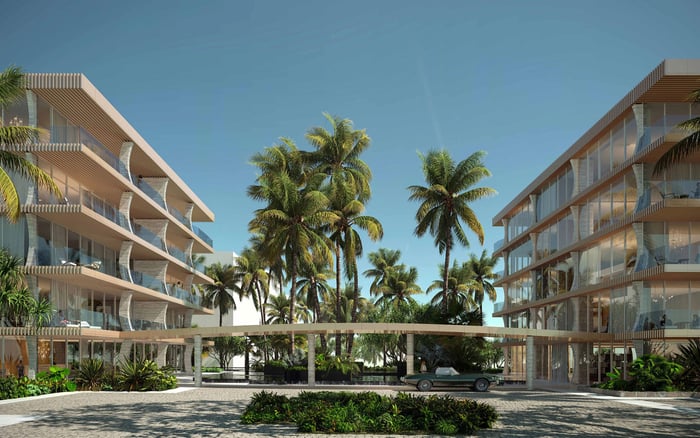
A buyer-focused guide to separating advertised parking amenities from contractual rights at Edgeworth and Shorecrest, with essential questions about EV access, self-parking, valet service, and garage control.
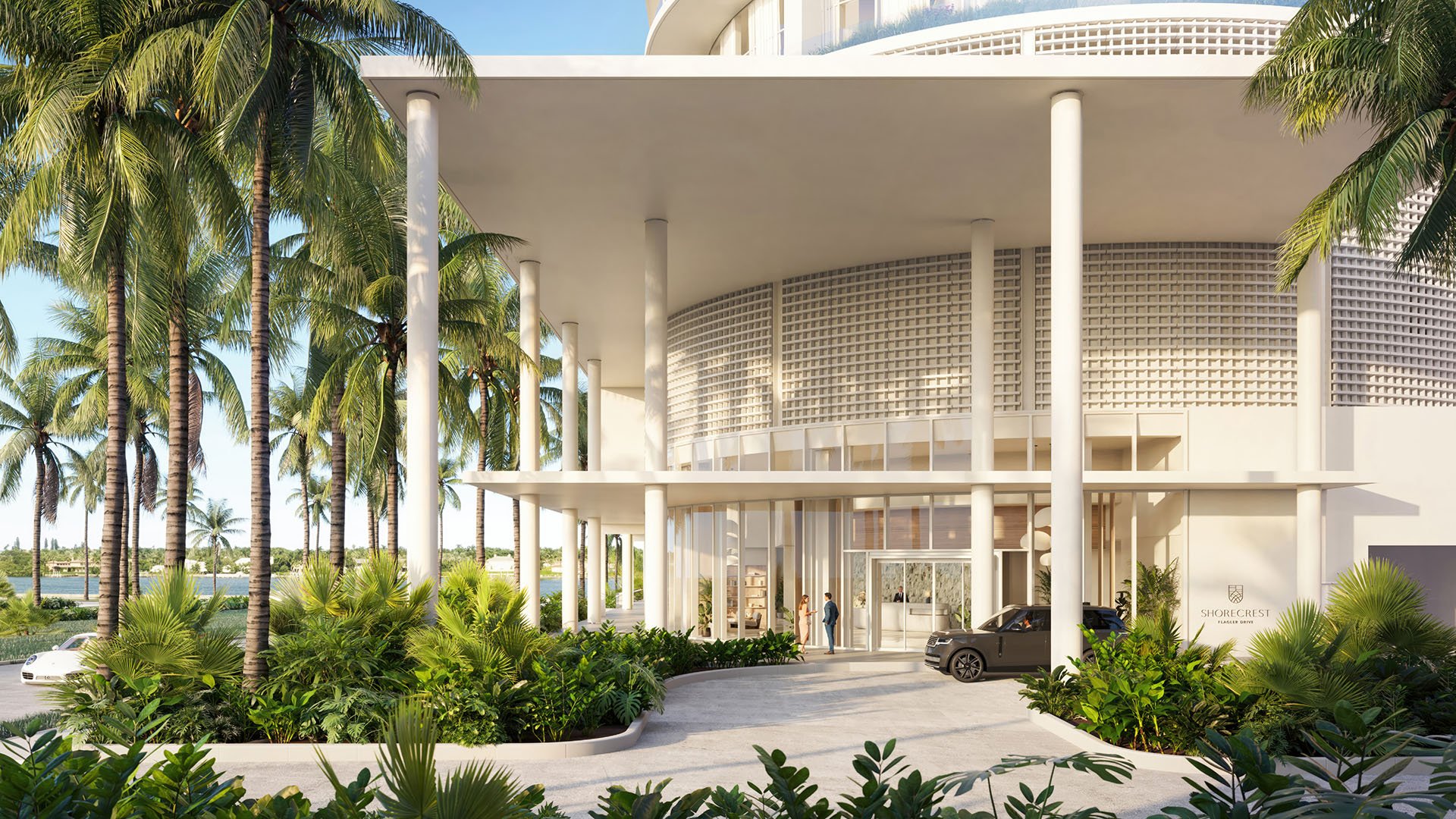
A waterfront residence should make arriving home feel effortless. For buyers with two vehicles, an electric daily driver, or a preference for keeping the keys, that experience depends on details less photogenic than a motor court: enforceable parking rights, usable charging capacity, and freedom from unwanted valet dependence.
At Edgeworth and Shorecrest in West Palm Beach, the questions overlap, but the disclosed parking details are not interchangeable. Shorecrest advertises charging and valet amenities; earlier descriptions also included self-parking. Edgeworth’s planned replacement garage raises a different question: how, if at all, will that facility serve condominium owners?
The distinction is simple: a building’s parking capacity is not a buyer’s parking entitlement. Evaluate the residence and its parking arrangement together, rather than treating the garage as a secondary amenity.
Begin with the specific residence. Ask how many spaces the signed purchase documents guarantee and whether they are deeded, designated as limited common elements, assigned, or licensed. Have counsel explain the consequences of the actual arrangement; these terms are not interchangeable.
Next, request the spaces’ locations or the procedure for allocating them. Can an assignment change? Are two spaces independently accessible, or does one vehicle block the other? Can an additional space be purchased or leased, and what happens to it when the residence is sold?
The financial questions deserve equal precision. Request itemized parking and valet charges, additional-space pricing, guest fees, and separate charging costs. Establish which amounts are included in association expenses and which are billed directly. An appealing service description is no substitute for a clear schedule of obligations.
Shorecrest Flagler Drive West Palm Beach is planned as 100 two- to three-bedroom residences at 1901 North Flagler Drive. Plans call for a 27-story tower with a five-story podium containing 204 parking spaces.
That yields an overall ratio of 2.04 spaces per residence-not a promise of two spaces for every purchaser. Ask how the planned inventory is divided among resident assignments, visitors, valet operations, and any other uses. Then establish the allocation attached to the residence under consideration.
The advertised arrival sequence includes a ground-level motor court, valet, and a garage entrance. Self-parking warrants closer attention. In September 2024, advertised parking amenities explicitly included valet and self-park options. The June 2025 description mentions EV charging stations and valet without repeating that language. The omission alone does not establish a policy change.
Ask whether current purchase documents preserve self-parking, whether residents can enter and retrieve vehicles around the clock, and whether restrictions vary by residence or parking location. Shorecrest’s advertised 24-hour concierge does not confirm 24-hour valet service.
Edgeworth West Palm Beach is a Related Ross waterfront condominium planned for a Family Church-owned parking lot along Flagler Drive. The development is linked to a 2024 agreement involving Related Ross, Frisbie Group, and Family Church to lease the church’s parking lots.
A planned 400-space garage is intended to compensate for lost church surface parking. That figure is not a confirmed allocation to condominium owners and should not be used to calculate resident parking availability.
The first question is whether residents will use the replacement garage at all. If so, establish which spaces they may use, who controls assignments, whether access is shared, and how church events would affect entry and retrieval. Ask to see the proposed resident route, not just a site-wide parking total.
Have counsel review the site lease, condominium documents, recorded access rights, and cost-sharing agreements. The church-site lease alone does not establish an individual residence’s ownership structure or the tenure of its parking rights. At Edgeworth, valet, self-parking, and EV charging remain open questions until supported by current project documentation. Undisclosed charging details do not establish that chargers are absent.
Shorecrest advertises a parking garage with EV charging stations. The next step is to translate that amenity into a practical charging routine. Request the planned charger count, power output, and connector types. Establish whether charging is dedicated to particular spaces or shared among residents.
For shared equipment, ask about reservations, session limits, vehicle-moving requirements, and billing. For a dedicated installation, establish whether private chargers are permitted, what approvals are required, and who pays for installation, electricity, maintenance, and replacement. An advertised charging station guarantees neither access nor complimentary electricity.
For both properties, ask whether valet staff will be authorized to connect, disconnect, or move charging vehicles. Clarify the procedure if a vehicle has not reached the owner’s requested charge level by departure time.
If Alba West Palm Beach is also on your shortlist, apply the same questions there without assuming equivalent equipment or policies. Compare the answers for the residences you would actually buy, rather than simply noting EV language in an amenity description.
Valet can be a welcome convenience when it remains a choice. Ask whether it is mandatory, what hours it operates, how after-hours retrieval works, and what peak-period retrieval targets are contemplated. Distinguish a service target from a contractual commitment.
Request space dimensions, garage clearance, and ramp restrictions for your actual vehicles. A large SUV or low-clearance car warrants a specific compatibility review. Ask whether assigned spaces allow independent departure and whether operating rules would require surrendering keys even when self-parking.
Guest access belongs in this discussion, too. Establish visitor parking rules, overnight permissions, and charges. At Shorecrest, advertised bicycle storage warrants separate questions about location, access, and e-bike charging restrictions. Do not assume storage includes charging permission.
Before committing, consolidate the answers into a residence-specific parking summary: guaranteed spaces, legal status, self-parking permissions, charging arrangements, valet terms, vehicle restrictions, guest access, and costs. Ask the sales team to identify where each material commitment appears in the governing or purchase documents, and have counsel review unresolved points.
The better fit is not necessarily the property with the larger garage or the more elaborate arrival sequence. It is the residence whose documented parking arrangements support your household’s routine-whether that means an early departure, a late arrival, or an EV ready for the next morning.
For a discreet conversation about matching your West Palm Beach residence to the way you live and arrive, connect with MILLION.
If branded residences are on your mind — as a home or as an allocation — we would be glad to share what we are seeing, privately.
Begin a quiet conversationThe planned five-story podium contains 204 parking spaces for a project described as 100 residences. That overall inventory does not establish an individual buyer’s allocation.
The overall ratio of 2.04 spaces per residence is not a guarantee. Buyers should confirm the number and legal status of their spaces in the purchase documents.
September 2024 materials explicitly describe valet and self-park options, while June 2025 materials do not repeat the self-parking language. That omission alone does not establish a change; buyers should confirm current contractual rights.
Yes, June 2025 materials advertise EV charging stations in the parking garage. Charger counts, power, allocation, billing, and access rules still require clarification.
No. The advertised concierge hours do not establish valet hours, which buyers should confirm separately along with after-hours retrieval procedures.
The planned 400-space garage is intended to replace lost church surface parking, not a confirmed condominium-owner allocation. Buyers should establish whether and how residents will use it.
Valet, self-parking, and EV charging are not established by the disclosed details discussed here. The absence of charging specifics does not mean chargers are excluded from the plans.
Counsel should review the site lease, condominium documents, recorded access rights, and cost-sharing agreements. The church-site lease alone does not establish an individual residence’s ownership structure or parking tenure.
Request parking-space dimensions, garage clearance, ramp restrictions, and confirmation that assigned spaces allow independent departure. Review those details against the vehicles you intend to keep there.
Ask for itemized parking, valet, additional-space, guest, and charging charges, including what association expenses cover. For private chargers, clarify installation, electricity, maintenance, and replacement responsibilities.