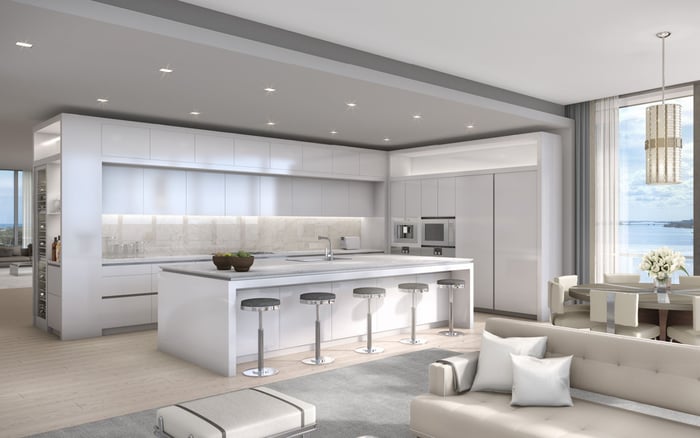
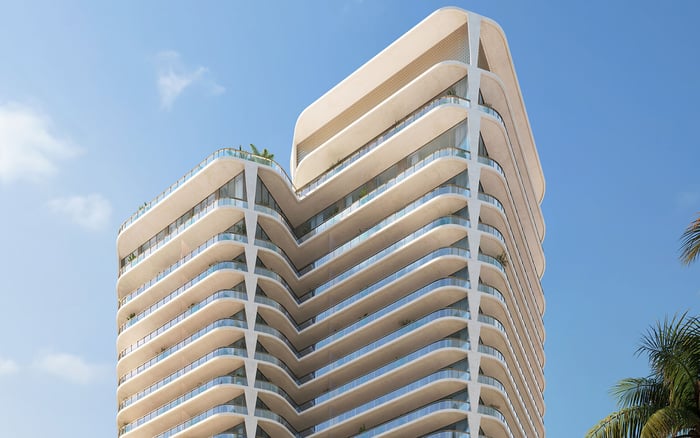
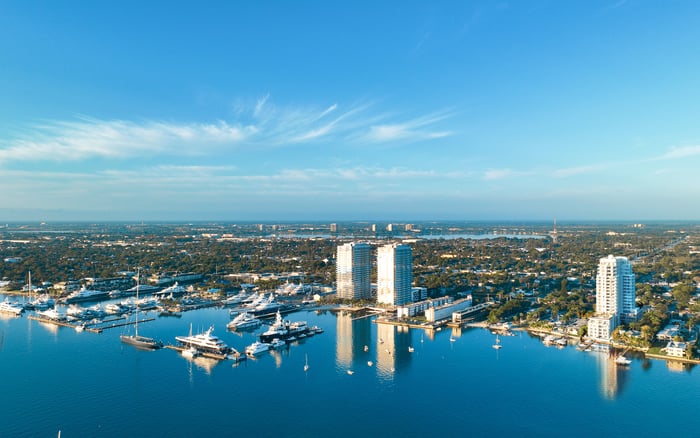
For Maison D'Or South Flagler buyers, the first owner-controlled budget could clarify the relationship between promised services and ongoing assessments. A disciplined review starts with staffing, insurance, reserves, contracts and the selected residence’s allocation.
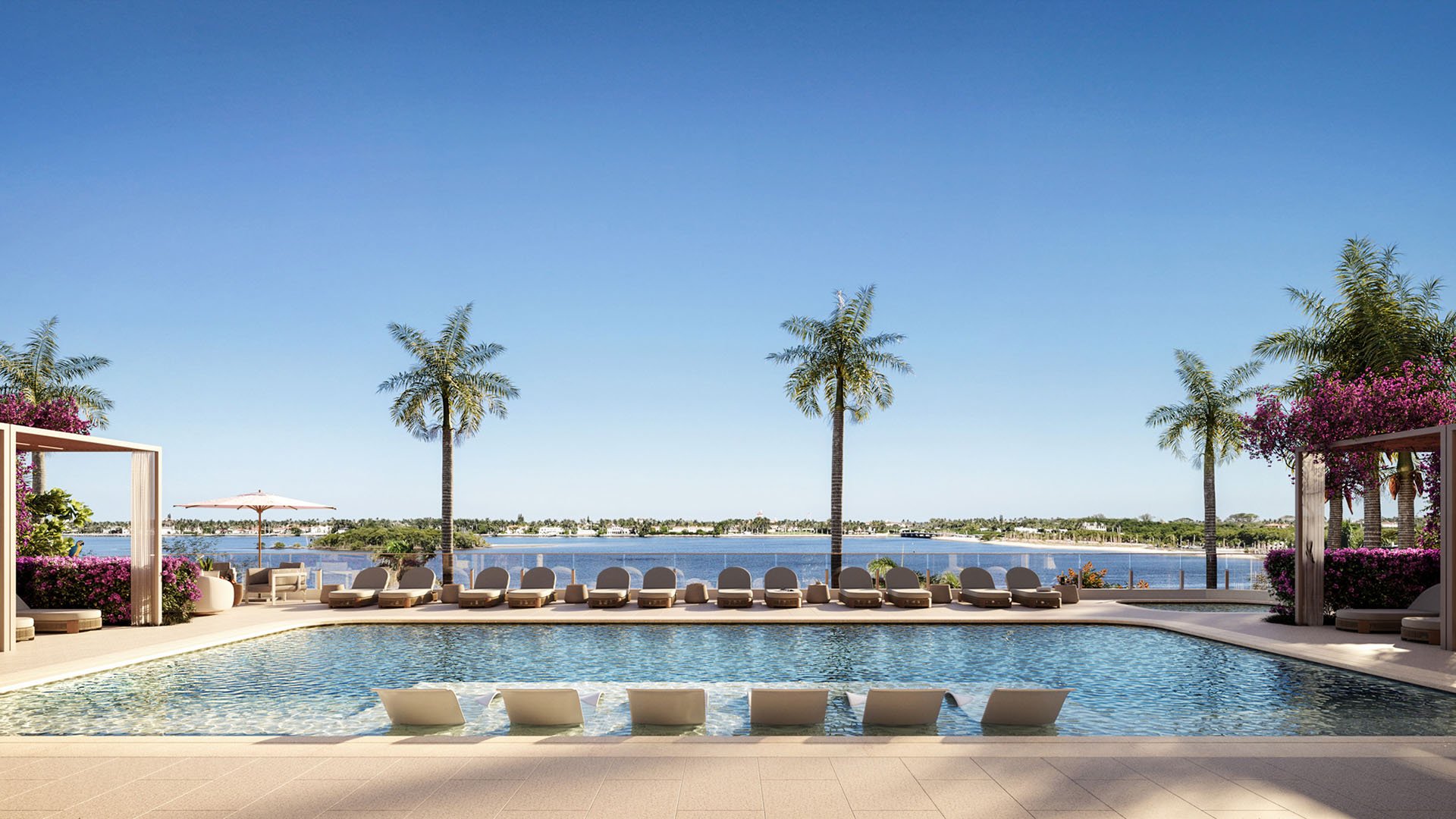
At Maison D'Or South Flagler, the appeal is an intimate waterfront address: a planned 19-story tower with 39 residences, including two penthouses, at 3705 South Flagler Drive in West Palm Beach. Palm Beach Island lies across the Intracoastal Waterway. Kolter Urban and Perko Development Partners are jointly developing the approximately 1.4-acre site.
For a serious buyer, the financial question extends beyond the opening assessment: can the operating plan sustain the intended experience? The first owner-controlled budget, when available after developer turnover, could clarify service choices, maintenance obligations and long-term funding.
This is a prospective checklist, not a finding of understated expenses, insufficient reserves or developer subsidies. A budget change would call for an explanation, not an automatic adverse conclusion. The objective is to understand what the selected residence pays for and how that obligation is calculated.
Sales launched in January 2026, with residences advertised from $5.7 million. That is marketing pricing, not evidence of closed transactions. Completion is anticipated in 2028, not established as a firm delivery date. Residence sizes span approximately 3,000 to 10,000 square feet, making unit-specific diligence essential.
A monthly HOA estimate of $7,871 is associated with Maison d’Or at 3773 S Flagler Drive #701. That address differs from the project address above. Before incorporating the figure into a purchase analysis, reconcile the residence identity, address, estimate date and underlying budget with the signed offering documents.
Do not treat that amount as an association-wide average or an approved post-turnover assessment. Ask which services, reserve contributions and other charges it includes. A precise-looking monthly number is useful only when its scope and allocation are equally precise.
Request the developer’s budget, the first owner-adopted budget when available, and available actual operating results. Compare equivalent categories side by side, noting the period covered and whether operations reflect a full year of the intended service program.
For each meaningful variance, request a written explanation: a price change, a different service level, a revised accounting classification or a one-time expense. Separate recurring operations from transition-related costs so neither distorts the expected annual run rate.
A concise review schedule should capture:
The original projection and its assumptions.
The owner-adopted amount and supporting explanation.
Actual spending for a comparable period.
The selected residence’s resulting assessment.
For buyers also considering Alba West Palm Beach, the same discipline applies: compare documented service scope and funding, not headline dues alone. This is a comparison framework, not a claim that the buildings have equivalent expenses.
Maison d’Or’s planned amenities include a waterfront pool, spa and wellness facilities, fitness facilities, a club lounge, private dining room and theater or screening room. Two furnished guest suites are advertised separately from the residential collection. Proposed offerings also include private wine storage and salon services.
Translate that program into a staffing and maintenance schedule. Ask what concierge coverage is planned, which roles are employed directly or contracted, and whether payroll assumptions include benefits, relief coverage and overtime. Marketing language such as anticipatory services does not establish a staffed position or its hours.
For the guest suites, clarify reservation rules, housekeeping, linen replacement and whether usage fees offset costs. For wellness and salon offerings, distinguish facilities funded through assessments from treatments charged separately. Apply the same scrutiny to private dining and screening-room use: what is included, what is bookable and what carries an additional charge?
The setting alone cannot establish an insurance premium. Request the applicable premiums, coverage limits, deductibles, exclusions and renewal assumptions. Distinguish current policy terms from estimates, and confirm the period each amount covers.
Separate the association’s coverage from insurance the residence owner must arrange independently. Understand how a deductible-related expense would be allocated under the governing documents; do not assume the monthly assessment answers that question.
If Forté on Flagler West Palm Beach is on the same shortlist, apply these questions independently there. Proximity is not evidence of identical coverage, deductibles or renewal exposure.
A reserve contribution is more informative when paired with the assets it is intended to fund. Request the component inventory, replacement-cost estimates, useful-life assumptions and annual contribution schedule. Compare those assumptions with the developer’s original projections and seek explanations for changes.
Ask whether the inventory addresses the relevant building systems and amenity equipment, and which costs belong to the association rather than individual residences. Identify when estimates were prepared and which assumptions underpin projected replacement costs.
A higher contribution could reflect a revised estimate or funding choice; a lower contribution does not, by itself, demonstrate efficiency. Neither establishes adequate funding without supporting analysis. Have qualified advisers review the reserve framework and applicable obligations rather than draw a conclusion from one budget line.
Request a schedule of service agreements and ask whether any developer payments, guarantees, introductory vendor rates or other support exist. If so, establish their amounts, duration and treatment at turnover. Do not presume such arrangements are part of Maison d’Or’s operating structure.
Review renewal dates, escalation provisions, termination rights and service specifications. These details help distinguish the cost of preserving an existing service from the cost of expanding it. Ask which decisions would remain for the owner-controlled board.
Then verify the selected residence’s assessment percentage and any responsibility for limited-common-element expenses. Thirty-nine residences do not necessarily mean 39 distinct owners, nor do they establish equal expense shares. The substantial variation in residence size reinforces the need to read the allocation documents rather than divide the total budget by the unit count.
Ask your adviser to model separate changes in staffing, insurance and maintenance using the residence’s documented allocation. Keep reserve contributions and one-time costs visible. These are sensitivity tests, not forecasts that dues will rise.
The decision standard is straightforward: each material expense should connect to a service, contractual obligation or funding assumption, and each assessment should connect to the governing allocation. A well-explained budget could strengthen confidence; an unexplained variance could justify further questions. For a luxury buyer, financial clarity is part of the service experience.
For a discreet perspective on your South Florida residential shortlist, connect with MILLION.
If branded residences are on your mind — as a home or as an allocation — we would be glad to share what we are seeing, privately.
Begin a quiet conversationThe planned condominium is at 3705 South Flagler Drive in West Palm Beach, across the Intracoastal Waterway from Palm Beach Island.
The planned 19-story tower contains 39 residences, including two penthouses. That residence count does not establish the number of distinct owners or equal assessment shares.
Kolter Urban and Perko Development Partners are developing the project together.
Residences are advertised from $5.7 million, and completion is anticipated in 2028. Neither the marketing price nor the anticipated year establishes a closed transaction or firm delivery date.
No. It is a listing estimate for one residence identified at 3773 S Flagler Drive 701, and both the address discrepancy and budget basis require reconciliation.
Request the developer budget, the first owner-adopted budget when available and available actual operating results. Compare recurring expenses separately from one-time transition costs.
The advertised amenities do not establish which services are included in assessments. Ask for a written distinction between association-funded operations and separately charged usage or treatments.
Review premiums, coverage limits, deductibles, exclusions and renewal assumptions. Distinguish association coverage from insurance the residence owner must arrange separately.
Review contributions alongside the component inventory, replacement estimates and useful-life assumptions. A contribution amount alone cannot establish whether funding is adequate.
An increase is not established here. Compare documented assumptions, contracts and service decisions, then test potential cost changes using the selected residence’s allocation.