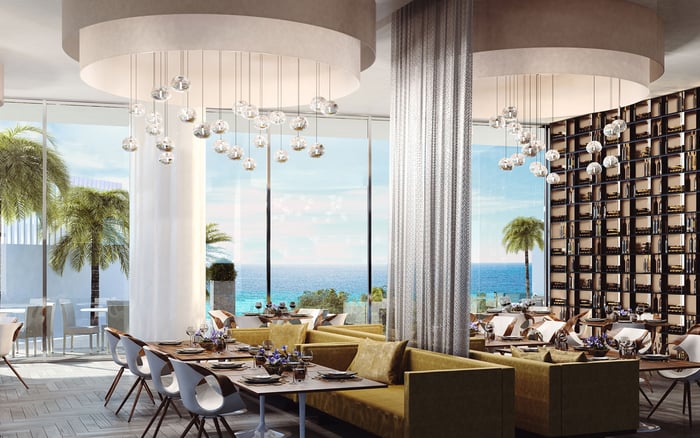
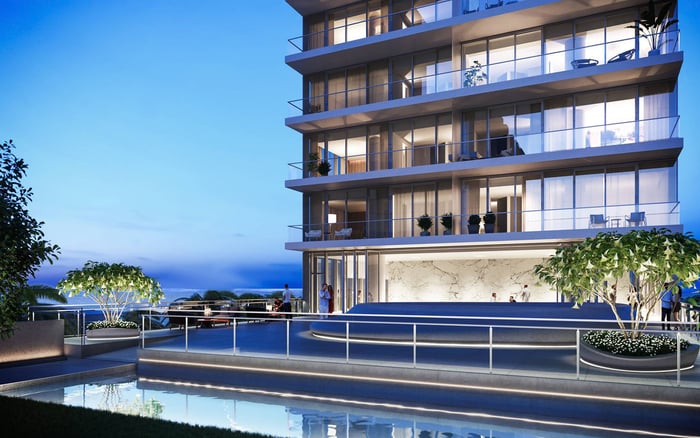
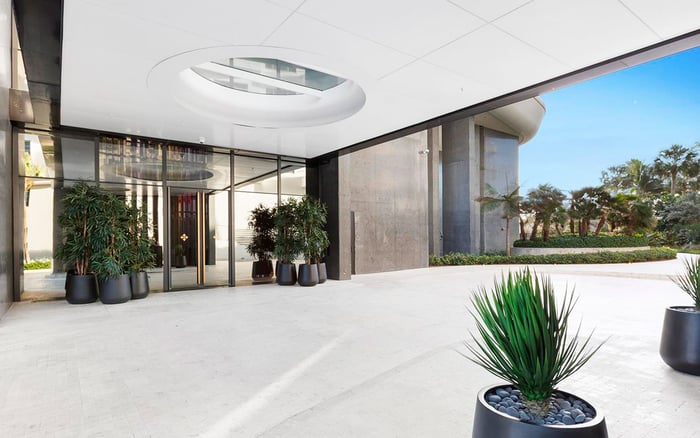
Turnberry Ocean Club's expansive terraces are central to its appeal, but their waterproofing assemblies are finite-life capital components. Buyers should pair a residence-level inspection with careful review of reserves, engineering records, warranties, maintenance responsibility, and projected renewal cycles.
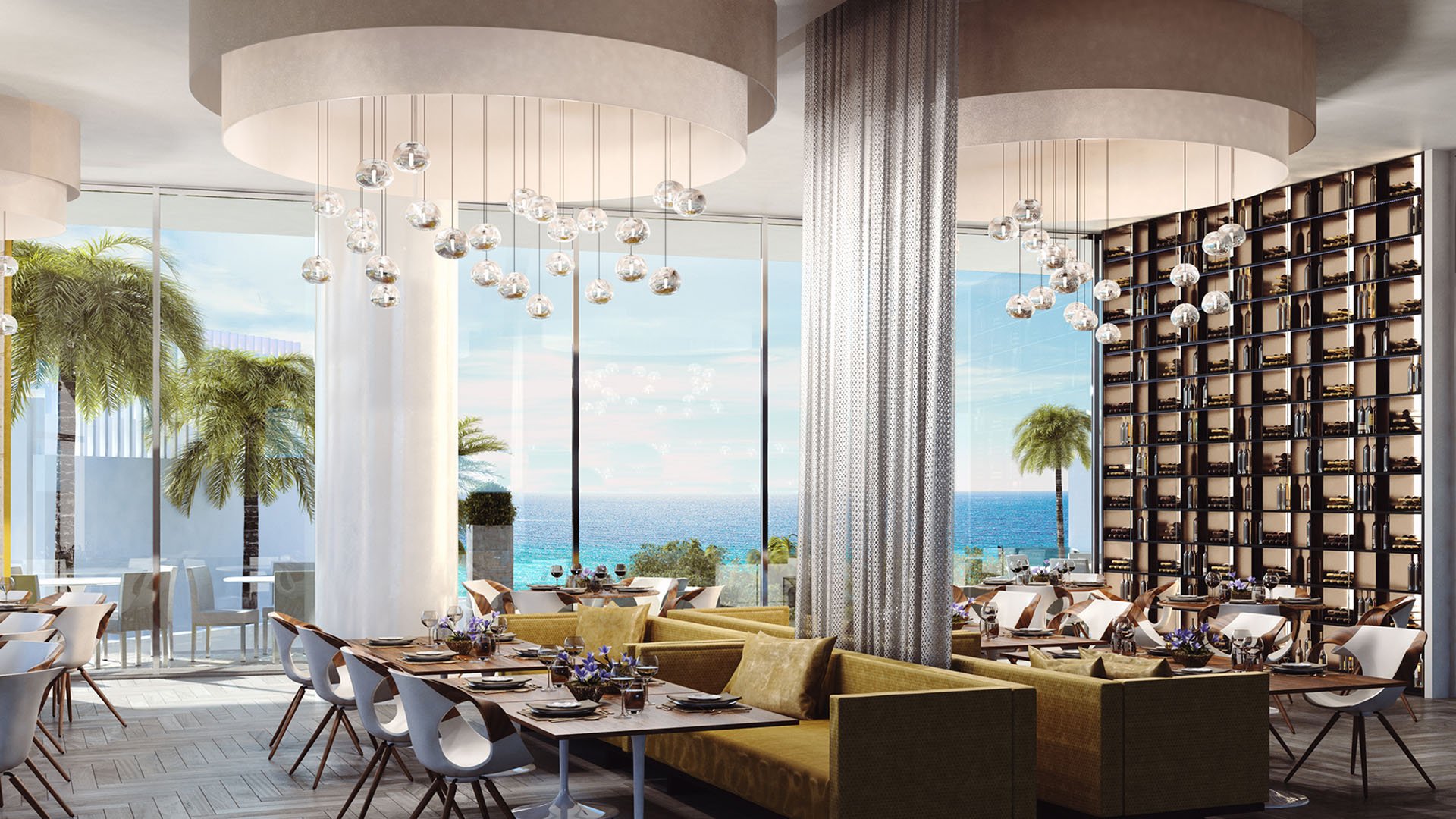
At Turnberry Ocean Club Sunny Isles, outdoor living is integral to the architecture. Completed in 2020, the 54-story oceanfront tower comprises 154 luxury condominiums and penthouses behind a glass facade articulated by staggered balconies. Residences feature 11-foot-deep oceanfront terraces and bay-facing balconies, creating unusually generous exterior living areas.
Those dimensions warrant consideration beyond furniture layouts and sunset dinners. In a coastal tower, every terrace is also a working assembly of membranes, drains, thresholds, joints, railings, sealants, and structural concrete. Together, these components manage water while enduring continuous salt exposure. For a buyer contemplating a long hold, they belong in the capital model alongside interiors, mechanical systems, insurance, reserves, and association assessments.
This is not an assertion of a current defect at Turnberry Ocean Club. It is a disciplined approach to underwriting ownership in Sunny Isles Beach, particularly when a residence's appeal and eventual maintenance scope are both shaped by extensive outdoor space.
Salt-laden Atlantic air accelerates chloride penetration into reinforced concrete, where it can attack embedded rebar and post-tension cables. As steel corrodes, expansion can crack the surrounding concrete from within. Balcony slabs, walking decks, slab edges, and door perimeters may reveal symptoms early because they are exposed to rain, wind, salt, and repeated wetting.
Waterproofing is the first line of defense from above. Balcony membranes beneath tile or topping generally have an estimated service life of approximately 15 to 25 years. That range is not a countdown clock for an individual building: installation quality, exposure, drainage, finishes, detailing, maintenance, and repairs all influence actual performance. It does mean that even a relatively recent tower contains finite-life exterior components that should figure into long-term planning.
Turnberry's deep terraces create substantial surface area. Oceanfront summer kitchens and barbecue grills also introduce drains, utilities, penetrations, and transitions that must remain watertight. Select Sky Villas and Tower Suites add private pools and hydrotherapy spas on sunrise terraces, making clearly defined maintenance responsibilities even more important.
Buyers should establish whether tile, topping, membrane, drains, railings, doors, pool or spa assemblies, planters, and utility penetrations are maintained by the owner, the association, or through divided responsibility. The governing documents are critical because an attractive private improvement can sit above a structural component subject to different ownership and repair obligations.
For residences with elaborate outdoor finishes, replacement may entail far more than applying a surface coating. Access, demolition, finish removal, drainage correction, membrane work, slab-edge repair, railing coordination, and restoration of kitchens or other built-ins can all expand the scope.
A regional planning proxy for a full balcony rebuild-including membrane replacement, slab-edge repairs, railings, and structural overlay-is approximately $25,000 to $60,000 per balcony, depending on size and condition. This is not a Turnberry Ocean Club quotation, forecast, or indication that such work is presently required. It is a broad scenario-planning range for testing affordability.
A prudent model should separate routine sealant and coating work from partial repairs and full replacement. It should also distinguish owner-controlled expenses from association obligations. Review the reserve study, engineering reports, inspection history, membrane warranties, facade-sealant schedule, planned restoration work, recent bids, and the assumptions underpinning reserve funding.
The essential buyer's-guide principle is straightforward: continuous coastal exposure makes concrete repair, waterproofing, and sealant renewal recurring life-cycle costs rather than singular emergencies. A well-funded plan can preserve both the residence and the quality of ownership.
Engage a coastal-specialist engineer or qualified building-envelope professional when the residence's exterior condition or documentation warrants it. The review should encompass balcony undersides, slab edges, tile, grout, drains, thresholds, sliding-door perimeters, sealant joints, railings, and any pool, spa, planter, kitchen, or utility penetration.
Warning signs may include grout-line cracks, efflorescence at slab edges, hollow-sounding tile, rust streaks, peeling paint near sliding doors, and musty odors after rain. None proves structural distress on its own. The objective is to distinguish cosmetic wear from membrane failure, envelope leakage, slab-edge deterioration, or reinforcement corrosion before assigning a repair allowance.
Buyers comparing nearby coastal options such as Jade Signature Sunny Isles Beach, Bentley Residences Sunny Isles, or The Ritz-Carlton Residences® Sunny Isles should apply the same framework consistently. The meaningful comparison is not age or visual finish alone, but exterior area, assembly complexity, responsibility allocation, maintenance records, and reserve strategy.
Does this article identify a current defect at Turnberry Ocean Club? No. The supplied facts do not document a current corrosion or waterproofing defect at the building.
Why evaluate waterproofing in a tower completed in 2020? Balcony membranes are finite-life components, so their eventual renewal belongs in any long-term ownership model.
How long can a balcony membrane last? The typical estimated service life is approximately 15 to 25 years, although actual performance depends on exposure, detailing, installation, drainage, and maintenance.
Is the $25,000 to $60,000 range a Turnberry estimate? No. It is a regional planning proxy for a full balcony rebuild and should not be treated as a project quote or forecast.
Which documents should a buyer request? Request the reserve study, engineering reports, inspection history, membrane warranties, facade-sealant schedule, planned work, and relevant governing documents.
What visible signs merit closer review? Cracked grout, efflorescence, hollow tile, rust streaks, peeling paint near doors, and post-rain odors warrant professional interpretation.
Why do summer kitchens affect waterproofing risk? They add drains, utilities, penetrations, and transitions that must remain watertight within an exposed exterior assembly.
Do private pools and spas require additional diligence? Yes. Confirm the condition of their waterproofing assemblies and determine who is responsible for maintenance, access, and replacement.
Who should inspect the terrace? A coastal-specialist engineer or qualified building-envelope professional can help distinguish cosmetic wear from consequential water or corrosion issues.
What is the most useful budgeting approach? Model routine maintenance, partial repairs, and eventual replacement separately, then allocate each expense according to the governing documents.
If you'd like a private walkthrough and a curated shortlist, connect with MILLION.
If branded residences are on your mind — as a home or as an allocation — we would be glad to share what we are seeing, privately.
Begin a quiet conversation