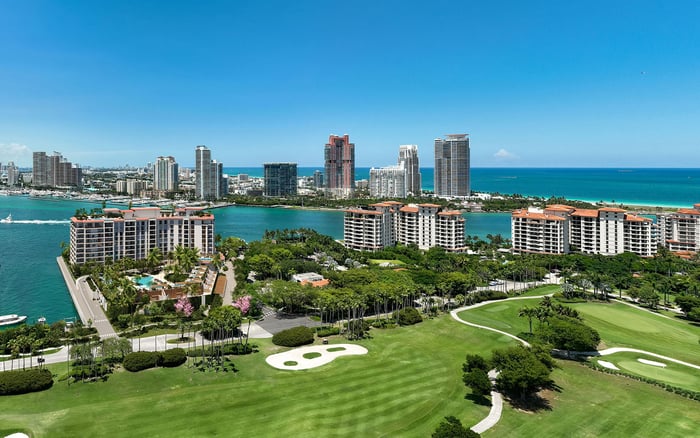
For Six Fisher Island buyers, developer financing, purchase deposits and association capital funding answer different questions. Understanding those distinctions can sharpen liquidity planning and support a more deliberate resale strategy.
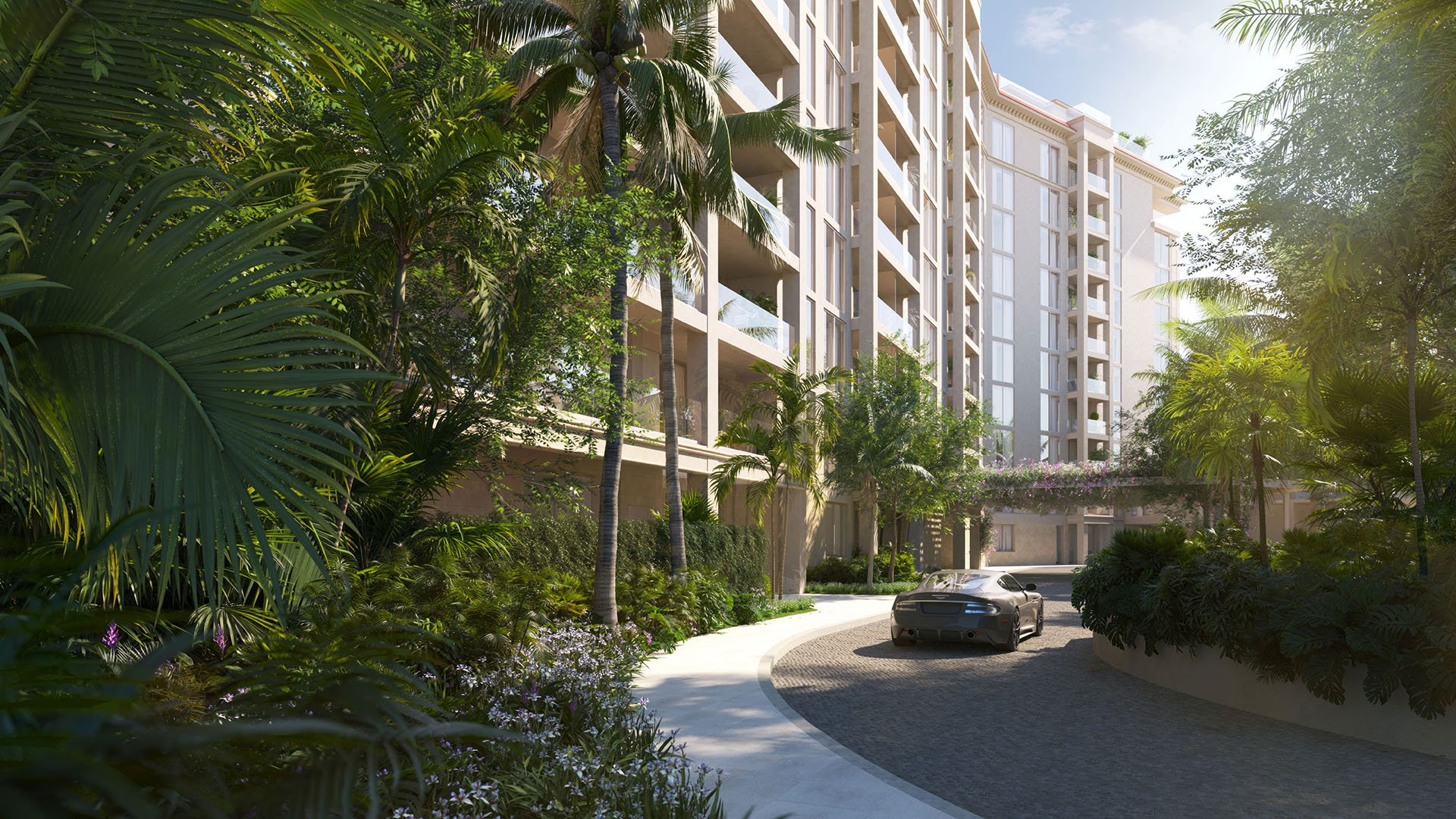
For buyers considering The Residences at Six Fisher Island, the financial question extends beyond the purchase price. A residence may fit comfortably within a portfolio, yet its payment milestones, recurring expenses and future capital obligations still require careful coordination. The objective is not simply affordability, but flexibility from contract through eventual resale.
The planned development is a 10-story, 50-residence condominium on Fisher Island. In June 2024, the development team secured a $400 million construction loan from Madison Realty Capital, replacing an earlier $85 million acquisition loan. That financing funds development. It does not establish the adequacy of future association reserves, guarantee completion or eliminate the possibility of owner assessments.
Buyers should distinguish three commitments: the developer’s construction financing, the purchaser’s contractual payment schedule and the association’s funding for long-term building needs. A substantial loan in the first category does not resolve the other two. Any discussion of future assessments here is a planning framework, not a statement that Six Fisher has announced one.
Advertised residence pricing ranges from approximately $15.6 million to $32.65 million, with advertised sizes of approximately 3,872 to 15,000 square feet. These are marketing figures, not confirmation of current inventory or terms.
The advertised payment schedule provides the more immediate liquidity framework:
20% At contract.
10% 90 Days after contract.
10% At top-off.
60% At closing.
Under that structure, 30% is committed within 90 days of signing and 40% before closing. For an illustrative $20 million purchase, that means $4 million at contract, $2 million after 90 days, $2 million at top-off and $12 million at closing.
The distinction between calendar-based and construction-based milestones matters. The second payment follows signing by a defined interval; top-off and closing follow project milestones. Confirm each trigger, notice requirement and payment obligation in the executed purchase agreement rather than relying on marketing language.
For portfolio planning, map those payments against liquid assets, not net worth alone. Keep the closing balance separate from funds reserved for recurring ownership expenses and contingencies. A comfortable acquisition budget should not depend on selling another asset at precisely the right moment.
Advertised association fees are approximately $2.36 per square foot per month. Applied to a hypothetical 4,000-square-foot residence, that equates to $9,440 monthly, or $113,280 annually. This illustrates a marketing estimate; it is not a verified adopted association budget.
It is also an association-fee calculation, not a measure of total ownership costs. Do not assume it establishes the budget’s insurance or reserve components. Request the underlying expense categories and reserve contribution assumptions before treating the figure as a dependable long-term baseline.
For a buyer also considering Palazzo del Sol, the useful comparison goes beyond the quoted monthly charge. Ask what each budget funds, which capital needs are identified and how much cash is already available to meet them. A lower monthly figure alone does not establish a lower long-term ownership burden.
A useful capital-project funding plan connects anticipated work to its estimated cost, timing and funding mechanism. For buyer diligence, its value lies in clarifying future obligations, not merely presenting a reassuring reserve balance.
Request the applicable reserve study, reserve balances, association budget and available board minutes. Review them together for pending projects, deferred maintenance and assessments. Ask which figures are estimates, which expenditures have been approved and whether the funding schedule aligns with the expected timing of the work.
For personal planning, distinguish money accumulated through recurring contributions from money that might be requested through an assessment. Both can support necessary work, but their timing affects household liquidity differently. If an assessment is contemplated or approved, ask for the amount allocated to the residence, installment dates and any remaining uncertainty. A building-wide headline number is no substitute for the owner-specific obligation.
The same questions apply when evaluating Palazzo della Luna. This is a consistent comparison framework, not a claim that either property has a particular capital shortfall or assessment. Evaluate each residence against its own documents.
Active special assessments can create buyer hesitation, short-term price pressure and longer marketing periods. These are general possibilities, not established outcomes for Six Fisher Island. A buyer may be weighing both the payment itself and uncertainty about the work, its final scope or its completion.
Consider a potential sale in three stages. When a project is newly announced, the funding obligation may be less clear. Once scope and funding are defined, a purchaser has more concrete information to evaluate. After completion, the discussion can focus on completed work and any remaining obligations rather than unresolved construction questions.
Necessary capital improvements can protect long-term property value even when funding them creates short-term selling friction. That does not establish a dollar-for-dollar resale discount equal to an assessment or a predictable recovery period.
Before choosing a listing date, weigh the advantage of greater project certainty against the cost of continued ownership. Waiting may provide clearer documentation, but it also means carrying the residence longer. Selling earlier may suit personal priorities, provided the funding obligations are understood and addressed in negotiations with counsel.
A rigorous acquisition review should produce a dated payment calendar, a clearly qualified operating-cost estimate and a document-based view of capital obligations. It should also separate confirmed commitments from assumptions that need updating before closing or resale.
Ask advisers to test two practical scenarios: holding the residence through a future capital project and selling while that project remains unresolved. Use documented obligations where available. Where costs or dates are uncertain, identify them as variables rather than inserting an unsupported forecast.
For Six Fisher buyers, the central discipline is straightforward: do not let the scale of developer financing substitute for association-level diligence. Contract deposits determine near-term cash requirements; the operating budget and capital plan shape ownership liquidity; project certainty can influence the eventual resale conversation. Keeping those questions separate makes the purchase decision more precise and the exit strategy less dependent on assumptions.
For a discreet perspective on your South Florida purchase and resale priorities, connect with MILLION.
If branded residences are on your mind — as a home or as an allocation — we would be glad to share what we are seeing, privately.
Begin a quiet conversationPlans describe a 10-story, 50-residence luxury condominium on Fisher Island.
It establishes that the developers secured construction financing from Madison Realty Capital in June 2024. It does not verify association reserve adequacy or guarantee completion.
The advertised schedule is 20% at contract, 10% 90 days later, 10% at top-off and 60% at closing. Confirm the obligations in the executed purchase agreement.
The advertised schedule places 30% due within 90 days of signing and 40% due before closing.
Illustratively, the payments would be $4 million at contract, $2 million after 90 days, $2 million at top-off and $12 million at closing.
The marketing estimate is approximately $2.36 per square foot monthly. It is not a verified adopted budget or a measure of total ownership costs.
Applying the advertised rate produces $9,440 monthly, or $113,280 annually, for association fees alone.
Review the applicable reserve study, reserve balances, association budget and available board minutes. Look for pending projects, deferred maintenance, assessments and their funding schedules.
No. Its assessment discussion is a general planning framework, not a claim that Six Fisher has announced a special assessment.
Completion may reduce uncertainty, but waiting also adds carrying costs. There is no established Six Fisher-specific discount or recovery timetable that determines the right selling date.