A buyer-focused guide to reading proposed reserves at The Cove Residences, from component-level straight-line schedules to pooled cash-flow planning and Florida’s two-pool framework.

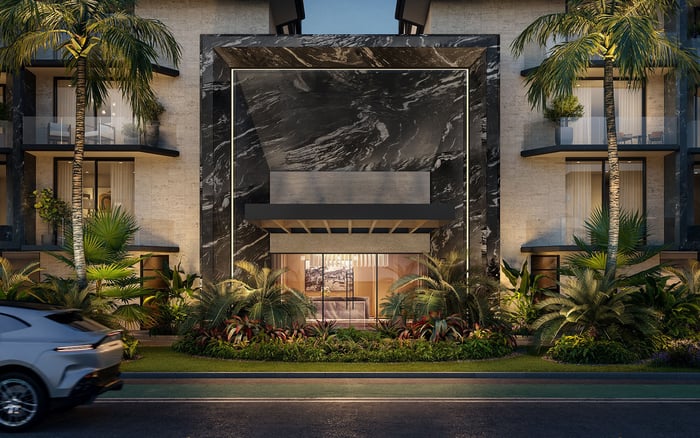
The Cove Residences Edgewater is planned for 456 NE 29th St, a bayfront address in Miami’s Edgewater neighborhood. The 40-story condominium is planned with 134 residences and a targeted 2028 completion. For buyers focused on architecture, water views and a future lifestyle, reserves may seem like a distant administrative concern. Yet they are integral to the long-term economics of ownership.
The central question is not simply whether the association will maintain reserves, but how the future association will calculate, organize and monitor those funds. Florida associations may use straight-line funding, also called component funding, or pooling, often called the cash-flow method. Each presents the same long-range obligations through a different financial lens.
The method The Cove’s future association will use has not been established, and project-specific reserve balances have not been disclosed. With completion targeted for 2028, preconstruction budgets may rely on proposed assumptions rather than years of operating history.
The reserve method shapes visibility, but the assumptions determine credibility.
Under straight-line funding, annual contributions are calculated and tracked separately for each major reserve component. The traditional calculation considers the estimated replacement cost, remaining useful life and funds already assigned to that item. The result is a series of distinct funding paths rather than one consolidated cash-flow picture.
For a buyer, the appeal is legibility. A schedule can show whether funding for a roof, pavement, painting or another identified component is progressing on its own timeline. That item-by-item discipline makes it easier to isolate a weak estimate, a short remaining life or a contribution that does not appear to keep pace with the projected obligation.
The restriction is equally important. Straight-line reserve money generally may be used only for its designated purpose unless the required owner approval authorizes another use. A well-funded component therefore does not automatically provide liquidity for an unrelated component whose cost arrives earlier or exceeds expectations.
This structure can make the proposed budget appear more rigid, but rigidity is not necessarily a disadvantage. For a buyer comparing Edgewater opportunities such as Aria Reserve Miami, the useful comparison is not the contribution total alone. It is whether each component’s cost, useful life and assigned balance form a coherent schedule.
Pooling combines multiple reserve components into a single cash-flow plan. Contributions and expenditures are modeled collectively, with work scheduled for the years in which each component is expected to require repair or replacement. As those dates arrive, the pool can direct available reserve money toward different included components.
That flexibility is the principal benefit. Rather than maintaining a separate funding track for every component, the association can plan around the timing of expected demands on the overall reserve balance. For a new tower, this can produce a funding curve that differs from the sum of several straight-line calculations.
The tradeoff is reduced visibility at first glance. An apparently adequate total pool does not, by itself, prove that every major asset is keeping pace with its replacement timeline. A buyer needs the underlying schedule, including identified components, estimated useful lives, projected costs, contribution assumptions and annual expenditures. Pooled funding still requires the applicable components and their estimated lives to be identified.
Buyers considering nearby new development, including EDITION Edgewater, can apply the same discipline: ask for the schedule beneath the headline reserve figure. Pooling is a cash-management method, not permission to lose component-level accountability.
Florida’s amended condominium framework permits pooling for structural-integrity reserve study items, commonly described as SIRS items. Non-SIRS reserves must remain in a separate pool. The practical picture is therefore not one unrestricted reserve account, but two distinct pools: one for SIRS components and another for non-SIRS components.
Even when reserve funds are pooled for cash management, individual components must remain clearly allocated and tracked. Buyers should look for documents that reconcile the collective balance with the obligations assigned to each component. They should also confirm that SIRS and non-SIRS funds are presented separately rather than treated as fully interchangeable.
Any future conversion from straight-line to pooled accounting warrants careful review against the governing documents and applicable requirements. For a preconstruction buyer, that issue may not be immediate, but it reinforces a broader point: reserve policy can evolve, and the governing documents, budgets and professional studies should be read together.
Start with the method, then move quickly to the assumptions. Straight-line funding can be underfunded if replacement costs are understated or useful lives are overly optimistic. A pooled plan can also be inadequate if its cash-flow forecast delays expenses, relies on unrealistic costs or allows the balance to approach an imprudent level. Neither label substitutes for sound inputs.
Ask for the proposed reserve schedule and identify which expenses sit in the SIRS pool and which sit in the non-SIRS pool. Review opening balances, annual contributions, projected expenditure years and minimum projected balances. For straight-line accounting, examine every component separately. For pooling, trace the years in which several expenditures cluster and determine how the plan preserves sufficient cash.
The new-construction and preconstruction context matters because early budgets are forward-looking. Buyers may be evaluating assumptions before the association has established actual maintenance costs or a mature operating record. This makes sensitivity especially valuable: What happens if a component costs more, reaches the end of its useful life sooner or requires work in the same year as another major item?
Those questions belong in serious buyer’s guides because reserve design affects both carrying-cost expectations and investment analysis. A polished amenity program and a disciplined reserve plan address different aspects of ownership. Buyers comparing The Cove with Villa Miami should keep those categories separate and evaluate each association’s documents on their own terms.
Straight-line funding emphasizes component-by-component discipline and clearer designated balances. Pooling emphasizes overall cash-flow sufficiency, timing and flexibility. Neither is inherently superior for every association. The stronger funding picture is the one supported by credible costs, realistic useful lives, transparent allocations and contributions aligned with projected work.
For The Cove, the prudent approach is to avoid assuming a reserve method before it is documented. Request the latest proposed budget, reserve schedules and governing provisions available at the time of review. Then have qualified legal and financial advisers assess how the structure may affect the residence under consideration.
To discuss The Cove and other South Florida residences with a discreet property adviser, connect with MILLION.
If branded residences are on your mind — as a home or as an allocation — we would be glad to share what we are seeing, privately.
Begin a quiet conversationStraight-line funding calculates and tracks annual contributions separately for each major reserve component, using its projected cost, remaining useful life and assigned funds.
Pooled funding combines multiple components in a cash-flow plan and schedules spending according to when each component is expected to need work.
The reserve method and project-specific reserve balances have not been established in the information provided.
No. Florida’s framework separates pooled SIRS reserves from a distinct pool for non-SIRS reserves.
It shows funding component by component, making designated balances and contribution progress more visible.
Pooling offers cash-flow flexibility by allowing available money within a pool to support included components as their expenditure dates arrive.
No. Buyers still need to examine component costs, useful lives, timing and projected minimum balances.
Yes. Unrealistic replacement costs, useful lives or contribution assumptions can weaken a straight-line plan.
Proposed budgets may depend on forward-looking assumptions because the association does not yet have a mature operating history.
Request the latest proposed budget, reserve schedules and relevant governing provisions, then review them with qualified legal and financial advisers.