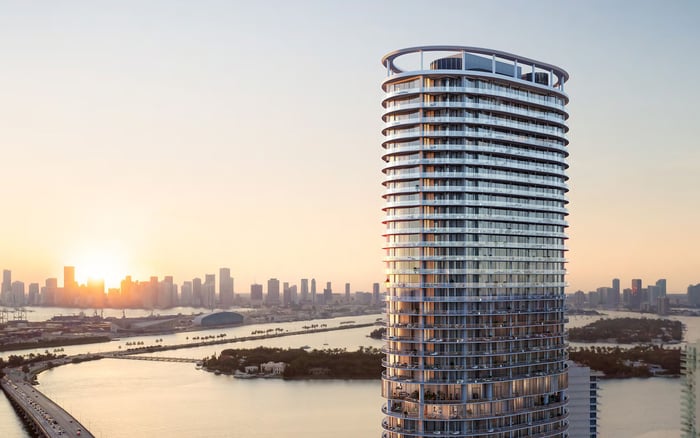
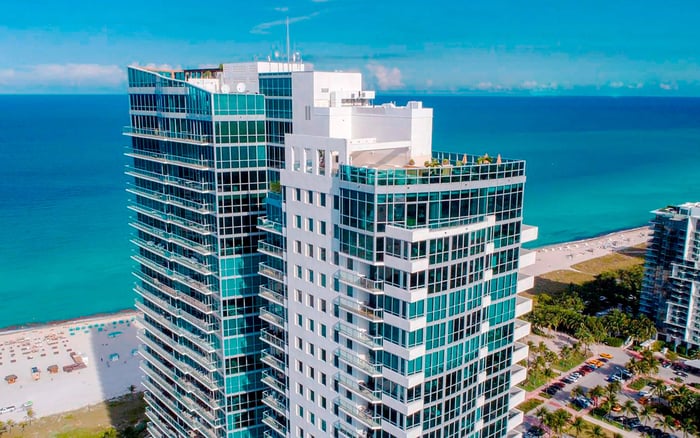
Faena Residences Miami advertises a wine cellar, integrated wine storage, private vaults and valet services. Buyers should distinguish those offerings from documented rights to specific spaces, then confirm allocation, operating terms and resale transfer in the transaction documents.

For buyers considering Faena Residences Miami Downtown Miami, storage deserves the same attention as the residence itself. A wine collection, seasonal wardrobe or vehicle left between visits raises a practical question: what, precisely, will the owner have the right to use?
The project is marketed along the Miami River within the Faena River District. Its advertised offerings include a building-level wine cellar, integrated kitchen wine storage, private vaults and valet parking. These are distinct categories, not interchangeable promises of privately allocated space.
The central distinction is straightforward: the available marketing descriptions do not establish how specific owner-storage spaces, vaults, wine lockers or vehicle-storage allocations are legally assigned or transferred. That does not mean those rights are absent or nontransferable. It means buyers should confirm them in the governing documents and purchase terms before treating them as part of the acquisition.
Ask the sales team to describe each proposed storage benefit separately. “Storage included” is too broad to establish capacity, access or ownership.
Owner storage and private vaults:
Private vaults are advertised, but their dimensions, identifiers and unit-by-unit assignments are not established. Nor is their status as separately owned space, a residence-linked assignment or a service arrangement.
Building wine cellar:
The cellar is an advertised amenity. Its description does not establish a dedicated wine locker for every residence or a specific bottle allocation.
Integrated wine storage:
Kitchens described as designed by Mario Carbone include integrated wine storage. This is distinct from the building cellar and should be checked against the residence's contractual inclusions and exclusions.
Valet parking:
The advertised service concerns parking. It does not, by itself, establish a dedicated long-term storage bay or an indefinite right to leave a vehicle onsite.
Request the declaration, amendments, assignment exhibits, purchase agreement and operating rules, along with any separate storage, wine-cellar or valet agreements. Ask counsel to reconcile those documents with the specific benefit offered for the residence.
For every proposed space, request an identifier, dimensions and location. Then establish how the right arises: does it accompany the residence, require a separate assignment or depend on a service agreement? These are alternatives to investigate, not established descriptions of this project's arrangements.
Written confirmation should also address permitted contents, charges, access procedures and insurance responsibilities. Ask whether the space can be relocated or reassigned, and who has authority to make that change. If no dedicated space is promised, have the actual access arrangement described instead.
For a buyer also considering Aston Martin Residences Downtown Miami, the comparison should apply the same document questions without assuming either property offers equivalent storage rights.
A collector should evaluate the residence's integrated wine storage and the building cellar independently. The former concerns equipment and inclusions inside the home; the latter raises questions about access, custody and any allocation outside it.
For the kitchen, confirm exactly which equipment the contract includes and whether any exclusions apply. Do not assume a marketing description settles what will be delivered or remain with the residence on resale.
For the building cellar, ask whether owners may store personal bottles, whether dedicated lockers are offered and how any capacity would be assigned. Request written terms for retrieval, access, fees, permitted contents and insurance responsibility. If environmental conditions matter to the collection, request the applicable specifications rather than inferring them from the word “cellar.”
These questions distinguish an attractive amenity from a workable arrangement for a particular collection. The advertised cellar alone establishes no individual locker allocation.
The advertised services include concierge, valet, security, an estate manager and an in-house curator. That service environment may shape the ownership experience, but it does not define the scope of parking or storage rights.
An owner who travels frequently should ask whether a vehicle may remain while the residence is unoccupied and whether duration limits, notice requirements or additional charges apply. Confirm whether any space is dedicated, whether vehicles may be moved and which retrieval procedures would govern extended stays.
Insurance and responsibility also require explicit treatment. Request the relevant agreement and ask who bears responsibility for damage, stored contents and any authorized vehicle handling. These are matters to confirm, not documented project terms.
The distinction matters most when the intended use is storage rather than routine arrival and departure. A valet offering should not be valued as long-term vehicle accommodation without written support.
Brand familiarity can blur property-specific details. Faena House Miami Beach, at 3315 Collins Avenue, advertises private storage for select residences, alongside separately listed bicycle storage. That description neither promises storage to every Faena House residence nor establishes the Downtown project's arrangements.
Likewise, La Cava belongs to Faena Hotel Miami Beach. Its identity as a private wine cellar is not evidence of a Downtown residential locker program. Hotel baggage storage is also a separate service, not proof of an owner-storage allocation on the river.
Buyers comparing branded residences should keep each property's documents and services distinct. A shared name should never substitute for confirmation of the rights attached to the specific residence under consideration.
Allocation and transfer are separate questions. Even after a buyer establishes access to a specific space, the available Downtown marketing does not document automatic transfer of that allocation on resale.
Before signing, ask whether each right accompanies the residence, requires a separate assignment or approval, or expires on sale. Confirm any transfer charges and whether relocation or reassignment provisions could affect what a subsequent buyer receives. Have counsel identify the documents needed to reflect the agreed treatment at closing.
For a resale purchase, request the seller's applicable assignment or service documentation and written confirmation of its status. Integrated wine-storage equipment should likewise be addressed in the contractual inclusions and exclusions.
The objective is a clear record: what is included, how it may be used, what it costs and what can pass to the next owner. Until those points are documented, evaluate the residence without assigning a separate premium to assumed exclusive or transferable storage rights.
For a discreet discussion of your Downtown Miami buying priorities, connect with MILLION.
If branded residences are on your mind — as a home or as an allocation — we would be glad to share what we are seeing, privately.
Begin a quiet conversationThe available marketing does not establish a private storage allocation for every residence. Request unit-specific documentation before treating storage as included.
Their legal status is not established in the available descriptions. Buyers should confirm whether a vault is separately owned, assigned to a residence or provided through a service arrangement.
The advertised building cellar does not establish a dedicated locker for each residence. Any personal allocation and its capacity should be confirmed in writing.
No. Integrated kitchen wine storage is described separately from the building wine-cellar amenity and requires its own review of contractual inclusions.
Buyers should not assume automatic transfer from the marketing description. Confirm the equipment in the resale contract's inclusions and exclusions.
The advertised valet service does not establish indefinite vehicle-storage rights or dedicated long-term bays. Request written terms addressing the intended duration and use.
Request the declaration, amendments, assignment exhibits, purchase agreement and operating rules. Include any separate storage, wine-cellar or valet agreements.
Request the space's identifier, dimensions, location, permitted contents, fees, access rules and insurance responsibilities. Confirm whether relocation or reassignment is permitted.
Automatic transfer is not documented in the available Downtown marketing. Confirm whether each right accompanies the residence, requires assignment or approval, or ends upon sale.
No. Faena House Miami Beach advertises private storage for select residences, while La Cava belongs to Faena Hotel Miami Beach; neither establishes Downtown allocation terms.