A buyer-focused comparison of Auberge’s association-funded beach-club membership and Kempinski’s amenity program, with practical guidance on recurring charges, service exclusions, and resale transfer rights.
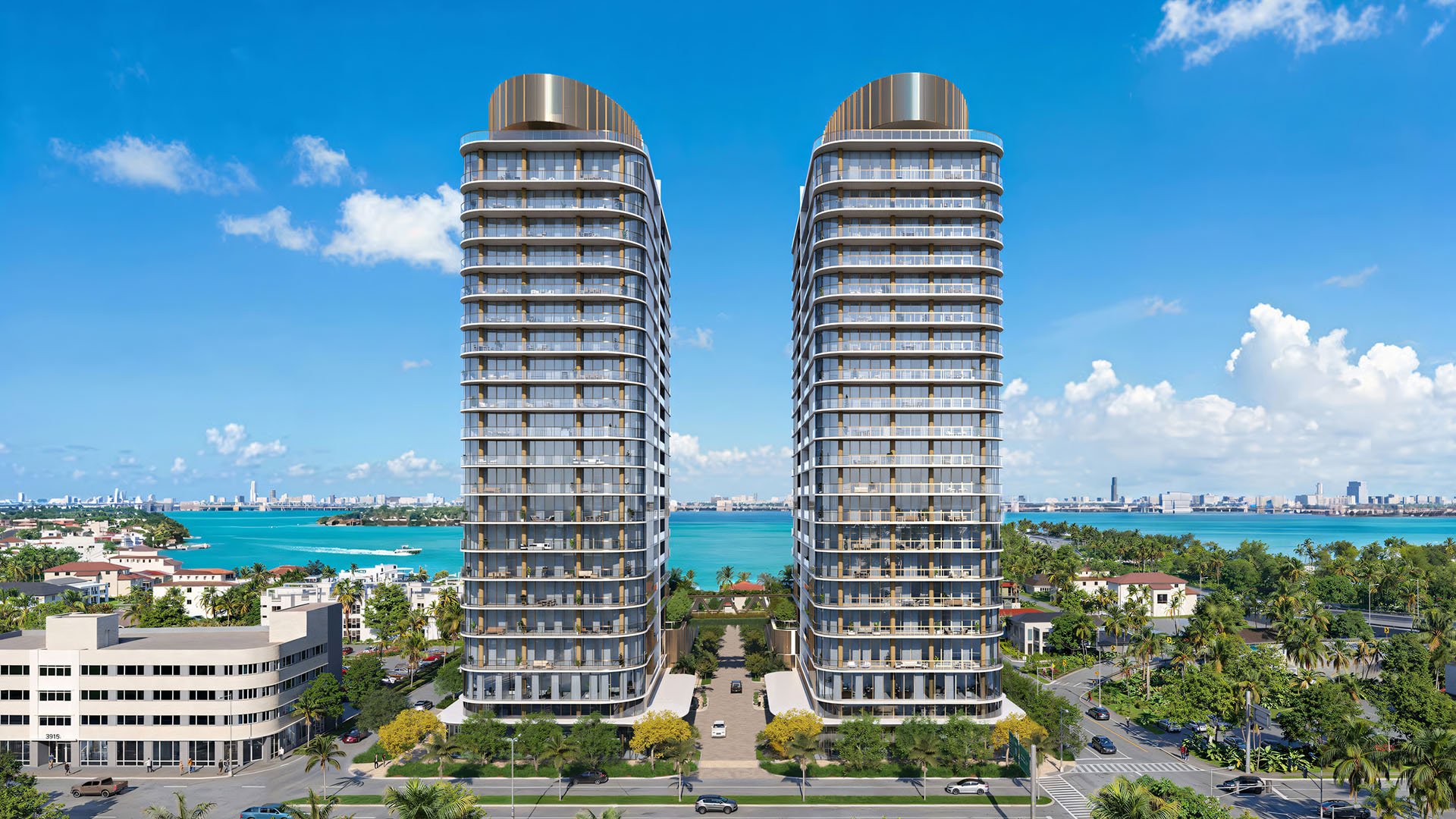
The most useful question about a private residential club is not simply what it offers, but what ownership secures: access, services, a recurring financial obligation, or some combination of all three. A spa, private lounge, and attentive concierge may shape daily life, but their presence alone does not establish what the monthly assessment covers.
At Auberge Beach Residences & Spa Fort Lauderdale, the original terms establish an association-funded owner beach-club membership, with additional charges for certain services and privileges. At Kempinski Residences Miami Design District, the disclosed amenity program is substantial, but the available terms do not establish a comparable fee structure or transfer framework.
That distinction is not a verdict on quality or value. It is a reason to compare contractual entitlements rather than amenity names. Before assigning value to the lifestyle, a purchaser should separate recurring ownership expenses, any distinct membership obligations, and discretionary service spending.
Located at 2200 North Ocean Boulevard in Fort Lauderdale, Auberge illustrates a useful distinction between membership and consumption. Under its original terms, unit owners’ beach-club memberships are included in association common expenses. Membership is therefore funded through the association rather than priced separately for owners.
Included membership does not mean an all-inclusive experience. Those original terms provide for additional fees for certain club areas and services. Food, beverages, and certain beach-club privileges require additional payment. Spa and restaurant services are offered on a fee basis, and concierge services are available to owners for additional fees.
A buyer should not treat “concierge” as a promise that every arrangement or personal service is included. The advertised availability of concierge services and 24/7 valet does not, by itself, establish which individual services fall within monthly charges.
The advertised amenities also include a private beach club, EVARA Beach Spa, fitness center, wine and cigar lounges, billiards room, golf simulator, and multiple pools. This is a range of available experiences, not a complete schedule of included benefits. Because the membership provisions reflect the original terms, current operating terms and prices require separate confirmation.
Auberge’s advertised monthly association assessments illustrate why ownership costs must be evaluated residence by residence. N1102 has been advertised at $4,795 monthly, S303 at $5,054, and N605 at $7,645. These are unit-specific assessments, not three quotations for beach-club dues.
Nor do these figures explain why the charges differ. Without the applicable budgets and allocation provisions, a buyer should not attribute the variation to membership tiers, service packages, or particular benefits. The full assessment cannot be treated as the price of club access simply because it includes owner membership under the original structure.
S303 has also been advertised with “Membership Purchase Required: No.” That is useful context, but it does not rule out every possible transfer, administrative, or closing-related charge. It also does not define current guest access or the rights of a subsequent purchaser.
Treat advertised figures as snapshots. Request the current assessment for the exact residence, any special assessments, and written confirmation of closing-related charges. Then budget for anticipated dining, spa, and other separately billed services without counting bundled membership twice.
At Kempinski Residences Miami Design District, the disclosed program encompasses spa and fitness areas, pools, dining and social spaces, lounges, and private salons. For buyers considering the Design District, these offerings frame the residential experience without establishing its full recurring cost.
The available terms do not specify a separate private-club initiation fee, annual dues schedule, or membership tiers. That absence is not a promise that no such charges exist. Equally, it would be unsupported to assume that a distinct private-club membership is required.
The same caution applies to bundled services. The available terms do not identify which amenity access or personal services are included in association charges and which are billed à la carte. A dining space does not establish a meal entitlement; a spa does not establish included treatments. General expectations associated with hospitality branding cannot resolve Miami-specific charges for housekeeping, dining, spa, or concierge services.
The practical next step is to obtain a written inclusion schedule separating facility access from service use. Until that distinction is documented, a direct cost comparison with Auberge would imply more certainty than the available terms support.
Transferability deserves its own review because “membership” can encompass several different rights. Access associated with owning a residence is not necessarily a separately transferable club interest. Neither should be assumed to carry a right to sell membership independently.
Auberge’s association-funded structure suggests an ownership-linked benefit. On its own, it does not establish legal transferability, transfer fees, or an independently saleable membership. Kempinski’s available terms likewise do not establish membership-transfer rules or whether particular privileges automatically pass to a subsequent purchaser.
Ask counsel to distinguish automatic eligibility from any required application, approval, registration, or payment. Request written provisions addressing purchasers, spouses, other household members, guests, and tenants rather than assuming they share identical rights. These are questions for the governing documents, not conclusions about either property.
For buyers also considering Shell Bay by Auberge Hallandale, the same discipline applies: assess that property’s agreements independently rather than carrying one residence’s membership assumptions into another purchase.
Before committing, assemble the current association budget, governing documents, any applicable club agreement, service-price menu, guest and tenant policies, and written transfer provisions. Ask for a clear division between mandatory recurring charges, transaction-related charges, and optional spending. Where a service is described as included, confirm its scope and limits.
Then test the package against actual use. A frequent host should seek clarity on guest access and dining charges; a seasonal owner should understand obligations that continue during absences. Neither usage pattern changes what the contract provides, but both affect the bundle’s personal value.
The defensible comparison is structural, not a lowest-dues ranking. Under Auberge’s original terms, owner membership is association-funded, with paid extras. Kempinski’s disclosed amenity program leaves fee allocation and transfer rights unspecified in the available terms. In both cases, clarity about continuing costs and successor rights should come before placing a premium on the club experience.
For a considered approach to South Florida residential ownership, explore MILLION.
If branded residences are on your mind — as a home or as an allocation — we would be glad to share what we are seeing, privately.
Begin a quiet conversationThe original disclosures include unit owners’ beach-club memberships in association common expenses. Current terms should be confirmed before purchase.
No. The advertised monthly assessments are unit-specific ownership charges, not standalone beach-club dues quotations.
N1102 has been advertised at $4,795 monthly, S303 at $5,054, and N605 at $7,645. These snapshots require current confirmation.
The original terms provide for additional payment for food, beverages, spa and restaurant services, and certain club privileges. Membership should not be treated as all-inclusive.
The original disclosures describe concierge services as available for additional fees. Advertised service availability does not establish inclusion in monthly charges.
The original membership language does not establish a right to sell membership independently. Transferability and any transfer charges require review of current governing agreements.
The available terms do not disclose a separate initiation fee, annual dues schedule, or membership tiers. This does not establish that no such charges exist.
The disclosed program includes spa and fitness areas, pools, dining and social spaces, lounges, and private salons. It does not specify which access or services are included in association charges.
The available terms do not establish automatic transfer of particular privileges to a subsequent purchaser. Obtain written transfer provisions before relying on that assumption.
Request the current association budget, governing documents, applicable club agreement, service-price menu, guest and tenant policies, and written transfer provisions. Confirm current assessments and any special or closing-related charges.