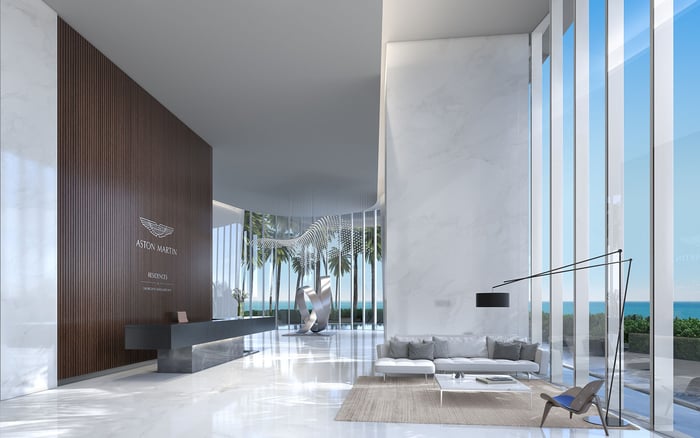
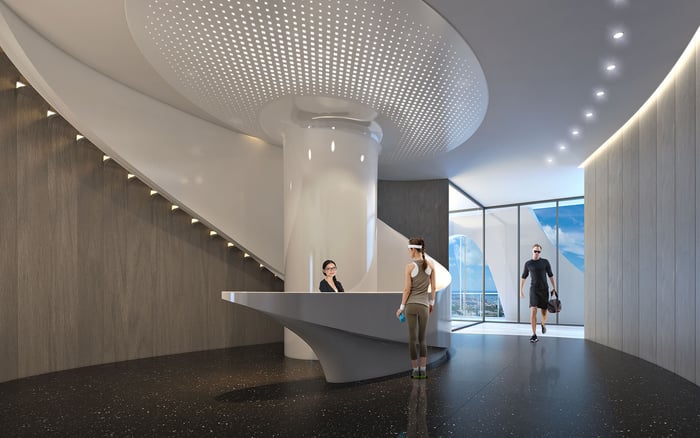
Aston Martin Residences advertises a sophisticated elevator system, but speed, private access and outage resilience are distinct considerations. Buyers should verify residence-specific elevator service, emergency-power assignments and the practical limits of generator coverage before relying on uninterrupted daily comfort.
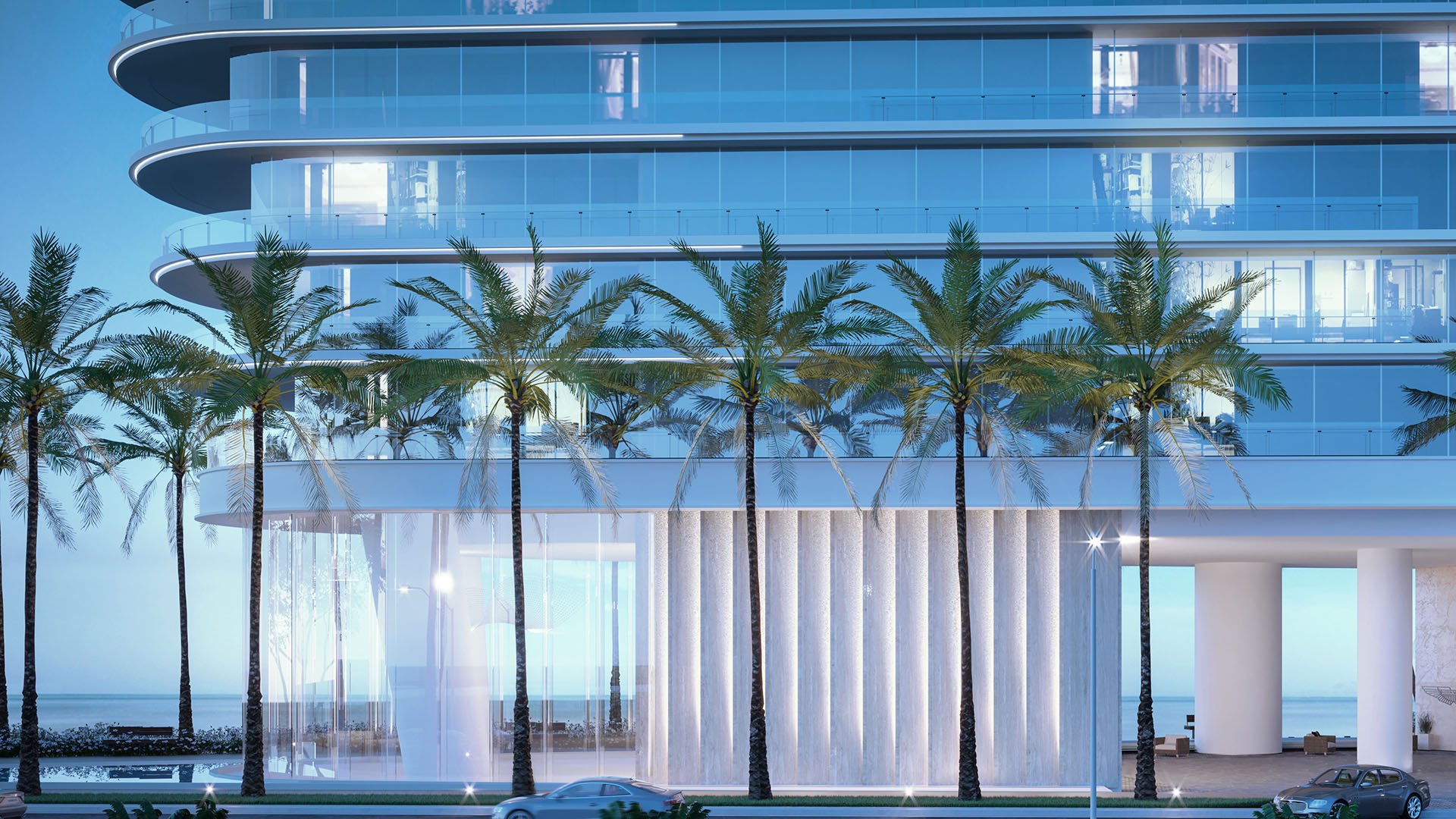
For a buyer at Aston Martin Residences Downtown Miami, a graceful arrival is part of the appeal. The more revealing question, however, is what happens when an elevator is unavailable or utility power fails. Daily resilience depends on equipment, electrical coverage and operating procedures-not simply the number of elevator doors outside a residence.
At 300 Biscayne Boulevard Way in Downtown Miami, the completed tower comprises 391 residences across 66 stories. Its official opening and completion were announced on April 30, 2024. That vertical scale makes circulation a meaningful part of ownership, from leaving for an appointment to receiving deliveries or reaching the amenities.
The essential distinction is straightforward: multiple elevators may offer alternatives when one fails, but they do not establish continued service during a building-wide power outage. Buyers should evaluate those scenarios separately.
Advertised specifications describe 10 destination-controlled, super-high-speed elevators, plus separate dedicated service elevators whose number is not specified. The destination-dispatch system is designed to shorten passenger travel time, while access from the main lobbies is restricted to residents’ own floors for enhanced security.
Advertised speeds reach up to 1,200 feet per minute. That is a travel-speed specification, not a measured waiting-time guarantee. Nor does a tower-wide elevator count establish how many cabs serve a particular residence or which alternatives remain available when one is offline.
Some advertised specifications predate completion. Ask management to confirm the installed equipment and current operating arrangements rather than treating early specifications as a complete account of service today.
For a buyer also considering One Thousand Museum Downtown Miami, the useful comparison rests on documentation: residence-specific cab assignments, maintenance history and emergency operation. The specifications available here do not support a resilience ranking between the buildings.
A private elevator lobby and dual high-speed elevators are described for at least one three-bedroom residence. That supports the configuration for some units, not every home in the building. Even where two cabs are present, private access does not prove that either can independently maintain service under every failure scenario.
Ask management to identify the cabs serving the exact residence under consideration. Establish whether either can provide access when the other is unavailable, what restrictions apply and whether a service elevator is an authorized alternative. The answers should address actual resident use, not merely the presence of another cab.
The service-elevator question deserves particular attention. Separate service elevators are advertised, but their availability to residents during passenger-elevator failures still needs confirmation.
Review maintenance history, outage logs and contractor response commitments alongside the access arrangements. A second elevator is a potential alternative; its practical value depends on whether it can serve the home when needed.
The available public specifications do not establish generator capacity, elevator emergency-power assignments, air-conditioning coverage or outage runtime. Those details remain unverified. This does not mean backup power is absent; it means buyers should not assume how much it covers.
Request an emergency-load schedule or an engineer’s letter identifying exactly what backup power supports. The review should distinguish among elevators, domestic-water pumps, common-area HVAC, in-unit air conditioning, refrigeration, lighting and outlets. An assurance that a building has backup power is no substitute for a defined list of supported equipment.
For elevators, confirm which cabs are assigned emergency power, which floors they serve and what operating restrictions apply during an outage. For the residence, determine whether the covered circuits support the functions that matter to the household.
The same questions belong in a review of Baccarat Residences Brickell if it is on the shortlist. The purpose is to apply a consistent standard of evidence, not to imply equivalent systems or superior performance at either address.
Resilience is personal. One household may prioritize reliable access and refrigeration; another may need clarity on in-unit cooling, water service or communications. Write those priorities down before reviewing the electrical documentation so that broad assurances do not obscure the functions that matter most.
Amenity access also warrants attention. The principal amenities occupy floors 52-55 and are interconnected by a glass staircase; the advertised infinity pool is on the 55th floor. Ask whether emergency elevator operation reaches those levels and whether amenities remain accessible under the building’s outage procedures. The staircase between amenity floors does not itself establish an alternative route from a residence.
A digital connection from every residence to the concierge and building amenities is also advertised. Its availability during outages is not established. Confirm how management communicates if that connection becomes unavailable and how residents obtain assistance under restricted operating conditions.
An equipment schedule is only part of the ownership picture. Ask for generator runtime at a stated load, fuel-storage information and refueling arrangements. A runtime figure is meaningful only when paired with the operating conditions to which it applies.
Request recent generator-test records and current outage procedures. These should clarify elevator restrictions, resident communications and the services management expects to preserve. Do not infer full-home backup power or particular emergency-power obligations from the building’s height, completion date or branding.
For a second-home buyer, ask how these procedures work when the owner is away. Establish how management will communicate and which residence-level functions are covered before relying on continuity between visits. For a full-time resident, assess the same documents against an ordinary day: departing the building, returning home, receiving essentials and maintaining indoor comfort.
Before committing, assemble three complementary records: the residence-specific elevator access plan, the emergency-load documentation and the current maintenance and outage procedures. Together, they establish what serves the home, what remains powered and how management handles interruptions.
Where the documents are technical, seek clarification from management or a qualified engineer. Ask for written answers tied to the residence rather than a general description of the tower. Throughout the review, distinguish advertised features from confirmed operating capabilities.
Aston Martin Residences’ advertised elevator system warrants investigation. A more informed buying decision weighs speed and privacy alongside confirmed alternatives, defined electrical coverage and credible operating procedures. Those details connect an exceptional address to a dependable daily experience.
For a considered approach to South Florida luxury ownership, explore MILLION.
If branded residences are on your mind — as a home or as an allocation — we would be glad to share what we are seeing, privately.
Begin a quiet conversationAston Martin Residences is at 300 Biscayne Boulevard Way, Miami, FL 33131, in Downtown Miami.
The tower contains 391 residences across 66 stories. Its official opening and completion were announced on April 30, 2024.
The advertised specifications describe 10 destination-controlled, super-high-speed elevators and separate dedicated service elevators. The service-elevator count is not specified.
No. The published speed of up to 1,200 feet per minute describes travel speed, not measured waiting times.
That configuration is described for at least one three-bedroom residence, but it is not established for every home. Confirm the arrangement for the specific residence.
No. Multiple cabs may provide alternatives during individual equipment failures, but outage operation depends on emergency-power assignments and operating procedures.
No. Generator capacity, elevator emergency-power assignments, air-conditioning coverage and outage runtime remain unverified in the available public specifications.
Request an emergency-load schedule or engineer’s letter identifying covered equipment and circuits. It should distinguish elevator service, water pumps, HVAC and residence-level functions such as refrigeration, lighting and outlets.
The principal amenities are on floors 52–55, with the infinity pool advertised on floor 55. Buyers should confirm whether emergency elevator service reaches those levels and whether amenities remain accessible.
Review elevator maintenance history, outage logs, contractor response commitments and recent generator-test records. Also request runtime at a stated load, fuel and refueling arrangements, and resident communication procedures.