A disciplined comparison of two coveted island markets, focused on flood exposure, access continuity, building resilience, association governance, and insurability.
Fisher Island and Key Biscayne offer distinct expressions of private island life, yet neither can be evaluated responsibly through lifestyle alone. For the waterfront buyer, the more useful comparison lies in the interplay among elevation, construction, coastal exposure, access, association governance, and insurance. The island name establishes context. The individual residence determines the risk.
That distinction is especially important when comparing a Fisher Island condominium with either a condominium or single-family residence on Key Biscayne. Ownership structures, maintenance obligations, policy architecture, and physical defenses can differ materially. Even neighboring properties may occupy different flood zones or have different lowest-floor elevations, drainage systems, seawalls, glazing, roofs, generators, and claims histories.
This framework belongs in any serious set of MILLION Buyer's Guides: establish the physical exposure, test operational readiness, and then determine whether insurance terms and ownership costs remain acceptable under realistic storm scenarios.
The island establishes context, but the individual residence determines the risk.
Fisher Island has no bridge or causeway. Ferry or boat access is central to daily movement-and becomes an additional operational variable before and after a storm. A buyer should understand when ferry service may be suspended, how evacuation instructions are communicated, what governs resident re-entry, and how staff, contractors, materials, fuel, and repair equipment reach the island after an event.
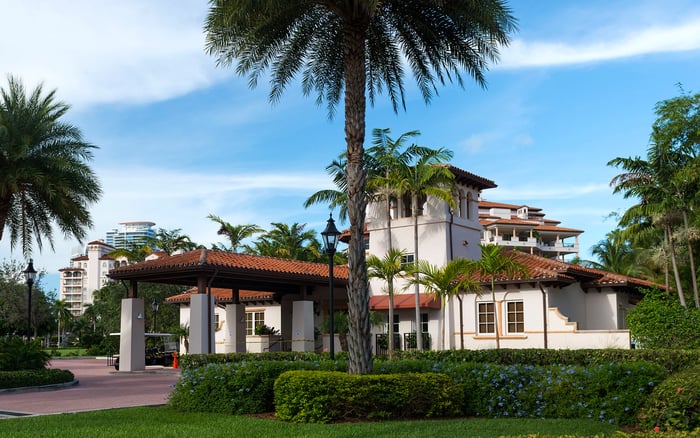
These questions apply whether considering an established condominium such as Palazzo del Sol or a newer offering such as The Residences at Six Fisher Island. The answers should be established through building documents, management protocols, emergency plans, and direct confirmation-not assumptions based on prestige.
Key Biscayne connects to the mainland through the Rickenbacker Causeway. Routine vehicle evacuation and post-storm access are therefore more direct than ferry-dependent travel, but the village still relies on one principal route. Buyers should consider departure timing, possible restrictions, re-entry procedures, and the practical effects of congestion or temporary closure.
Access is not a binary choice between convenient and inconvenient. It is a question of continuity. Fisher Island adds a managed marine-transport layer. Key Biscayne offers road access concentrated in a single principal corridor.
Fisher Island is mapped in FEMA Zone AE and carries a severe flood-risk score of 84 out of 100, reflecting exposure to the 100-year base-flood event. Flood insurance is generally required when a property in the mapped high-risk zone is financed with a federally regulated or government-backed mortgage. Cash buyers should not interpret the absence of a lender mandate as evidence that coverage is unnecessary.
Key Biscayne also carries substantial coastal exposure and high flood risk, with common designations including Zones AE, VE, and X. Storm surge, tidal flooding, and wave action are central concerns. Because those zones represent different conditions, no island-wide generalization can replace a parcel- and building-level review.
In either market, obtain the current elevation certificate, FEMA map designation, base-flood elevation, and lowest-floor information. Confirm whether enclosed lower areas, parking, storage, mechanical equipment, or other improvements could be vulnerable. For an oceanfront residence, wave exposure and the protection of openings deserve particular attention alongside flood depth.
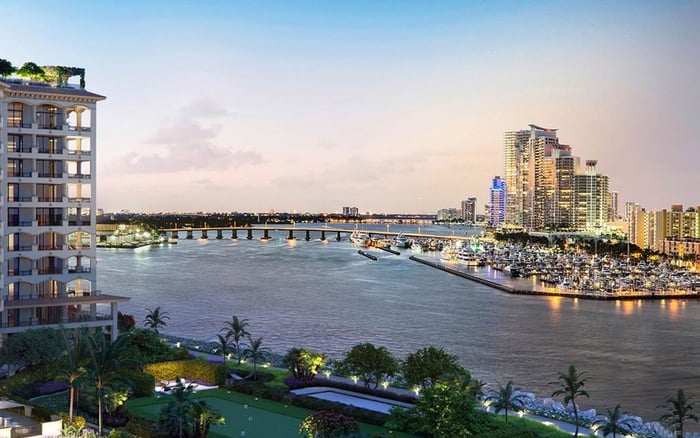
A buyer considering Oceana Key Biscayne should still complete this unit- and building-specific analysis. A recognizable address does not reveal where critical systems are located, how the association allocates deductibles, or what a personal policy must cover.
For a condominium, request the complete master policy-not a summary page. Review the named-storm deductible, flood and storm-surge sublimits, ordinance-and-law protection, exclusions, loss runs, reserves, engineering reports, prior special assessments, and any open claims. Determine how a major deductible could be allocated among owners and whether the association's coverage is walls-out only.
The personal policy should be structured around the gaps. Interiors, improvements, furnishings, art, contents, temporary housing, loss assessment, personal liability, and excess flood exposure may require separate limits. Residences at Palazzo della Luna and estate-oriented properties such as The Links Estates at Fisher Island may present different ownership and coverage questions, making it essential to verify the legal structure and policy language for the specific asset.
For a Key Biscayne single-family home, the owner's diligence extends to the entire envelope and site. Review roof age and condition, wind-mitigation features, impact protection, seawall condition and height, drainage, backflow prevention, lowest-floor elevation, generator capacity, and the placement of electrical and mechanical systems. Confirm responsibility for every component, then price both immediate work and longer-term resilience improvements.
The distinction is straightforward: condo buyers investigate shared systems and collective financial capacity; single-family buyers assume direct responsibility for the structure, grounds, and protective infrastructure.
Insurance should be tested early, not left as a closing formality. Request binding flood and wind quotes based on the precise residence, occupancy, construction details, mitigation credits, and intended use. A second-home profile may be treated differently from a primary residence, so policy conditions should be reviewed rather than inferred from a premium indication.
Ask the insurance adviser to model deductibles in dollar terms, including the named-storm deductible under the association's policy and the owner's own coverage. Confirm replacement-cost assumptions, water-related exclusions, temporary living-expense limits, loss-assessment protection, and whether excess flood coverage is appropriate. The least expensive quote may offer the weakest response where the owner needs it most.
For Fisher Island, pair the policy review with operational questions about ferry suspension, marina procedures, emergency power, fuel storage, resident communications, contractor access, and post-storm staging. For Key Biscayne, pair it with causeway planning, property drainage, seawall review, roof and opening protection, and municipal re-entry procedures.
Fisher Island's market position is unusually rarefied. Its luxury-condo median reached approximately $6.1 million and $1,839 per square foot in the first quarter of 2024. The median rose to $2,004 per square foot in the first quarter of 2025, then reached $2,708 per square foot with an $11.2 million median sale price by the third quarter of 2025.
Those figures define a narrow ultra-prime market, but they do not price a building's resilience or an individual unit's insurance profile. A July 2024 sale at 7600 Fisher Island Drive closed at $11.825 million, or approximately $3,150 per square foot, illustrating how specific assets can diverge from broader medians.
Key Biscayne demands a more asset-specific comparison across condominiums and individual residential parcels. Buyers should resist relying on a single island-wide benchmark when property type, waterfront orientation, elevation, seawall responsibility, construction, and coverage structure may differ substantially.
The final decision is not simply exclusivity versus accessibility. Fisher Island offers an exceptionally concentrated luxury-condo market with ferry-dependent operations. Key Biscayne provides direct causeway access and a broader mix of condos and homes, while retaining meaningful coastal-flood exposure and reliance on one principal route.
A disciplined buyer should compare elevation documents, building systems, emergency protocols, association finances, insurance terms, and total carrying costs side by side. The preferred property is the one whose exposure is visible, whose responsibilities are clear, and whose storm plan remains credible after the view has been set aside.
For discreet guidance on evaluating South Florida island residences, consult MILLION.
If branded residences are on your mind — as a home or as an allocation — we would be glad to share what we are seeing, privately.
Begin a quiet conversationFisher Island is mapped in FEMA Zone AE and has a severe flood-risk score of 84 out of 100, indicating exposure to the 100-year base-flood event.
It is generally required for properties in the mapped high-risk zone when financed by a federally regulated or government-backed mortgage. Cash buyers should still assess coverage carefully.
Key Biscayne connects by the Rickenbacker Causeway, while Fisher Island relies on ferry or boat access. Key Biscayne still depends on one principal route.
Key Biscayne commonly includes FEMA Zones AE, VE, and X. The designation and related requirements should be confirmed for the individual parcel and building.
Request the current elevation certificate, FEMA designation, base-flood elevation, insurance policies, loss runs, engineering reports, reserves, and binding flood and wind quotes.
Review named-storm deductibles, flood and storm-surge sublimits, ordinance-and-law coverage, exclusions, loss runs, and how deductibles may be allocated to owners.
Review the roof, impact protection, wind mitigation, seawall, drainage, backflow prevention, lowest-floor elevation, generator, and placement of critical systems.
Ferry dependence can affect evacuation, re-entry, contractor movement, delivery of materials, and post-storm repairs. Buyers should verify the applicable operating protocols.
No. Community-level scores provide context, but property elevation, construction, protective systems, maintenance, and policy terms determine the buyer's practical exposure.
Compare specific properties through elevation, access continuity, physical resilience, ownership structure, association finances, insurance terms, and total carrying costs.