A discreet decision framework for families evaluating a move from Geneva to Bal Harbour, with emphasis on school fit, club access, daily travel, privacy, and residential due diligence.
A relocation from Geneva to Bal Harbour should be approached as an operating decision before it becomes a property decision. The residence establishes the setting, but school schedules, extracurricular commitments, business travel, household staffing, club use, medical appointments, and visiting relatives will determine whether daily life feels composed.
Begin by mapping a representative week for every family member. Include departure windows, likely return times, recurring evening commitments, weekend plans, airport transfers, deliveries, and staff movements. Then assess each residence against that calendar rather than relying on a single daytime tour.
For MILLION readers, the central lenses are Bal Harbour, Lifestyle, Waterfront, Private-school planning, and Beach-access expectations. Unlike generic Buyer's Guides, this process should be tailored to one household and its standards of privacy, service, and flexibility.
Private-school selection deserves its own diligence track. Families can compare academic approach, admissions timing, grade availability, language support, learning resources, extracurricular programs, calendar alignment, transportation options, and expectations for parent participation. Every material point should be confirmed directly with the institution before a housing decision is made.
The essential question is not simply whether a school appears convenient on a map. It is whether the full routine works for siblings in different grades, after-school activities, caregivers, drivers, and parents with separate schedules. A residence that performs beautifully during a viewing may feel less effortless when several daily movements overlap.
Build at least two school scenarios into the search. The preferred option should guide the initial radius, while an alternative preserves flexibility if admissions, timing, or educational fit changes. Housing flexibility can be especially valuable during the first academic cycle, while the family is still establishing its South Florida rhythm.
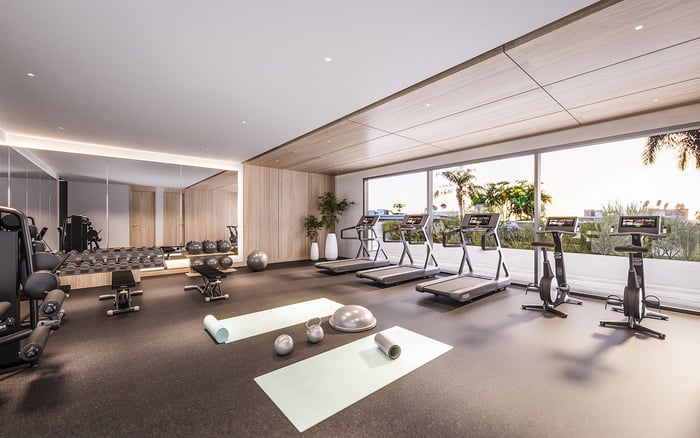
Club membership, hotel privileges, marina arrangements, wellness access, and residential amenities should never be treated as interchangeable. Determine what is included with ownership, what requires a separate application or fee, what remains subject to availability, and which rules apply to children, guests, instructors, caregivers, and household staff.
The review should extend beyond an amenity inventory. Consider reservation procedures, guest policies, seasonal demand, dress expectations, operating hours, privacy practices, and whether the spaces genuinely support the household's preferred routine. Whenever access influences the purchase decision, written confirmation matters.
Within the residential search, Oceana Bal Harbour and Rivage Bal Harbour should be evaluated as distinct candidates rather than assumed equivalents. The comparison should center on the specific residence, current governing documents, service structure, and the family's priorities.
Online estimates are only a preliminary filter. Rehearse each important route at the hour it will actually be used, in both directions, and repeat the exercise on more than one day. Test school drop-off, office travel, appointments, social plans, and airport departures separately. Account for parking, building exit time, pickup coordination, and the final walk to the destination.
Families should also model disruption. Consider what happens when two children need transport simultaneously, a parent has an early departure, a caregiver is unavailable, or weather alters the routine. A resilient plan may involve multiple drivers, clear vehicle staging, backup pickup permissions, and realistic buffers.
If the search expands beyond the original address preference, options such as The Surf Club Four Seasons Surfside and The Well Bay Harbor Islands should undergo the same commute testing. Expansion should follow evidence from the family's rehearsals, not an abstract sense of proximity.
Security questions should be precise, discreet, and directed to the appropriate building representatives and independent advisers. Review arrival control, visitor authorization, package handling, service access, garage procedures, elevator access, camera coverage, key and credential management, incident escalation, and emergency communication.
The residence requires a separate assessment. Families may wish to examine sightlines, terrace and window access, alarm integration, secure storage, communications resilience, staff protocols, and procedures for children arriving with drivers or caregivers. Digital privacy deserves equal scrutiny, including network separation, smart-home permissions, vendor access, and the removal of prior-user credentials.
Household operations are often the decisive layer. Establish written rules for guests, contractors, photographs, deliveries, travel information, keys, vehicles, and social media. The objective is not conspicuous protection, but a calm system in which family members and trusted staff understand how access is granted, recorded, and withdrawn.
Before making an offer, create a weighted scorecard grounded in the family's actual priorities. Categories might include school routine, privacy, security, staffing logistics, guest accommodation, outdoor use, service quality, storage, vehicle handling, noise sensitivity, and ease of departure. Weighting keeps a dramatic view or polished presentation from eclipsing everyday requirements.
Assess the exact unit as carefully as the building. Orientation, arrival sequence, elevator relationship, internal circulation, bedroom separation, staff workspace, deliveries, and storage can materially shape family life. Request current documents and written answers, then have qualified legal, tax, immigration, insurance, security, and property professionals review matters within their disciplines.
For a Geneva family, continuity may matter as much as novelty. Identify what must remain familiar, what can change, and what the move is intended to improve. That clarity transforms Bal Harbour from an attractive idea into a residence strategy built around education, discretion, and time.
Should the family choose a school or a residence first? Define the school strategy first, then test residences against the resulting weekly schedule and backup options.
How should parents compare private schools? Compare educational fit, admissions status, calendars, languages, support, activities, transport, and parent commitments directly with each institution.
Can a map provide a reliable school commute? A map is a starting point. Rehearse the complete journey at the relevant hours, including pickup, parking, and building exit time.
Should club privileges be assumed with ownership? No. Confirm in writing what is included, separately administered, fee-based, application-based, restricted, or subject to availability.
What security questions belong on the first tour? Ask about visitor approval, deliveries, service access, garages, elevators, credentials, incident response, and emergency communication.
Does the exact residence matter as much as the building? Yes. Arrival sequence, layout, exposure, circulation, storage, staff flow, and access points can reshape the household experience.
How many commute tests are sensible? Test every essential route in both directions on multiple days, at the times the family expects to travel.
How should household staff be included in planning? Map staff arrivals, parking, access permissions, work areas, deliveries, handoffs, confidentiality rules, and backup responsibilities.
What should be confirmed before an offer? Confirm the residence details, governing documents, costs, access rules, operational procedures, and professional reviews relevant to the family.
Is a backup residence area worth considering? Yes. A carefully tested alternative can preserve flexibility if school, inventory, timing, or household priorities change.
When you're ready to tour or underwrite the options, connect with MILLION.
If branded residences are on your mind — as a home or as an allocation — we would be glad to share what we are seeing, privately.
Begin a quiet conversation