A buyer-focused comparison of Faena Residences Miami Downtown Miami and Viceroy Brickell, centered on how sophisticated penthouse purchasers should evaluate scale, roof rights, terrace usability, and wind-protected outdoor rooms without relying on unsupported assumptions.

Faena Residences Miami Downtown Miami and Viceroy Brickell sit in the same rare conversation: design-conscious vertical living for buyers who want Miami’s urban energy without surrendering the rituals of a private home. Yet for the uppermost residences, prestige is only the entry point. The more decisive questions are quieter and more technical: how large the penthouse truly lives, what rights attach to the roof, and whether the outdoor rooms remain comfortable when wind, sun, and exposure are part of daily life.
That distinction matters because a buyer can admire two names with equal confidence and still reach very different conclusions. One residence may feel monumental through ceiling height, lateral width, and view composition. Another may prove more useful because its private exterior space is protected, connected to the principal rooms, and easy to furnish. In Miami, where Downtown and Brickell are separated by proximity more than lifestyle ambition, the best purchase is often the one that answers these questions with the least ambiguity.
Downtown Miami has become a setting for buyers who want cultural proximity, bay orientation, and a more civic version of waterfront-adjacent living. Faena Residences Miami Downtown Miami belongs to that Downtown conversation, and its appeal is naturally tied to the idea of a full lifestyle address rather than a conventional apartment tower. For a purchaser evaluating Downtown, the question is not simply whether the building is impressive. It is whether the residence can operate as a private stage above the city.
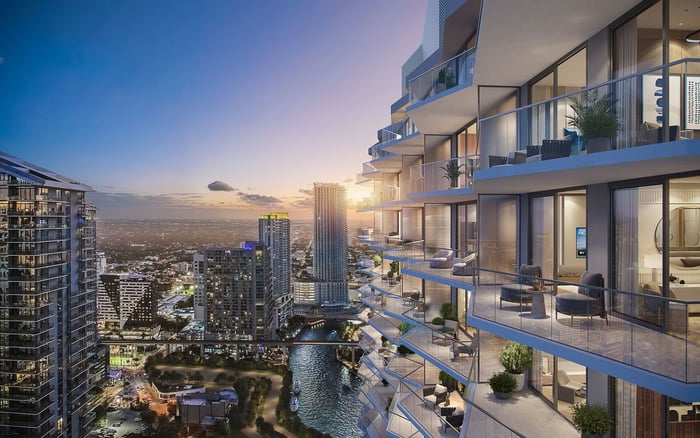
Brickell carries a different energy. It is financial, social, walkable, and intensely vertical. Viceroy Brickell invites buyers to consider an address within one of Miami’s most active luxury corridors. But Brickell buyers should be especially precise about how the upper floors handle privacy, access, exterior comfort, and protected views. In a neighborhood defined by towers, a penthouse must be judged not only by height, but by separation, usable volume, and the confidence of its legal and architectural package.
This is where the comparison becomes useful. Downtown may reward breadth, spectacle, and a more destination-driven residential identity. Brickell may reward convenience, intensity, and immediacy. Neither answer is automatically better. The right answer depends on whether the buyer is purchasing atmosphere, usable space, rights, or a carefully balanced mix of all three.
Penthouse scale is often described in square footage, but experienced buyers know that the number can mislead. A dramatic floor plan may live smaller if circulation is inefficient, if terraces are narrow, or if the principal rooms do not connect cleanly to the view. Conversely, a more measured plan can feel expansive when the primary suite, salon, dining area, and outdoor rooms align with purpose.
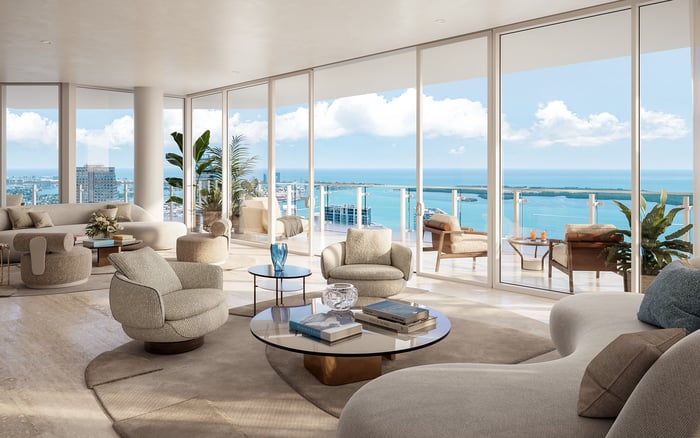
For Faena Residences Miami Downtown Miami, the buyer’s task is to read the Downtown setting through proportion. Does the plan create a true sense of arrival? Are the primary entertaining rooms broad enough for art, furniture, and movement? Is the view treated as a wall of atmosphere or merely as a backdrop? These are the questions that separate a prestigious upper-floor apartment from a true private residence.
For Viceroy Brickell, the same discipline applies, but with an added urban filter. Brickell rewards buyers who understand view corridors, neighboring towers, sun exposure, and noise orientation. A residence may be high, but if the outdoor space cannot support dining, lounging, and privacy, the buyer is paying for altitude more than livability. In this segment, scale should be tested room by room, not accepted as a single marketing line.
The phrase “roof rights” sounds glamorous, but it is fundamentally legal and operational. A roof can be private, limited common, shared, restricted, service-dependent, or governed by rules that matter more than the romance of the view. Before valuing a roof as part of a penthouse, a buyer should understand what can be accessed, furnished, improved, maintained, insured, and transferred.
This is especially important in high-profile residences, where amenity programming and private ownership can exist side by side. A purchaser should distinguish between exclusive use and true ownership, between private access and association control, and between a roof that is architecturally integrated and one that functions as an occasional bonus. Downtown and Brickell both offer spectacular skyline moments, but not every rooftop condition converts into private value.
The most sophisticated buyers treat roof rights as a document-review issue before treating them as a lifestyle feature. If the roof is central to the purchase thesis, the value should be supported by clear rights, clear obligations, and a clear understanding of what future modifications are possible. Without that clarity, a roof may be beautiful, but it should not be priced as fully controlled private space.
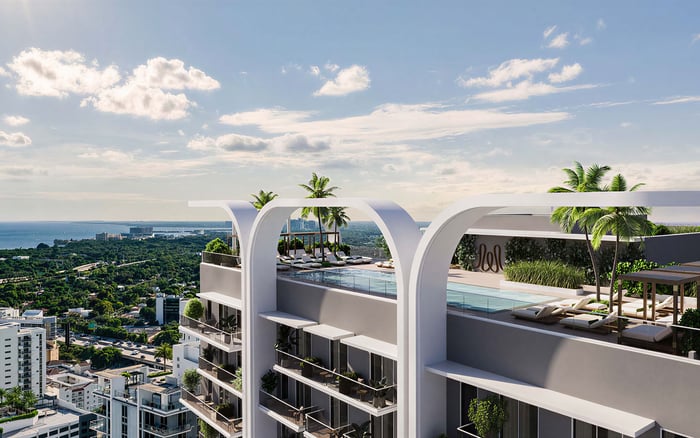
Miami buyers love terraces, but not all terraces become rooms. Wind, direct sun, cross-exposure, rail height, ceiling cover, and furniture depth determine whether outdoor space can be used in the morning, at sunset, or only on perfect days. In the upper ranges, the word terrace should imply more than a ledge with a view. It should describe a living environment.
A wind-protected outdoor room can transform the character of a penthouse. It allows breakfast without improvisation, evening drinks without discomfort, and entertaining without retreating indoors when conditions shift. It also changes how the interior lives, because sliding doors, covered edges, and sheltered corners can make the salon feel larger and more relaxed.
For both Faena Residences Miami Downtown Miami and Viceroy Brickell, the buyer should examine outdoor space in practical terms. How deep is it? Is there cover? Can a dining table sit there without blocking movement? Does the layout create privacy from adjacent residences? Does the exposure invite breezes or punish the space with constant wind? The answers can matter as much as the name on the façade.
Waterview is one of Miami’s most powerful value drivers, but it is rarely a single category. A bay view, river view, skyline view, and long urban horizon each create a different emotional and financial proposition. Downtown may offer a layered sense of city, water, arts, and bay movement. Brickell may offer a denser frame of towers, water glimpses, and metropolitan drama.
The most compelling view is not always the widest. It is the one that aligns with how the owner lives. A collector may want protected walls and controlled light. A frequent host may want an exterior room that photographs beautifully at dusk. A seasonal resident may want morning water and immediate walkability. In this segment, view value must be interpreted through use, not only through direction.
That is why two residences with comparable prestige can produce different buyer decisions. One may satisfy the desire for iconic presence. Another may offer the day-to-day efficiency of Brickell. The question is not which name is louder. The question is which home gives the owner more command over space, light, privacy, and time.
Start with the private residence, not the building story. Walk the plan mentally from arrival to entertaining to sleeping to outdoor living. If the sequence feels natural, the penthouse has a foundation. If it depends on explanation, the buyer should pause.
Then separate rights from impressions. Roof access, terrace use, storage, parking, service circulation, and alteration potential should be understood before emotional pricing takes over. Luxury buyers are not merely purchasing finishes. They are purchasing control.
Finally, test the outdoor rooms against Miami’s climate. A beautiful view that cannot be used is still valuable, but it is different from a protected exterior room that becomes part of daily life. For buyers weighing Downtown against Brickell, that distinction may be the most revealing one.
Is Faena Residences Miami Downtown Miami positioned as a Downtown project? Yes. It is treated here as part of the Downtown luxury conversation and evaluated through that lens.
Can Viceroy Brickell be compared directly on penthouse size? It can be compared conceptually, but buyers should verify exact dimensions before relying on any size conclusion.
What is the most important penthouse scale question? Ask how the residence lives in practice, including room width, ceiling presence, circulation, and usable outdoor space.
Are roof rights the same as rooftop access? No. Access may be limited or governed, while true private rights require clear documentation and defined responsibilities.
Why do wind-protected outdoor rooms matter in Miami? They make terraces more usable across more days, turning exterior space into part of the living program.
Is Brickell better than Downtown for a penthouse buyer? Not inherently. Brickell favors urban immediacy, while Downtown may appeal to buyers seeking a broader civic and cultural setting.
How should a buyer evaluate Waterview quality? Consider direction, permanence, privacy, glare, and how the view supports the owner’s daily routines.
Does a terrace always add equal value? No. Depth, cover, wind exposure, privacy, and connection to interior rooms determine how valuable it feels.
What should be reviewed before valuing a private roof? Ownership language, exclusive-use rights, maintenance duties, insurance, access, and alteration restrictions should be reviewed.
What separates a true penthouse from a high-floor residence? A true penthouse typically feels distinct in scale, privacy, outdoor living, arrival sequence, and control of key spaces.
To compare the best-fit options with clarity, connect with MILLION.
If branded residences are on your mind — as a home or as an allocation — we would be glad to share what we are seeing, privately.
Begin a quiet conversation