Waldorf Astoria’s advertised private arrival and concierge services invite a more detailed buyer conversation about visitor records, app permissions, hotel data boundaries, and any future biometric access proposal.
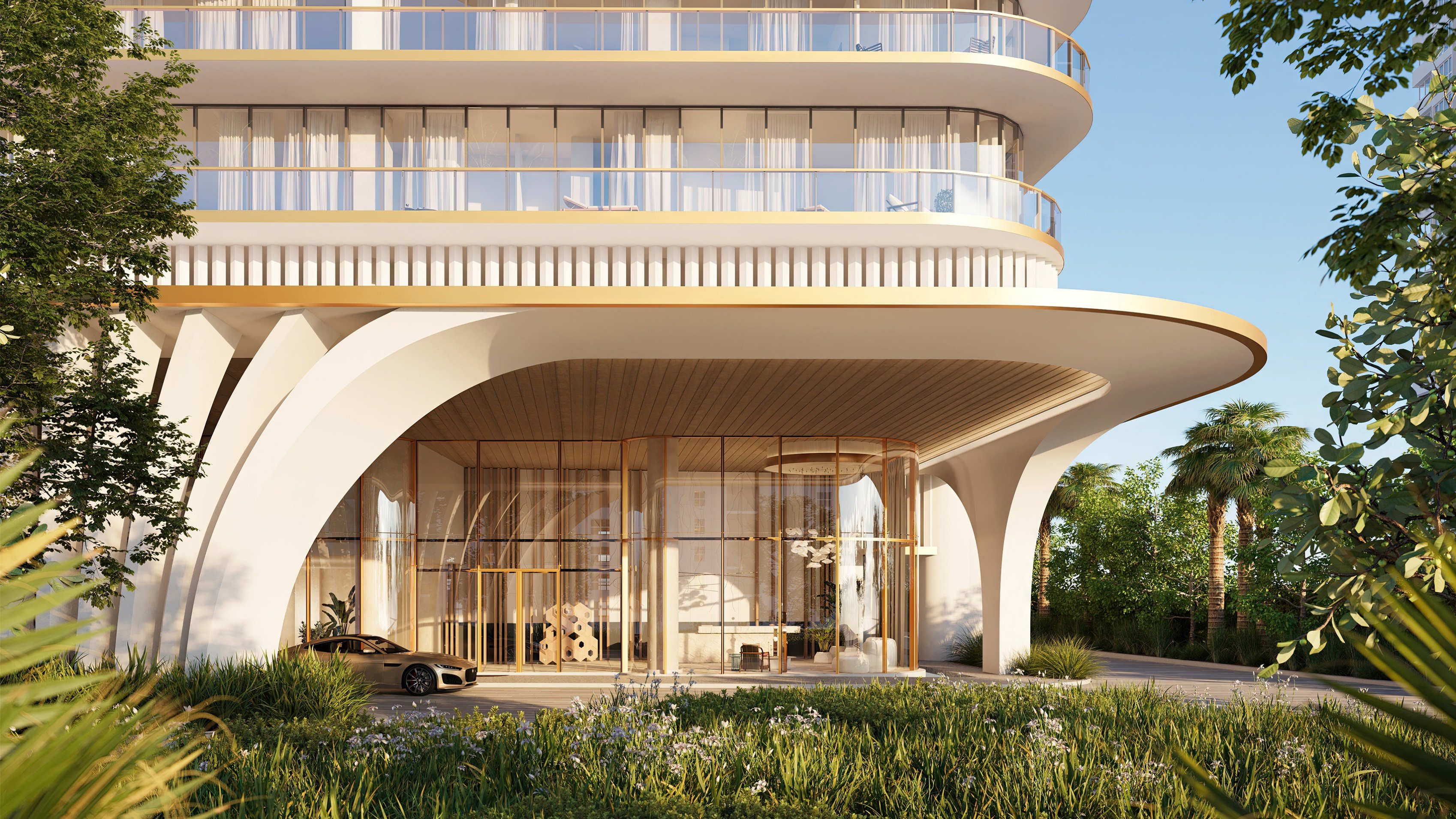
At Waldorf Astoria Residences Downtown Miami, the promise of discretion begins with the arrival sequence: an advertised private porte cochère, 24-hour valet service, and private residential entry. For a buyer who values an unobtrusive return home, those distinctions matter. They do not, however, answer a separate question: what information might accompany each arrival, guest invitation, or service request?
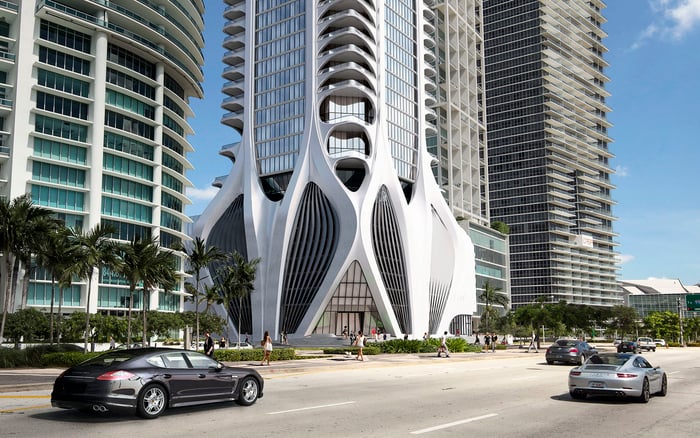
The planned hotel-and-condominium tower at 300 N Biscayne Boulevard in Downtown Miami combines 387 private residences with 205 hotel rooms. Its planned 100 stories and approximately 1,049-foot height establish its architectural scale. Privacy calls for a more intimate assessment: the household, its visitors, and the people authorized to see their information.
Visitor-registration practices and biometric access are not established project features here. The task is buyer due diligence-not an assumption that particular surveillance systems are installed or that advertised conveniences compromise privacy.
Advertised residential features include a private residential lobby and private and semi-private elevators. Alongside the private entry, these address how people move through a mixed-use building. Digital privacy concerns who can see information about that movement, if recorded, and for what purpose.
Buyers should request separate explanations of circulation and information access. Which employees serve only residences? Which functions involve hotel personnel? If an access event creates a record, is it visible only to security, or also to concierge, management, and outside providers?
These are distinct design questions. A beautifully separated entrance is not evidence of restricted database permissions. Nor should hotel integration automatically be read as a privacy weakness. What matters is whether responsibilities and boundaries are explicit.
A custom concierge app was previously advertised as accessible through a touchscreen monitor and iPad. Advertised functions include dining reservations, room service, spa and fitness treatments, valet, package delivery, and dog walking. Savant premium smart-home technology was also previously advertised.
These descriptions establish an advertised service concept, not a current operational specification. They do not establish that visitor registration is included, that smart-home information feeds into concierge systems, or that a particular access-control vendor has been selected.
Ask for a current demonstration and a written feature schedule. Can residents use concierge services without the app? Does each household member receive a separate account? Can a personal assistant receive limited permissions without seeing every reservation or delivery? What happens to access when that assistant leaves?
For owners comparing Aston Martin Residences Downtown Miami with Waldorf Astoria, the useful comparison is not an assumed difference in technology. It is whether each property can explain its permissions, service alternatives, and account controls in equally concrete terms.
The first visitor-data question is whether the proposed app handles guest registration at all. If it does, ask which fields are mandatory and which are optional. Buyers should understand whether an invitation requires only a name or also a telephone number, identification details, photograph, or other information.
Next, distinguish an invitation from a lasting record. Does an authorization expire after a visit? Does the associated information remain afterward? Can recurring permissions for household staff be withdrawn immediately? How are unexpected visitors handled without requiring unnecessary advance disclosure?
The review should extend beyond collection. Ask who can search visitor histories, who can export them, and whether staff access is itself logged. Request a defined retention schedule and an explanation of vendor sharing, including any permitted use unrelated to entry or service delivery.
Test these questions against an ordinary household scenario: a dinner guest, a caregiver, and a contractor arriving on different terms. The goal is appropriate access for each, without making every relationship equally visible.
Advertised residential services include 24-hour concierge assistance and dedicated on-site professionals. Advertised hotel benefits include house-account signing privileges and preferred access to the spa and other hotel venues. These conveniences warrant a closer look at the boundary between residential and hospitality information.
Ask how a hotel charge is associated with a residence and which details are visible to residential staff. Are billing records separate from guest-access records? Can service preferences be shared across departments, and can residents limit that sharing while retaining the underlying service?
A buyer need not reject personalization to expect discretion. The practical standard is a clear explanation of what is necessary to fulfill a request, what is optional, and who receives each category of information. That explanation should cover outside service providers as well as on-site teams.
Facial recognition, fingerprint enrollment, and a named biometric access vendor are not confirmed features of this project. They should not be implied by the presence of a concierge app, smart-home technology, or private elevators.
If biometric access is proposed, begin with choice. Is enrollment optional? Is an equivalent non-biometric credential available without reduced access or service? How would visitors, household employees, and residents who decline enrollment enter?
Then request the technical and governance details in writing: what is stored, where it is stored, who administers it, and whether outside vendors can access it. Ask how enrollment is revoked and what deletion means for retained copies. Any proposal should also explain the fallback when recognition fails or the system is unavailable.
The buying question is not whether the technology sounds advanced. It is whether its convenience is proportionate to the information requested and the controls offered.
For a broader search extending into Brickell, apply the same checklist to Cipriani Residences Brickell. This is a consistent evaluation framework, not a claim that the projects use comparable systems or share data practices.
At the pre-construction stage, request the current privacy notice, app terms, proposed access policies, retention schedule, and allocation of responsibility among residential management, hotel operations, and vendors. Distinguish features promised in purchase documents from marketing descriptions and operating policies that may change. Ask counsel which commitments are incorporated into the transaction and how later policy changes would be communicated.
Waldorf Astoria's advertised combination of private arrival, concierge service, and hotel privileges offers a compelling setting for these questions. The buyer's task is to connect each convenience to a clear rule: what is collected, why it is needed, who sees it, and when access ends.
A persuasive answer is more than an assurance of discretion. It is a usable service demonstration supported by clear written responsibilities and meaningful choices for the household.
For a discreet perspective on evaluating South Florida residences, explore MILLION.
If branded residences are on your mind — as a home or as an allocation — we would be glad to share what we are seeing, privately.
Begin a quiet conversationThe planned hotel-and-condominium tower is at 300 N Biscayne Boulevard in Downtown Miami.
The planned building program includes 387 private residences and 205 hotel rooms.
Advertised features include a private porte cochère, 24-hour valet service, and private residential entry. A private residential lobby and private and semi-private elevators are also described.
No. Facial recognition, fingerprint enrollment, and a named biometric access vendor are not confirmed project features.
Older materials advertised dining reservations, room service, spa and fitness treatments, valet, package delivery, and dog walking through a touchscreen monitor and iPad. These descriptions are not a current operational specification.
No. Buyers should ask whether the current proposed app handles visitor registration and which guest information would be required.
Ask who can view, search, or export records, how long they are retained, and whether vendors receive them. Also clarify how recurring visitor permissions are withdrawn.
No. Physical circulation features do not establish how information is collected, shared, retained, or protected.
Advertised benefits include house-account signing privileges and preferred access to the spa and other hotel venues. Buyers should clarify which billing and service details can be seen by residential staff and hotel personnel.
Request optional enrollment, an equivalent non-biometric alternative, and written details on storage, vendor access, revocation, and deletion. The proposal should explain entry procedures when the system is unavailable.