W Pompano Beach pairs private residences with rental-program suites, creating a budget structure that deserves close scrutiny. The first owner-controlled budget should clarify whether projected dues, shared-cost allocations and reserves reflect the property’s true operating demands.

For buyers evaluating W Pompano Beach Hotel & Residences, the most revealing financial document may emerge only after occupancy, when control has passed from the developer to the owners. That first owner-controlled budget should begin to show what it truly costs to operate an oceanfront, W-branded environment-not merely what a pre-construction model anticipates.
The distinction matters. A developer budget is prepared before a completed building has established its own patterns for insurance, utilities, staffing, maintenance and service consumption. An owner-controlled budget can reflect early operating experience, actual contracts and a more informed assessment of reserve requirements. It may not represent fully stabilized costs, but it should provide a clearer test of the assumptions made during sales.
W Pompano Beach is currently presented as a pre-construction development with estimated delivery in summer 2029. As a result, there is no completed-building operating history or owner-controlled association budget to examine today. Buyers must evaluate the available projections while preserving the right questions for turnover.
The central question is not simply what owners pay, but which owners pay for which services.
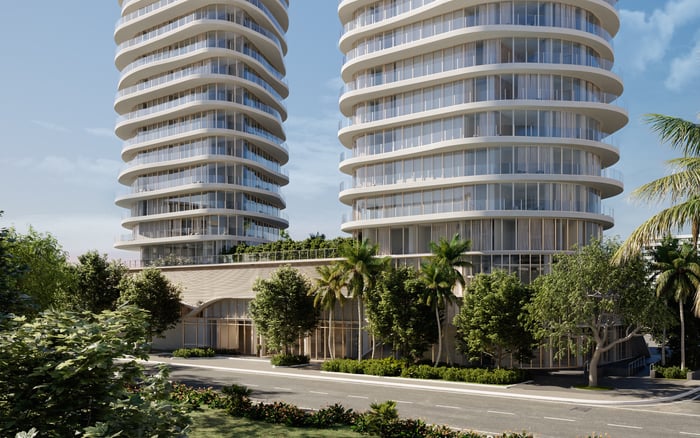
Planned for 20 North Ocean Boulevard in Pompano Beach, the approximately 3.7-acre, 24-story development is expected to contain 373 units. Its program combines 74 conventional private residences, three penthouses and 296 condo-hotel suites. Related Group and BH Group are developing the property under a Marriott licensing agreement for the W Hotels brand.
These components serve materially different operating purposes. The standard private residences are planned with two to four bedrooms and approximately 2,400 to 3,400 square feet. Three penthouses are marketed with private rooftop pools. None of these private residences is intended for daily rentals. By contrast, the fully furnished hotel suites range from studios to two-bedroom layouts spanning approximately 580 to 1,860 square feet, and owners may place them in the W Hotels rental program while away.
That mix makes this more than a routine branded-residences budget review. It belongs squarely within sophisticated buyer’s guides because private residential use, transient hotel use and shared amenities can create distinct levels of demand. The governing documents and allocation schedules should establish precisely how those differences translate into financial responsibility.
The pre-construction estimate places residential association fees at approximately $1.81 per square foot. For a 2,400-square-foot residence, that implies about $4,344 per month before any separately charged hotel-program or club costs. The figure is useful as an underwriting reference, but it should not be mistaken for proof of stabilized carrying costs.
The first owner-controlled budget should reveal whether that estimate was sufficiently comprehensive and realistic. Buyers should compare projected and actual spending across insurance, reserves, staffing, utilities, routine maintenance and branded services. They should also confirm whether the calculation uses the same square-footage definition presented during sales and whether any material expense falls outside the quoted association rate.
A variance is not automatically evidence of poor planning. Beachfront buildings can face evolving operating demands, and the first years may bring start-up adjustments. The more useful analysis asks why a line item changed, whether the change is recurring and which ownership group bears the cost.
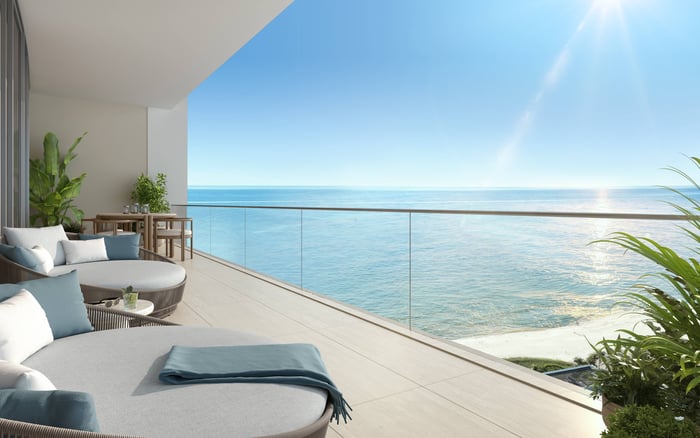
W Pompano Beach plans oceanfront pool areas, cabanas, spa and fitness spaces, food-and-beverage venues and beach services. Each amenity carries recurring costs that may include labor, utilities, cleaning, repairs, supplies and replacement planning. The decisive issue is how those expenses are divided among private residences, hotel suites and any master or shared-facilities entity.
Buyers should request separate pro forma budgets and allocation documents for every applicable association or operating entity. The review should identify which party contracts for each service, which component benefits and what formula determines each component’s contribution. Square footage, unit count and actual usage can produce markedly different outcomes, making the stated allocation method as important as the total expense.
Hotel-facing operations warrant particular scrutiny. Private residential owners should understand whether they contribute to services primarily associated with transient guests, food-and-beverage activity or rental turnover. Conversely, the documents should demonstrate whether the hotel component contributes appropriately to shared infrastructure and beachfront amenities.
The same discipline is useful when comparing other oceanfront options, although every declaration and budget is distinct. Nearby alternatives such as Armani Casa Residences Pompano Beach and The Ritz-Carlton Residences® Pompano Beach can help buyers frame questions about service scope, privacy and carrying costs without assuming that one project’s structure applies to another.
For condo-hotel purchasers, association costs represent only one layer of ownership. Rental-program economics should be assessed after management charges, housekeeping, taxes and other program expenses. Because the suites are delivered furnished, future operating statements should also clarify how furniture replacement is funded and whether it constitutes an association obligation, a hotel-program charge or an owner-specific cost.
Clear separation is essential to both transparency and investment analysis. Gross rental receipts do not establish net performance, and a general association figure cannot capture every hotel-program deduction. Buyers should seek documents that prevent the same expense from appearing indirectly in multiple places and explain which charges remain mandatory even when an owner does not participate in rentals.
The turnover budget should also demonstrate whether reserve contributions reflect the long-term demands of a beachfront property. Salt exposure, intensive amenity use and complex shared systems make disciplined maintenance planning essential, even when near-term operating costs appear controlled.
Insurance warrants a direct comparison between the sales-era assumption and the post-occupancy contract. Buyers should review coverage, deductibles, allocation among entities and any costs excluded from the main association budget. A lower headline fee carries less weight if significant obligations are deferred, billed separately or supported by thin reserves.
The same lens applies farther along the Broward coastline. Four Seasons Hotel & Private Residences Fort Lauderdale offers a relevant comparison for buyers considering branded hospitality, but W Pompano Beach must ultimately be judged by its own governing documents and operating structure.
Before committing, buyers should obtain all available proposed budgets, declarations, management and licensing disclosures, shared-facilities agreements, reserve assumptions and rental-program terms applicable to their chosen ownership type. Counsel and financial advisers can then map every recurring or contingent charge to the appropriate entity.
At turnover, owners should compare forecast and actual costs line by line, inspect material contracts and determine whether staffing levels align with occupied operations. They should distinguish start-up items that may disappear from expenses likely to rise with fuller occupancy, while identifying services funded outside regular dues. Penthouse buyers should also establish how rooftop-pool maintenance and related systems are treated.
Initial pricing-approximately $3.1 million for private residences and $775,000 for hotel suites when sales launched in November 2024-establishes two very different entry points. It does not resolve the carrying-cost question. The quality of the first owner-controlled budget will rest on its transparency, defensible allocations and credible planning for a complex oceanfront asset.
For discreet guidance on evaluating W Pompano Beach and South Florida’s luxury market, connect with MILLION.
If branded residences are on your mind — as a home or as an allocation — we would be glad to share what we are seeing, privately.
Begin a quiet conversationThe published pre-construction estimate is approximately $1.81 per square foot for residential association fees.
At $1.81 per square foot, the implied monthly fee would be approximately $4,344 before separately charged hotel-program or club costs.
It should provide a clearer comparison between developer-era projections and early actual costs for insurance, reserves, staffing, utilities, maintenance and branded services.
The development is planned with 373 units comprising 74 conventional residences, three penthouses and 296 condo-hotel suites.
The private residences are not intended for daily rentals, distinguishing them from the condo-hotel inventory.
Yes. Condo-hotel owners may place their suites in the W Hotels rental program when they are not occupying them.
Buyers should examine allocations for pools, cabanas, spa and fitness areas, food-and-beverage venues, beach services, utilities and shared infrastructure.
Operating statements should distinguish association expenses from rental-program charges such as management, housekeeping and furniture replacement.
Buyers should request the applicable pro forma budgets, declarations, allocation schedules, shared-facilities agreements, reserve assumptions and rental-program terms.
Current pre-construction marketing identifies estimated delivery in summer 2029.