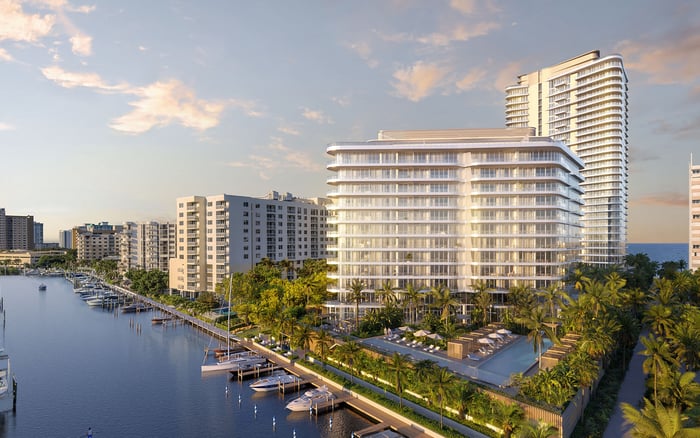
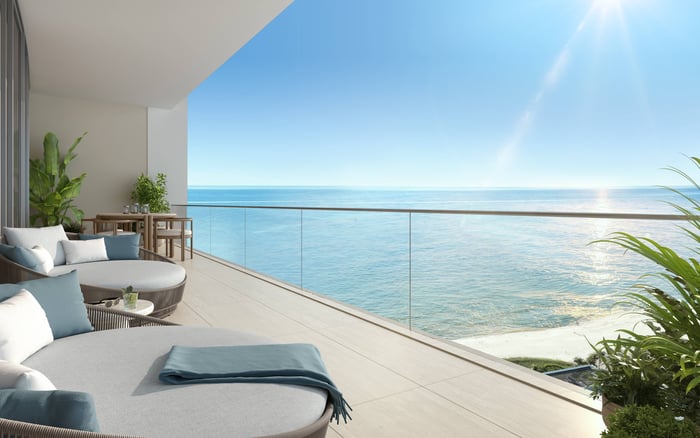
W Pompano Beach’s long-term appeal deserves an assessment beyond the brand. Shoreline maintenance, documented beach access, coastal approvals, and clearly allocated ownership responsibilities belong at the center of purchase diligence.

For a luxury buyer evaluating W Pompano Beach Hotel & Residences, the beach deserves the same attention as the residence. The essential question is not simply whether the sand is maintained, but how public shoreline planning, private responsibilities, and documented access fit together over a long ownership horizon.
Pompano Beach participates in a broader coastal-management framework, but that framework does not establish the condition of an individual frontage, the timing of its next intervention, or the financial obligations attached to a particular purchase.
A disciplined assessment separates three considerations: what was announced for the development, what regional beach management provides, and what property-specific documents confirm. A compelling branded proposition should withstand all three inquiries.
The development was announced in November 2024 as a planned 24-story hotel-and-residences project on a nearly four-acre site. The announced program included 74 condominium residences, three penthouse residences, and 296 condo-hotel suites. Starting condominium pricing was approximately $3.1 million at the time; it should not be treated as current pricing.
Those details establish the original proposition, not the project’s present construction status or final engineering approvals. Buyers should request current offering materials and distinguish the condominium residence under consideration from the condo-hotel component before evaluating ownership obligations.
Location language also warrants precision. The site has been described as both 20 N. Ocean Drive and 20 N. Ocean Boulevard. Descriptions also differ between beachfront and across from the beach. Confirm the legal address, parcel boundaries, and actual access route rather than treating an ocean-oriented presentation as proof of direct oceanfront ownership.
A survey and documented access arrangements are more useful than an address alone. They should clarify what is owned, what is crossed, and which rights support the route from residence to sand.
Broward County maintains its beaches through the Shoreline Protection Project, a federal partnership addressing coastal erosion. In 2016, the Segment II project placed approximately 650,000 cubic yards of sand along shorelines in Pompano Beach, Lauderdale-by-the-Sea, and Fort Lauderdale.
That history demonstrates a regional maintenance effort. It does not establish that the same volume served the W site or that a future placement has been scheduled at its frontage. The buyer’s inquiry should be narrower: which shoreline segment is relevant to this property, what monitoring is available, and what work is scheduled and funded there?
Regional beach-management strategies include monitoring, nourishment, inlet bypassing, and offshore sand sources. They also include placing beach-compatible maintenance-dredging material on adjacent beaches in areas of greatest need. These are tools for managing a changing shoreline, not evidence that erosion has been permanently resolved.
A buyer also considering The Ritz-Carlton Residences® Pompano Beach should apply the same location-specific questions. A shared municipality is not sufficient grounds to assume identical frontage conditions, access rights, or maintenance exposure.
Pompano Beach’s comprehensive planning framework commits the city to beach stabilization and erosion reduction, including participation in county renourishment when conditions require it. Beach-renourishment projects are intended to have a life of at least ten years.
The distinction between an objective and a warranty is central. That ten-year horizon is not a guarantee for an individual property, a fixed replenishment calendar, or an assurance of uninterrupted beach conditions throughout an owner’s holding period.
For purchase analysis, request the latest relevant nourishment schedule and funding status. Distinguish an adopted policy from a funded intervention, and a funded intervention from completed work. The planning objective should not be read as a ten-year period free of maintenance concerns or potential disruption.
City policies require new development permits to comply with shoreline and slope-stabilization regulations during and after development, including post-construction vegetative stabilization. Installing erosion-control devices on commercial or residential property also requires a city building permit.
The general erosion-control checklist calls for contractor documentation, a best-management-practice plan, and site plans showing fences, gates, and control devices. These requirements describe a permitting process; they do not establish that W Pompano Beach has obtained its project-specific coastal approvals.
Before committing, organize the coastal review around four document groups:
Property and access: the legal description, survey, parcel boundaries, and documented beach-access arrangements.
Coastal design: project-specific permits, setbacks, dune-interface plans, and any applicable approval conditions.
Public maintenance: the relevant shoreline segment, latest nourishment schedule, and funding status.
Ownership responsibilities: documents identifying who maintains applicable private improvements and how those costs are allocated.
Have qualified legal and coastal-engineering advisers reconcile these materials. The objective is to identify which obligations belong to public agencies, which belong to the property, and which remain unresolved. General municipal compliance is no substitute for that property-level review.
Brand identity and coastal diligence address different parts of a purchase. For W, the announced combination of residences and condo-hotel suites makes it especially important to establish how responsibilities are allocated among the relevant ownership and operating entities, without presuming the answer.
If Waldorf Astoria Residences Pompano Beach is also on the shortlist, compare documentation rather than brand impressions. Request equivalent evidence of access rights, coastal approvals, and applicable maintenance responsibilities for each property. This is a diligence framework, not a claim that their legal structures or shoreline conditions are the same.
The useful comparison is not which name sounds more protected, but which purchase offers the clearest understanding of rights, responsibilities, and remaining uncertainty.
For long-term value, shoreline planning is a condition to evaluate, not a premium to calculate automatically. Consider the quality and continuity of beach access, the public maintenance framework, and the private obligations disclosed in the ownership documents. Keep those considerations separate from any unsupported forecast of resale performance.
This assessment establishes neither a quantified erosion-related effect on W’s resale value nor a confirmed future nourishment date at the project frontage. Insurance costs also require current, property-specific review. Neither the brand nor the existence of a public protection program supplies those answers.
The strongest purchase case remains persuasive after coastal responsibilities are understood. For a long-horizon buyer, clarity about the shoreline is part of the luxury proposition, not an administrative detail to resolve later.
For a considered approach to South Florida coastal ownership, explore MILLION.
If branded residences are on your mind — as a home or as an allocation — we would be glad to share what we are seeing, privately.
Begin a quiet conversationThe November 2024 announcement described a planned 24-story development by Related Group and BH Group. The program included 74 condominium residences, three penthouse residences, and 296 condo-hotel suites.
Approximately $3.1 million was the starting condominium price disclosed in November 2024. Buyers should obtain current pricing rather than use that historical figure.
Descriptions differ between beachfront and across from the beach. Confirm the legal address, parcel boundaries, and actual beach-access arrangements before assuming direct oceanfront ownership.
Broward County maintains beaches through its Shoreline Protection Project, a federal partnership. Regional management strategies include monitoring, nourishment, inlet bypassing, and offshore sand sources.
Approximately 650,000 cubic yards of sand were placed along shorelines in Pompano Beach, Lauderdale-by-the-Sea, and Fort Lauderdale. That regional total does not establish a placement volume for the W frontage.
No. The intended life of at least ten years is a planning objective, not a property-specific warranty or a fixed replenishment schedule.
No future nourishment date at the project frontage is established here. Buyers should request the latest relevant schedule and funding status.
No. The checklist describes general permitting requirements and does not establish the project’s specific coastal approval status.
Request the survey, access arrangements, project-specific coastal permits, setbacks, and dune-interface plans. Also review relevant nourishment plans and documents allocating private maintenance responsibilities.
No appreciation guarantee or quantified resale effect is established here. Insurance costs require current property-specific review and should not be inferred from the public maintenance program.