Downtown Miami places residents close to nightlife, hospitality, and major events, while Edgewater offers a calmer bayfront setting for culinary entertaining. The decisive privacy question is not simply what happens inside a tower, but how crowds, traffic, and visibility shape the experience beyond its doors.
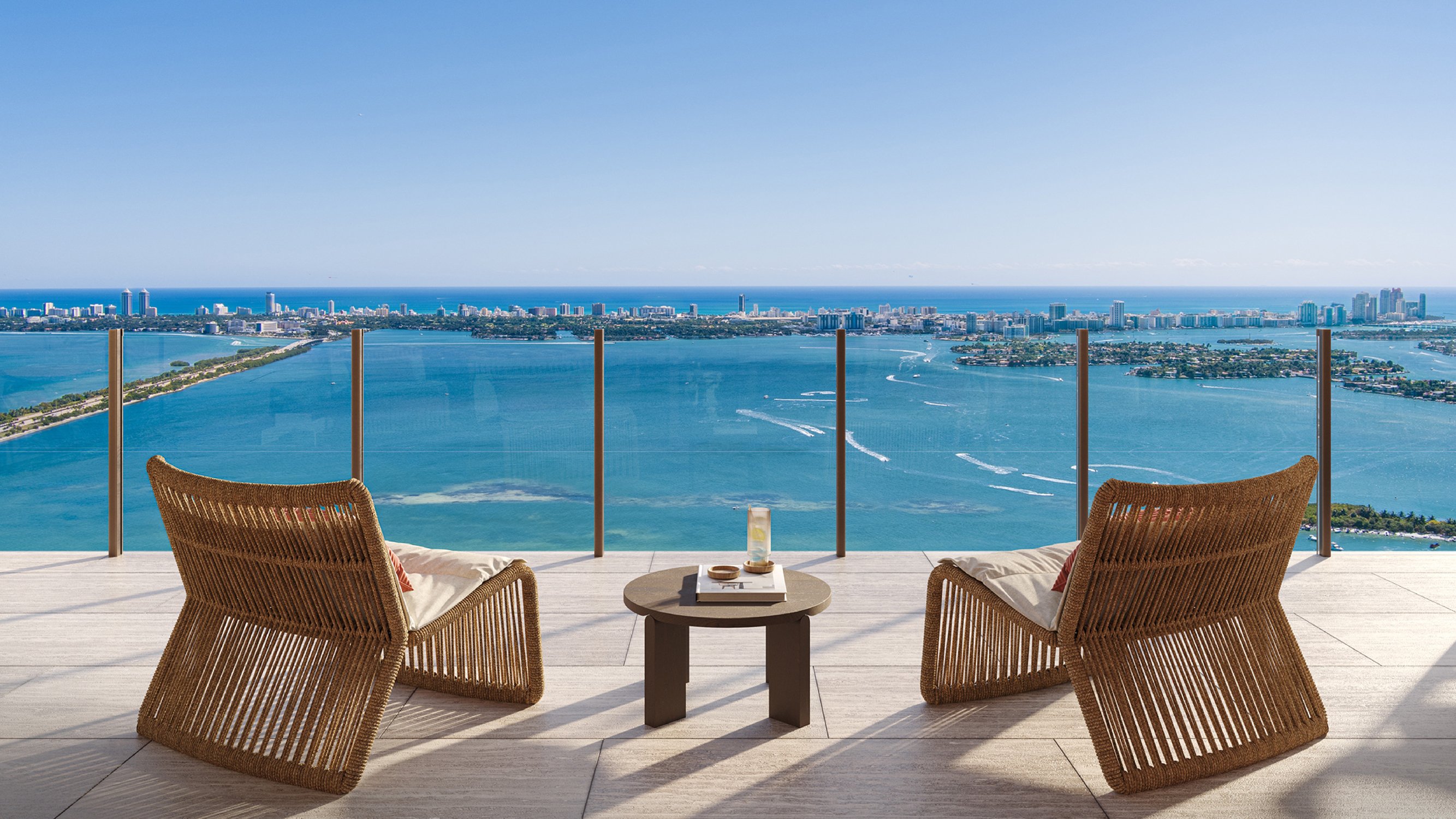
Downtown Miami and Edgewater sit side by side, yet offer notably different expressions of luxury urban life. Downtown concentrates nightlife, hospitality, arenas, and major events within a denser public realm. Immediately to the north, Edgewater is a predominantly residential bayfront corridor where condominium towers, Biscayne Bay, and Margaret Pace Park establish a calmer daily cadence.
For buyers, the distinction becomes clearest once an invitation is sent. Downtown makes it easier to move from dinner to rooftop drinks, a performance, or a late-night venue without turning the evening into a cross-city itinerary. Edgewater is better suited to sunset cocktails, a chef-driven dinner, and a smaller gathering removed from the city's most animated streets.
The most useful privacy test begins at the residence, then continues through the lobby and onto the street.
Neither neighborhood is categorically better. The right choice depends on whether entertaining is meant to spill into the city or remain carefully contained within the residence, its amenities, and a select group of nearby dining rooms.
Downtown is the stronger address for owners who view immediacy as part of the luxury proposition. High-energy venues such as E11even Miami and rooftop destinations such as Sugar at EAST Miami illustrate the range, from club-heavy nights to elevated drinks. The appeal lies not only in access, but also in the ability to return home quickly after an arena event or a long evening.
That convenience comes with intensity. Guests may encounter more traffic, pedestrians, hotel activity, and nightlife outside the building. During major event periods, the surrounding streets can become part of the experience, whether or not the host intended them to be. Buyers comparing Downtown Miami towers should therefore examine arrival sequencing, controlled entrances, concierge procedures, elevator access, and residents-only social rooms closely.
Private amenities can provide a controlled counterpoint to the public energy. Waldorf Astoria Residences Downtown Miami, at 300 Biscayne Boulevard, pairs its central position with an all-day dining brasserie, while its amenity program includes a private bar and wine-tasting room. An owner can host within the building rather than rely entirely on the public nightlife circuit.
Street-level convenience can also generate activity. West Eleventh Residences plans a 15,083-square-foot ground-floor food hall with multiple vendors. That format can simplify casual group dining, but buyers should consider how a popular public venue may affect curbside movement and lobby-adjacent energy. For another Downtown point of comparison, Aston Martin Residences Downtown Miami belongs on a tour centered on central-city living and the arrival experience.
Edgewater extends approximately from NE 17th Street to NE 36th Street, between Biscayne Boulevard and Biscayne Bay. Its location preserves access to Downtown, Wynwood, Midtown, the Design District, and Miami Beach, while its smaller concentration of major nightlife venues and hotels generally means fewer late-night crowds around residential entrances.
The neighborhood's entertaining pattern is correspondingly food-led. Amara at Paraiso, at 3101 NE 7th Avenue, offers coastal Latin American dining and bayfront terrace seating suited to a sunset gathering. Klaw Miami, at 1737 N Bayshore Drive, provides a multilevel seafood and steak setting for a dinner that can serve as the evening's destination rather than a prelude to clubbing. Daytime plans can continue around Margaret Pace Park or along the bayfront.
At Villa Miami, the residential concept includes services associated with Major Food Group, supporting restaurant-style dining and catering within the building. That proposition aligns naturally with an owner who prefers a composed dinner at home, professionally supported service, and a guest list that remains private.
Other Edgewater comparisons, including Aria Reserve Miami and EDITION Edgewater, can help buyers assess how different tower locations relate to the bay, Biscayne Boulevard, and the neighborhood's residential rhythm. The objective is not simply to select a waterfront residence. It is to understand the route guests take from car to lobby-and how exposed that route feels on an active evening.
In Downtown, private dining is often most valuable as insulation from the district's public momentum. A residents-only room, private bar, wine space, or catered residence allows the host to enjoy central access while limiting unnecessary visibility. The ideal setting supports an evening that can begin privately, move into the city, and conclude with a short return home.
In Edgewater, private dining feels less defensive and more intrinsic to the neighborhood. Bay views, sunset timing, restaurant-style residential service, and nearby destination dining support smaller, longer meals. Bars remain accessible across central Miami, but they need not define the itinerary. This is a lifestyle distinction rather than a simple amenity comparison: Downtown expands the range of spontaneous options, while Edgewater makes it easier to curate the evening around food and conversation.
Prospective owners should ask practical questions. Can caterers and service staff enter separately? How are guests announced? Is elevator access controlled by floor? Can a private dining room be reserved during peak weeks? Where do waiting vehicles queue? A handsome room matters, but operational discretion determines whether it performs gracefully when the city is busiest.
Building-level privacy encompasses controlled elevators, security, concierge oversight, private amenities, and residence access. A well-managed high-rise can provide this layer in either neighborhood. It is especially important Downtown, where the tower must separate residential life from a more active public setting.
Neighborhood-level privacy concerns what happens after the elevator doors open: crowds near the entrance, traffic at the curb, pedestrian visibility, and the ease of moving guests or staff discreetly. Edgewater's calmer streets can add a degree of neighborhood discretion that Downtown cannot consistently match. Yet conditions vary by venue, road closure, and precise building position. A tower directly on Biscayne Boulevard may experience a different event week from one on a quieter side street.
The trade-off is clear. Downtown keeps an owner close to the action, reducing the distance between home and major venues while increasing exposure to the event's surrounding energy. Edgewater offers a close-but-not-immersed position, retaining access to Downtown, Wynwood, and the Design District while providing a more residential return.
Choose Downtown if club nights, major venues, rooftop drinks, and spontaneous hospitality are central to the calendar. Prioritize buildings with credible arrival management and private social spaces, as those features help preserve control when the surrounding district is at its busiest.
Choose Edgewater if entertaining centers on chef-led dinners, sunset drinks, bayfront walks, and intimate gatherings. Its advantage is not isolation but selective proximity: the city's cultural and dining districts remain accessible, while home feels less embedded in their crowds.
Conduct the final test at the hours that matter. Visit each building on an ordinary evening and again during a major event period. Observe the curb, lobby approach, guest process, nearby dining, and route home. The best address is the one where public energy and private rituals remain compatible throughout the year.
For confidential guidance on selecting a South Florida residence aligned with your entertaining style, connect with MILLION.
If branded residences are on your mind — as a home or as an allocation — we would be glad to share what we are seeing, privately.
Begin a quiet conversationDowntown offers denser access to clubs, rooftop bars, hospitality, arenas, and major events. Edgewater is better aligned with quieter, food-focused evenings.
Edgewater naturally supports intimate, chef-led dinners and sunset gatherings. Downtown can also work well when a building provides residents-only dining and social spaces.
Edgewater retains access to Downtown, Wynwood, Midtown, the Design District, and Miami Beach while maintaining a more residential rhythm.
It includes controlled elevators, security, concierge procedures, private amenities, and managed access to residential floors.
It concerns crowds, traffic, curbside activity, and visibility outside the lobby. Edgewater's calmer setting generally provides more of this layer.
Residents remain close to venues but may face a busier public realm, heavier traffic, and more pedestrian activity around building entrances.
No. It offers a close-but-not-immersed position, preserving access to central districts while allowing residents to return to a quieter setting.
They allow owners to host privately without relying entirely on public venues. They can also provide greater control when surrounding streets are busiest.
Review the curb approach, guest registration, elevator controls, service access, private-room reservations, and vehicle queuing.
Visit on a normal evening and during a major event period. Comparing both conditions reveals how access, crowds, and privacy change.