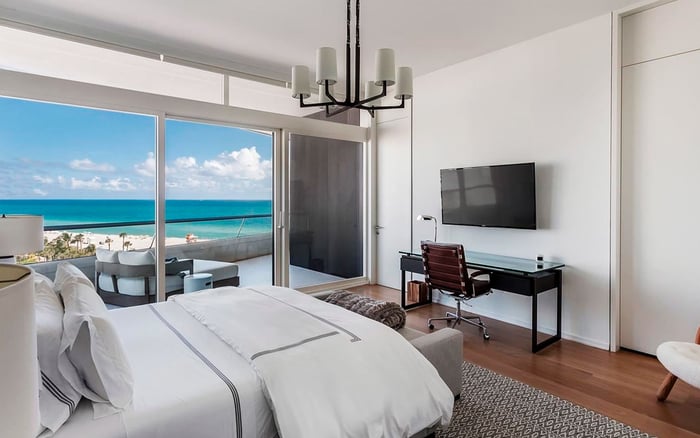
A family-office evaluation of Setai Residences Miami Beach should look beyond trophy ownership and treat the residence as an operating asset shaped by recurring costs, service infrastructure, governance, income use, and resale flexibility.
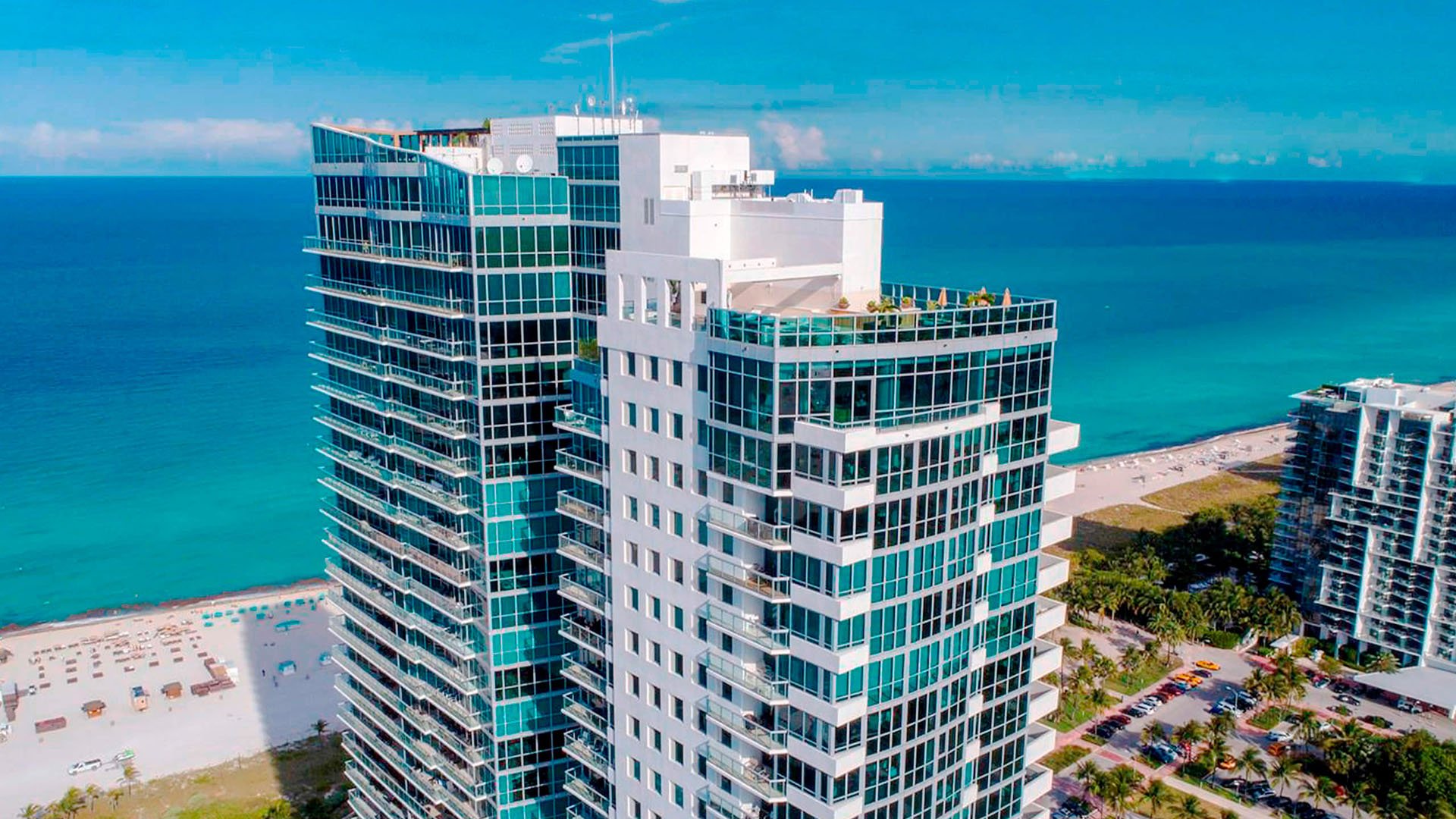
For a family office, Setai Residences Miami Beach is not merely an oceanfront trophy. It is a hybrid asset: part traditional luxury condominium, part branded hospitality environment. That combination is central to its appeal, and it is also why ownership should be underwritten with more discipline than a purely private apartment.
The attraction is clear. Setai can combine lifestyle utility, capital preservation goals, and selective income generation in a single address. Yet the family-office lens asks a more rigorous question than a weekend buyer might. It examines how the residence performs over a full hold period, including recurring obligations, service expectations, governance, personal use, and eventual resale.
That framing matters because the value proposition is layered. The residence offers access to a service-rich setting while carrying operating complexity. The right diligence process should treat Setai as both a home and an operating asset.
The first step is context. Setai sits within Miami Beach, one of South Florida’s most closely watched luxury markets, where oceanfront positioning, hospitality association, and scarcity all influence buyer perception. A family office should begin by defining the competitive set: conventional luxury condominiums, branded residences, hotel-connected ownership, and other high-service beachfront alternatives.
This is not a generic comparison exercise. A buyer considering Setai may also study Miami Beach properties such as Faena House Miami Beach, The Perigon Miami Beach, or Shore Club Private Collections Miami Beach, not because they are identical, but because each helps define how ultra-prime buyers weigh privacy, service, design identity, and exit optionality.
Physical context should include the building’s condition, unit orientation, interior quality, and the practical experience of arrival, service, beach access, and privacy. Market context should include the depth of buyer demand for this specific type of ownership. Setai’s condo-hotel framework can broaden the lifestyle proposition, but it can also narrow the buyer pool to those comfortable with the structure.
Recurring carrying costs are a central diligence category at Setai Residences Miami Beach. The purchase price defines entry; annual ownership economics define comfort. A family office should break down the major expense components rather than rely on a headline estimate.
The review should include association obligations, insurance-related allocations, reserve exposure, property taxes, utilities, interior maintenance, and any service or management-related charges tied to the ownership model. The point is not to presume that costs are problematic. The point is to understand how they behave over time and how they compare with the family’s intended use.
For a primary-use owner, higher service infrastructure may be justified by convenience and lifestyle. For a seasonal owner, the same costs should be weighed against actual nights of use and the value of having a residence maintained in a hospitality setting. For an investment-oriented owner, recurring expenses need to be tested against any selective income potential, while still respecting personal use, privacy, and operating rules.
A disciplined carrying-cost model should also include stress testing. Family offices often evaluate assets under more than one scenario: heavy personal use, limited personal use, selective rental use where permitted, and eventual resale. Setai’s economics should be reviewed through each scenario before purchase, not after closing.
Embedded service infrastructure is part of the Setai ownership analysis because the property is tied to a branded luxury-hospitality environment. That service layer can be a major advantage for families that value discretion, convenience, and reduced friction. It can also create a false sense that all private household requirements are covered by the building.
A family office should separate building-level services from owner-specific staffing needs. Building services may support the day-to-day experience, but a family may still need private arrangements for housekeeping preferences, culinary routines, transportation coordination, wardrobe care, art handling, security protocols, guest preparation, or family-office reporting.
Within branded residences, service is both an amenity and an operating variable. The question is not simply whether service exists. The more precise questions are what is included, what is optional, what is owner-directed, and what remains private. That distinction helps prevent overlap, under-service, or the quiet expansion of costs after acquisition.
The best staffing plan begins before closing. It defines how the residence will be used, who has authority to coordinate vendors, how frequently the property will be occupied, and what level of readiness is expected between visits. For some families, Setai’s service ecosystem may reduce the need for a large private team. For others, it becomes the platform around which a more customized household operation is built.
Setai may appeal to family offices seeking selective income generation, but income should be evaluated carefully. A condo-hotel structure can create opportunity, yet ownership utility, operating rules, calendar control, wear, privacy, tax considerations, and brand standards all influence the real outcome.
The most conservative approach is to underwrite lifestyle value first and income second. If the residence produces revenue in a manner compatible with the family’s use and objectives, that can strengthen the ownership case. If the family requires predictable yield as the primary objective, the underwriting should be more cautious.
This is where Setai differs from a conventional luxury condominium. The structure may add flexibility for some owners, but it also adds analysis. A family office should understand how access, booking periods, owner stays, management arrangements, and operating obligations affect the lived experience. Income potential is not a substitute for cost discipline.
Governance dynamics should be considered alongside price and lifestyle value. In any high-service building, decision-making, budget priorities, rules, and owner alignment can influence the ownership experience. In a condo-hotel setting, governance can be especially important because residential interests and hospitality operations may intersect.
Exit flexibility is shaped by both broader Miami Beach market conditions and the condo-hotel structure. One future buyer may value the service access and brand environment. Another may prefer the simplicity of a conventional condominium. That range of buyer preference should be part of the initial underwriting.
Resale planning begins before acquisition. A family office should evaluate whether the asset has multiple exit narratives: personal-use trophy, serviced pied-à-terre, income-capable residence, or hospitality-adjacent beachfront holding. The more clearly those narratives can be supported, the stronger the exit case may be.
Comparisons with other service-led or branded environments, including The Ritz-Carlton Residences® Miami Beach, can help clarify which buyer segments may be most relevant at exit. The goal is not to predict liquidity with certainty. It is to avoid assuming that every luxury buyer values operating complexity in the same way.
A practical diligence checklist for Setai should begin with a full recurring-cost schedule. It should then move into governance documents, use rules, service inclusions, owner responsibilities, insurance exposure, rental or income-related limitations where applicable, and the process for approving vendors or private staff.
The family office should also build a use-case memo. Who will occupy the residence? How often? Will guests use it without principals present? Is privacy more important than revenue? Is the residence expected to be turn-key at all times? The answers influence staffing, budgeting, and exit strategy.
Setai’s core proposition is powerful because it combines beachfront lifestyle, service access, operating optionality, and Miami Beach identity. Those same ingredients require precision. For the right family, the residence can function as a refined lifestyle holding. For the wrong mandate, the complexity may be mispriced.
Is Setai Residences Miami Beach best viewed as a condo or hotel residence? It is best evaluated as a hybrid of oceanfront condominium ownership and branded hospitality infrastructure.
Why do carrying costs matter so much for family offices? Carrying costs determine the true annual ownership profile and should be modeled beyond the acquisition price.
Can Setai support income generation? It may support selective income objectives, but income should not be assumed without reviewing use rules and operating structure.
Does building service replace private staffing? Not necessarily. Family offices should distinguish between building services and private household requirements.
What makes the condo-hotel structure more complex? It can blend residential ownership with hospitality operations, which may affect governance, use, costs, and exit planning.
How should a family office think about governance? Governance should be reviewed as part of underwriting because budgets, rules, and service priorities shape ownership quality.
Is Setai primarily a lifestyle purchase? Lifestyle is central, but the asset should also be reviewed for capital preservation, operating costs, and resale flexibility.
What affects exit flexibility at Setai? Exit flexibility depends on Miami Beach demand, buyer appetite for service-led ownership, and comfort with the condo-hotel model.
Should a buyer compare Setai with other Miami Beach residences? Yes. Comparisons help clarify how privacy, service, branding, and simplicity are valued across competing luxury options.
What is the most important diligence question before buying? The key question is whether the ownership structure aligns with the family’s intended use, service expectations, and hold-period strategy.
If you'd like a private walkthrough and a curated shortlist, connect with MILLION.
If branded residences are on your mind — as a home or as an allocation — we would be glad to share what we are seeing, privately.
Begin a quiet conversation