A discreet buyer’s guide to evaluating whether the brand premium at The Residences at Six Fisher Island is supported by durable fundamentals, not only prestige.
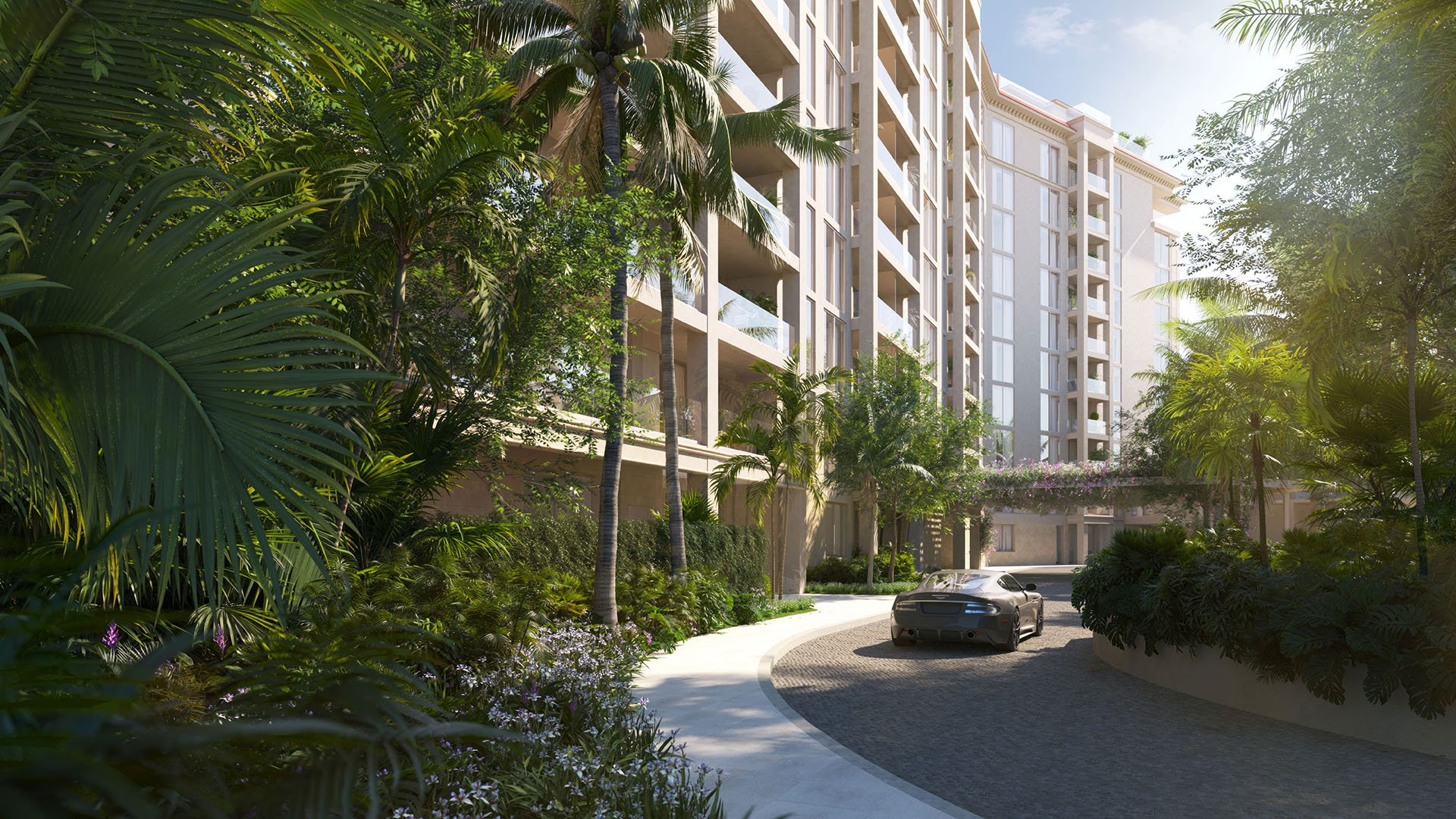
The Residences at Six Fisher Island sits at one of South Florida’s most coveted intersections: Fisher Island’s private-enclave prestige and the region’s growing appetite for ultra-luxury branded residences. For buyers already fluent in trophy property, the question is rarely whether the address impresses. It is whether the premium attached to the name is verifiable, defensible, and durable.
That distinction matters. A brand can create confidence, emotional resonance, and an immediate sense of belonging. On Fisher Island, where privacy and scarcity are central to the value proposition, that effect can be amplified. But a sophisticated buyer should not pay for aura alone. The premium should be tested against measurable fundamentals: location, construction quality, operational discipline, governance structure, carrying costs, resilience, and exit liquidity.
In that sense, The Residences at Six Fisher Island is best approached not as a simple lifestyle purchase, but as a high-conviction acquisition that merits institutional-grade diligence. The name may open the conversation. It should not close it.
Fisher Island is not merely another waterfront location. Its private-island setting is central to the scarcity narrative, and its controlled-access character supports the privacy premium that has long shaped pricing on the island. Buyers are not only considering a residence. They are evaluating an ecosystem where seclusion, discretion, and limited land form the foundation of perceived value.
Structural scarcity is the first pillar to examine. Fisher Island has limited land and a mature development pattern, which means future supply is inherently constrained. That does not automatically justify any price, but it creates a different context from markets where new towers can continually reset inventory. A buyer paying a brand premium should ask whether the project’s positioning is truly strengthened by that scarcity, or whether the brand is simply borrowing credibility from the island.
Comparisons within Fisher Island can be useful when kept disciplined. Existing luxury references such as Palazzo del Sol and Palazzo della Luna help frame how privacy, scale, finishes, and resale behavior may influence buyer expectations on the island. The goal is not to declare one building superior. The goal is to determine whether the premium at Six is supported by tangible advantages beyond marketing language.
The best branded real estate combines emotion and execution. The risk is paying for the first without confirming the second. A name can create immediate recognition, but recognition is only valuable over time if the property performs in ways buyers can see, feel, and resell.
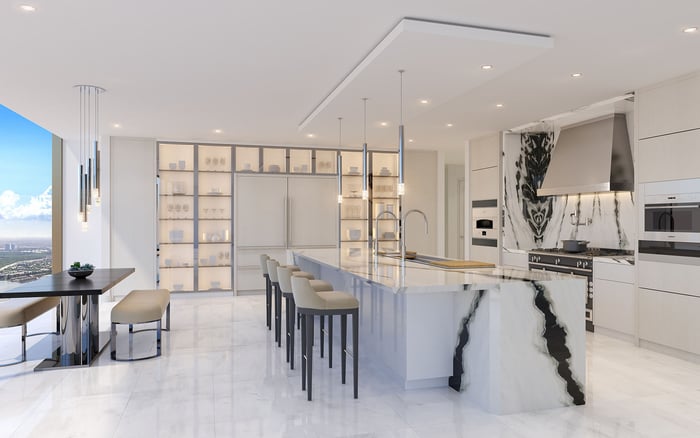
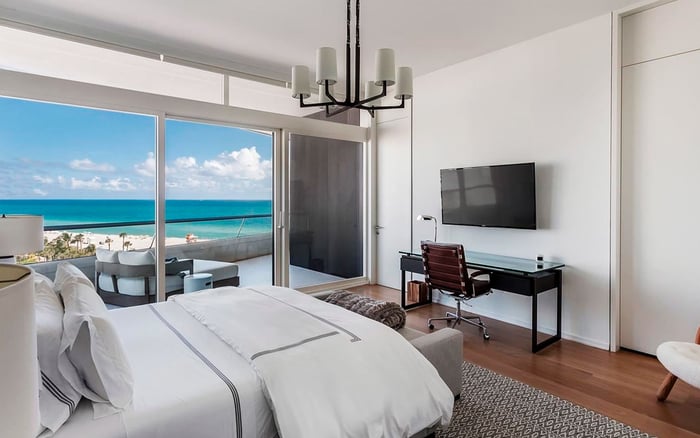
Design should be examined at the level of livability, not just visual drama. Does the residence plan support how the buyer actually lives? Are arrival sequences, ceiling heights, outdoor areas, natural light, privacy between rooms, storage, service areas, and entertaining spaces commensurate with the premium? In ultra-luxury real estate, beauty matters, but frictionless daily use matters more.
Construction quality deserves equal scrutiny. Buyers should examine specifications, assemblies, glazing, acoustic separation, mechanical systems, waterproofing logic, and finish execution. In a branded residence, the promise is often refinement. The test is whether that refinement is built into the structure and systems, not merely staged in presentation materials.
This is where a buyer’s-guide mindset becomes essential. The brand may justify attention, but the residence must justify price. If a non-branded or less-hyped luxury alternative offers comparable privacy, better floor plans, lower carrying costs, or stronger resale evidence, the premium requires a clear explanation.
In luxury condominiums, operations are not a secondary issue. They are part of the asset. A globally recognizable name does not automatically guarantee long-term service quality, disciplined budgeting, or consistent governance. Buyers should understand who controls standards, how decisions are made, what costs are likely to recur, and how the association or governing structure will manage the building over time.
Service is especially important in the ultra-premium segment because residents are not only purchasing square footage. They are purchasing predictability. Staff training, maintenance protocols, vendor selection, security procedures, amenity upkeep, and response times all shape the lived experience. If those systems are underfunded or poorly governed, the brand premium can erode quickly.
Cost discipline is the companion issue. Carrying costs should be modeled against the level of service promised and the buyer’s expected holding period. High costs are not automatically problematic in this segment, but they should be transparent, purposeful, and connected to real value. Luxury buyers will pay for excellence. They are less forgiving of inefficiency.
South Florida has become one of the country’s most visible laboratories for branded luxury condominiums. Buyers evaluating Fisher Island are often also aware of brand-forward projects in Brickell, Miami Beach, Sunny Isles, and other waterfront submarkets. That broader context is useful because it shows how differently brand premiums can behave depending on land scarcity, buyer depth, lifestyle identity, and resale liquidity.
In Brickell, for example, a buyer comparing urban branded residences might study 888 Brickell by Dolce & Gabbana as part of the city’s fashion-led luxury conversation, while The Residences at Mandarin Oriental, Miami speaks to a different form of service-driven recognition. Those comparisons do not replace Fisher Island diligence. They sharpen it.
The point is that a brand premium is not a universal number. It is a market-specific, building-specific, and buyer-specific calculation. On Fisher Island, the premium may be strengthened by privacy and limited supply. In denser urban districts, it may depend more heavily on hospitality, design identity, and convenience. A disciplined buyer should identify which elements are doing the real work.
Ultra-luxury buyers often focus on acquisition, but the exit matters from day one. Financial modeling should stress-test the premium by comparing purchase price, carrying costs, expected appreciation, and resale liquidity. The goal is not to reduce a personal residence to a spreadsheet. It is to avoid confusing emotional conviction with investment logic.
A useful exercise is to isolate the premium. What portion of the price appears attributable to Fisher Island scarcity? What portion reflects building quality? What portion belongs to the brand? What portion is simply current market enthusiasm? If the buyer had to resell into a less exuberant market, which of those components would likely remain durable?
Liquidity is particularly important at the top of the market. Trophy properties can be extraordinarily resilient when they are rare, well executed, and widely desired by the right buyer pool. They can also be thinner markets, where timing and pricing discipline matter. A residence whose value depends on a narrow interpretation of fashion may face more volatility than one anchored by privacy, architecture, service, and irreplaceable setting.
Any serious analysis of waterfront or island luxury in South Florida should include coastal risk. This does not mean buyers should avoid the category. It means they should price risk intelligently. Resilience, insurance, maintenance obligations, building systems, elevation logic, water management, and long-term capital planning all deserve attention when buyers are paying at the highest levels of the market.
Waterfront prestige is powerful, but it comes with responsibilities. A premium residence should demonstrate that its physical and financial planning is aligned with the realities of its setting. Buyers should ask how resilience is being addressed, how costs may evolve, and whether the governance structure is prepared to maintain standards over decades.
The strongest brand premium is not the loudest one. It is the one that remains credible when measured against time, weather, maintenance, and resale scrutiny.
Before signing, buyers should ask a direct set of questions. What does the brand deliver that cannot be easily replicated? How are standards protected after delivery? Are the design and construction details commensurate with the price? Do the operating documents support cost discipline? How does the residence compare with both Fisher Island peers and broader South Florida luxury alternatives?
They should also ask whether the property’s value story would still make sense if the name were removed from the first sentence. If the answer is yes, the brand may be additive. If the answer is no, the premium may be more fragile than it appears.
For The Residences at Six Fisher Island, the opportunity lies in the combination of Fisher Island privacy, structural scarcity, and the appeal of branded luxury. The responsibility for buyers is to confirm that those elements translate into a residence with durable value, not only an elegant identity.
What is the main buyer question at The Residences at Six Fisher Island? The key question is whether the brand premium is supported by durable fundamentals such as location, quality, governance, operations, and resale liquidity.
Does Fisher Island scarcity automatically justify a premium? No. Scarcity is a powerful support, but buyers should still test the residence against comparable luxury inventory and long-term market depth.
Why does controlled access matter on Fisher Island? Controlled access reinforces the privacy narrative that underpins much of the island’s ultra-luxury appeal and pricing power.
What should buyers examine beyond the brand name? They should examine design quality, construction standards, operating structure, governance, carrying costs, resilience planning, and exit liquidity.
Can a brand be a real asset in luxury real estate? Yes. A brand can add recognition and confidence, but it must be aligned with quality, service, resilience, and lasting buyer demand.
How should buyers compare branded and non-branded residences? They should compare tangible performance factors such as floor plans, finishes, service model, costs, privacy, and resale evidence.
Why are operations important in a luxury condominium? Operations shape the daily experience and can influence long-term value through service consistency, maintenance quality, and cost discipline.
Should carrying costs affect the premium analysis? Yes. Carrying costs should be modeled alongside purchase price, expected appreciation, and potential resale liquidity.
Why is coastal resilience part of the diligence process? Waterfront and island properties require careful attention to insurance, maintenance, building systems, and long-term capital planning.
What is the simplest test of the brand premium? Ask whether the residence would still be compelling if the brand name were removed from the presentation.
When you're ready to tour or underwrite the options, connect with MILLION.
If branded residences are on your mind — as a home or as an allocation — we would be glad to share what we are seeing, privately.
Begin a quiet conversation