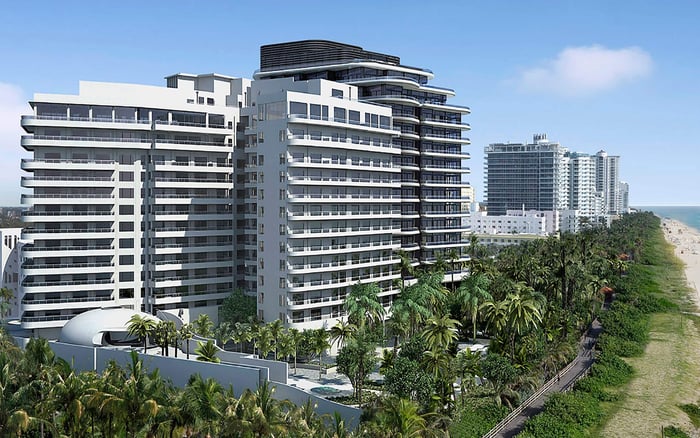
A due-diligence ranking of eight Miami Beach waterfront condominiums, focused on the records that reveal reserve discipline, capital planning, inspection status, and potential assessment exposure.

For a Miami Beach buyer, the view is only one dimension of value. Association governance, reserve planning, engineering records, and the financing of future capital work can materially shape ownership costs. This is especially true in an oceanfront or bayfront tower, where façades, balconies, waterproofing, roofs, parking structures, elevators, and central mechanical systems may carry substantial long-term obligations.
The following ranking is a due-diligence shortlist, not a declaration that one association is financially stronger than another. Standardized reserve balances and funded percentages are rarely public, so a sophisticated resale review must examine current documents at both the building and unit levels. This perspective belongs in any serious buyer's guide to Miami Beach condominium ownership.
1. Continuum South Beach: 100 and 50 S Pointe Drive
This established, large-scale South of Fifth oceanfront complex leads the shortlist. Its current budget, reserve schedule, Structural Integrity Reserve Study, inspection record, board minutes, and assessment history should determine how confidently a buyer proceeds.
2. Apogee South Beach: 800 S Pointe Drive
This boutique waterfront tower presents a more concentrated ownership profile. Buyers should test whether its smaller owner base has funded major long-term obligations conservatively-and how each residence would share future project costs.
3. Bath Club Residences: 5959 Collins Avenue
This established Mid-Beach oceanfront condominium is a compelling candidate for scrutiny. The decisive evidence lies not in reputation, but in its current reserve schedule, recent capital-work history, inspection findings, and financing plan for remaining obligations.
4. Ritz-Carlton Residences, Miami Beach: Miami Beach waterfront
A branded management model may make governance and reporting easier to review, but branding cannot establish reserve adequacy. Buyers still need budgets, board minutes, reserve records, engineering information, and clear details on capital-plan financing.
5. Faena House: 3315 Collins Avenue
This limited-residence Mid-Beach oceanfront tower warrants close consideration. Boutique scale can increase each owner's share when major work is insufficiently reserved, making component costs and scheduled contributions particularly important.
6. Murano at Portofino: 1000 S Pointe Drive
At this established South of Fifth waterfront tower, buyers should examine whether reserves keep pace with concrete, waterproofing, roofing, elevator, and mechanical obligations. Pending projects and the unit's allocated share deserve equal scrutiny.
7. Icon South Beach: 450 Alton Road
This large luxury tower merits consideration when recent financial statements, reserve schedules, engineering records, and special-assessment disclosures demonstrate disciplined planning. Meeting minutes can provide further context on project timing, bids, and board decisions.
8. One Ocean South Beach: 1 Collins Avenue
This smaller, newer ocean-adjacent building completes the ranking. Buyers should confirm that required structural reserves are funded, applicable inspection obligations are addressed, and no deferred-maintenance gap is obscured by its relative newness.
The contrast between Continuum on South Beach and Apogee South Beach illustrates why size alone cannot answer the association-strength question. A larger ownership base may distribute costs more broadly, while a boutique building may offer more focused governance. Neither structure proves conservative funding without supporting records.
The same discipline applies to Faena House Miami Beach and The Ritz-Carlton Residences® Miami Beach. High service levels, brand identity, and architectural distinction are lifestyle considerations-not substitutes for financial statements, engineering documentation, and a credible capital plan. Investment quality begins with understanding both the residence and the institution responsible for its shared assets.
A reserve balance is meaningful only in context. Buyers need the estimated replacement cost of each covered component, its remaining useful life, scheduled contributions, and the assumptions behind those figures. A reserve study connects these variables and recommends contributions over time.
Florida's building-safety framework includes milestone inspections for qualifying condominium buildings and Structural Integrity Reserve Studies for covered components. Associations subject to SIRS requirements generally cannot waive or underfund reserves for covered structural components in budgets adopted on or after December 31, 2024. Structural Integrity Reserve Studies must remain in association records for at least 15 years after receipt.
Request the current budget, reserve schedule, latest SIRS, milestone-inspection summary, recent board minutes, financial statements, engineering materials, and all special-assessment notices. Official association records should also include applicable budgets, financial reports, minutes, inspections, and reserve studies.
Special assessments sit outside the regular annual budget and may be used when operations and reserves cannot cover structural repairs, insurance shortfalls, or major projects. Compare the subject unit's share, payment schedule, and treatment at closing rather than focusing only on the building-wide total. Delays in producing current records should prompt deeper legal and financial review before the contractual review period expires.
Does a large reserve balance prove association strength? No. It must be evaluated against component costs, remaining useful lives, planned contributions, and current assumptions.
What is a Structural Integrity Reserve Study? A SIRS evaluates covered structural components and informs the reserves needed for their repair or replacement.
Which documents should a buyer request first? Start with the budget, reserve schedule, latest SIRS, inspection summary, financial statements, board minutes, and assessment notices.
Are branded residences automatically better funded? No. Branding and service may shape the ownership experience, but current engineering and financial documents establish the relevant facts.
Why do coastal towers require closer capital review? Salt exposure and complex shared systems can make façades, waterproofing, balconies, roofs, garages, elevators, and mechanical equipment significant obligations.
What is a special assessment? It is a charge outside the regular budget, often used when available operating funds and reserves cannot cover a major expense.
Should buyers review board minutes? Yes. Minutes can reveal project discussions, funding decisions, bids, disputes, and potential assessments not evident in a balance sheet.
Does a newer building eliminate reserve risk? No. Buyers must still verify required funding, inspection status, maintenance planning, and the absence of deferred work.
How should an assessment be compared across units? Review the subject residence's allocated share and payment terms, not merely the association's total project cost.
Who should review the association package? A Florida condominium attorney, qualified inspector or engineer, and financial adviser should review it before applicable deadlines.
When you're ready to tour or underwrite the options, connect with MILLION.
If branded residences are on your mind — as a home or as an allocation — we would be glad to share what we are seeing, privately.
Begin a quiet conversation