A penthouse purchase deserves scrutiny above the ceiling line. For buyers evaluating Alma Bay Harbor Islands, the essential questions concern rooftop rights, equipment adjacency, elevator geometry and the practical boundaries of privacy.
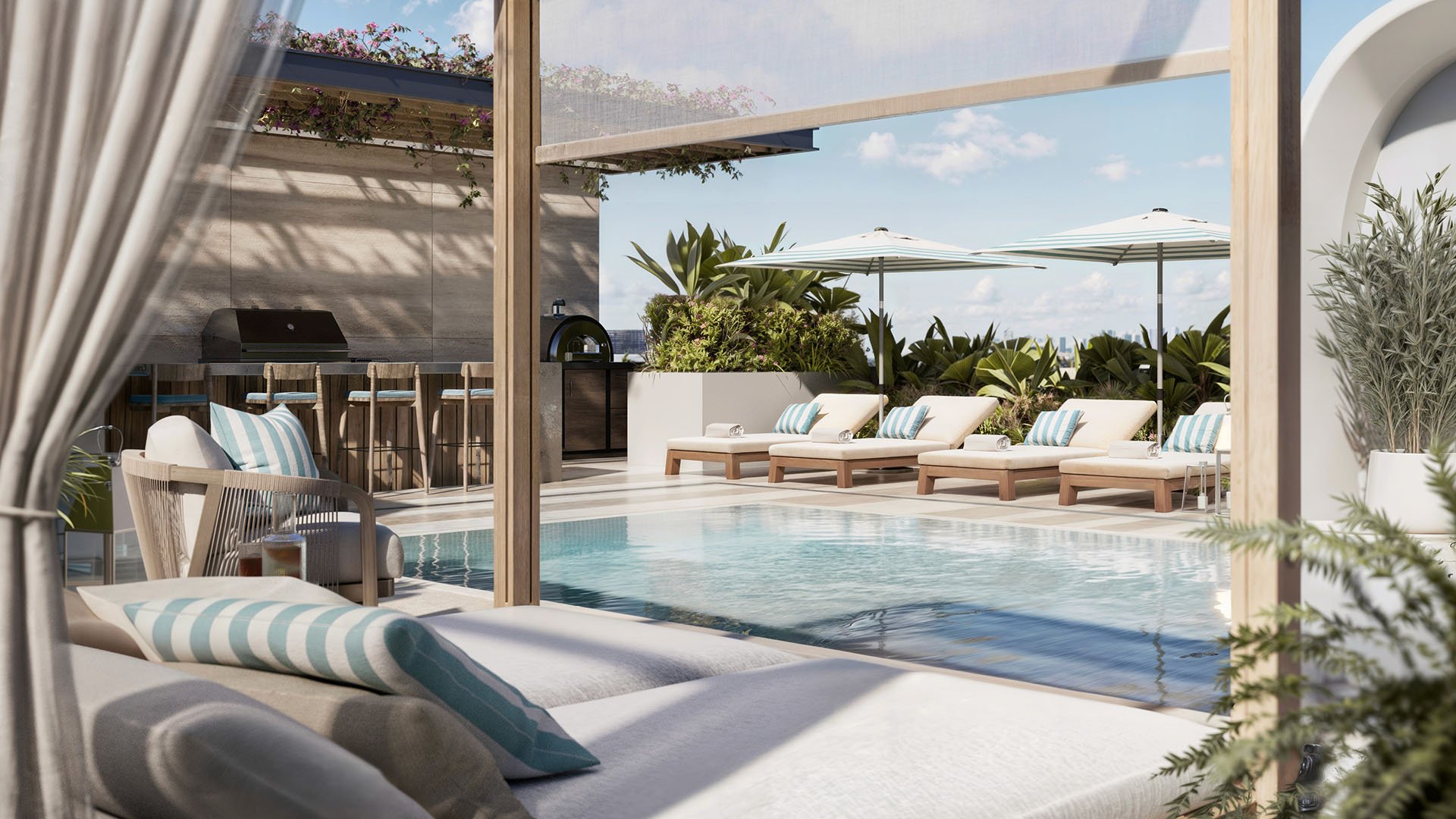
The appeal of a penthouse is easy to understand: light, outlook and the promise of a more private daily rhythm. The harder question is what, precisely, the purchase delivers beyond the residence itself. At Alma Bay Harbor Islands, buyers should make rooftop rights, mechanical adjacency and elevator-overrun geometry explicit subjects of due diligence-not assume that a top-floor position resolves them.
These are questions to investigate, not descriptions of Alma’s configuration. A disciplined evaluation separates three layers: the rights conveyed with the residence, the physical layout shown in the plans, and the provisions governing maintenance and access. The objective is not simply more outdoor square footage. It is outdoor space whose privacy, usability and obligations are understood before a buyer assigns it a premium.
“Private access” is not a substitute for a legal description. Ask counsel to determine whether the rooftop area falls within the unit’s boundaries, is reserved for exclusive use under the governing documents, or remains shared space reached by a private route. These possibilities are not interchangeable.
If marketing language describes a penthouse with private access to a rooftop pool or deck, that description alone does not establish exclusive ownership of the amenities. For an Alma buyer, the lesson is to test offering language against the rights actually conveyed-not to infer a particular arrangement from the description of access.
Request a marked plan identifying every outdoor boundary, then ask counsel to reconcile it with the declaration, applicable exhibits and purchase documents. Clarify who may enter, for what purpose and under what notice provisions. Ask separately about guests, alterations, planting, furnishings and restrictions on use.
Apply the same discipline when comparing Alana Bay Harbor Islands. Compare documented rights rather than treating similar terrace language as proof of equivalent ownership or control.
Mechanical adjacency is a question of placement and operation. Ask the design team to identify any equipment above, beside or near the proposed penthouse and outdoor areas. Request a clear account of its position relative to bedrooms, principal seating areas, doors and glazing, rather than accepting a roof plan with unexplained symbols.
The review should address sound, vibration, exhaust, visual screening and service access. These are inspection topics, not findings about Alma. Ask which systems would operate overnight, which serve common facilities and what acoustic or vibration-control measures are specified. Where comfort is central to the purchase, have an independent specialist assess the relevant design information.
If the residence can be inspected, seek conditions representative of normal equipment operation. A quiet visit does not answer the operational question unless nearby systems are confirmed to be running. If inspection is not yet possible, request the proposed performance criteria and ask how compliance will be demonstrated.
Buyers also considering Bay Harbor Towers can apply the same questions without presuming identical systems. The meaningful comparison rests on evidence for each residence, not a building-wide promise of tranquility.
For the elevator-overrun review, request a section drawing showing the shaft’s upper extent relative to the highest landing and the rooftop. Have the architect identify the actual configuration, dimensions and any associated enclosure. Do not assume that a rooftop projection contains elevator machinery, or that every elevator design produces the same rooftop condition.
Translate that drawing into the experience of using the space. Where would the enclosure appear from the principal seating position? Does it interrupt a desired sightline? How does it relate to circulation, screening and the intended furniture layout? Ask for a dimensioned illustration from realistic viewing positions, not just an aerial perspective.
Access control is a separate issue. Even if an elevator offers owner-controlled, key-locked access, that feature alone establishes neither rooftop rights nor a separate service route. For Alma, ask who can authorize elevator access, where technicians would arrive and whether routine or emergency work would require entry through an area intended for private use.
Privacy is also an operational question. Ask for the proposed route to every rooftop component requiring inspection, cleaning, repair or replacement. Have each route shown on a plan, including the doors, stairs or elevator connections it uses. Establish whether it crosses the residence, an exclusive-use area or shared circulation.
Next, request a written allocation of responsibility. Who maintains the roof assembly, drains, terrace finishes, railings and any equipment serving the space? Who arranges access, restores disturbed finishes and bears the applicable cost? Ask counsel to explain how the documents address these questions; do not rely on a sales conversation.
A useful exercise is to walk through a hypothetical repair. If work requires moving terrace furniture or temporarily restricting access, what procedure applies? The point is not to predict a defect. It is to understand whether the arrangements fit the buyer’s expectations for an effortless, discreet residence.
Do not assign a numerical premium or discount to Alma’s roof rights, mechanical adjacency or elevator arrangement without transaction-specific support. Instead, organize the decision around what has been established: legal control, practical outdoor usability, service access and maintenance responsibility. Keep unresolved items visible rather than absorbing them into an overall impression of luxury.
For a buyer extending the search to Bal Harbour and Rivage Bal Harbour, this framework provides a consistent basis for comparison. It does not imply matching rooftop arrangements. It subjects each opportunity to the same questions about rights, design and operation.
Before committing, assemble a concise decision file: counsel’s explanation of rooftop rights, the relevant roof and section drawings, equipment information, and written clarification of service access and responsibilities. Ask the advisory team to flag inconsistencies and distinguish binding provisions from illustrative material.
The strongest penthouse decision is not necessarily the one with the most dramatic roof image. It is the one in which the buyer understands what is controlled, what is shared and how the space will function. For Alma, that is the standard to apply before treating the rooftop as part of the residence’s enduring value.
For a discreet perspective on South Florida penthouse selection, explore MILLION.
If branded residences are on your mind — as a home or as an allocation — we would be glad to share what we are seeing, privately.
Begin a quiet conversationNo. Private access alone does not establish ownership or exclusive use; ask counsel to confirm the rights conveyed by the governing documents.
No. Treat rooftop ownership and exclusive-use boundaries as questions to resolve through the applicable documents and marked plans.
Compare descriptions of private access with the rights conveyed in the governing documents. Access language alone does not establish exclusive ownership of a rooftop pool or deck.
Request a section drawing showing the shaft’s upper extent relative to the highest landing and rooftop. Ask the architect to explain its configuration and relationship to terrace sightlines.
No. Owner-controlled elevator access alone does not establish rooftop rights or a separate service route; ask for the access arrangements to be shown on a plan.
Request equipment locations, operating information and proposed sound and vibration controls. Have a specialist assess the design or inspection conditions where comfort is a deciding factor.
Not without understanding whether nearby systems were operating. Seek representative operating conditions or ask how proposed performance criteria will be demonstrated.
Ask who maintains the roof assembly, drains, terrace finishes, railings and relevant equipment. Clarify access procedures, restoration obligations and the allocation of costs.
A numerical premium requires transaction-specific support. Evaluate documented control, usable space and obligations before assigning additional value.
Bring together counsel’s explanation of rooftop rights, relevant drawings, equipment information and written access and maintenance clarifications. Ask the advisory team to identify inconsistencies and distinguish binding terms from illustrations.