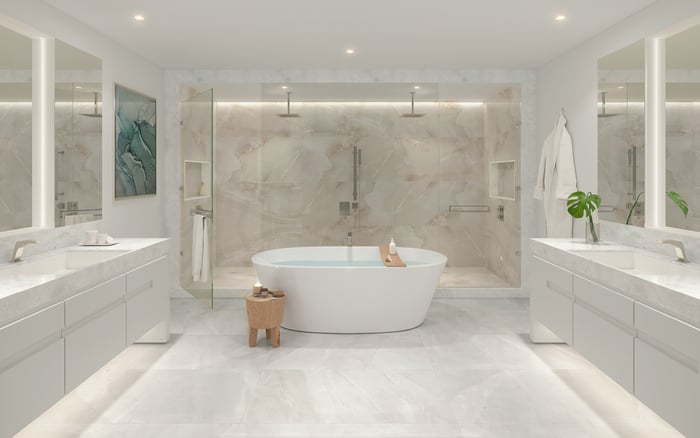
A disciplined framework for reviewing rental flexibility, building controls, security protocols, and the potential financial consequences of common-area use before buying a new Boca Raton condominium.

A new-construction condominium may be presented as suitable for a second home or investment, but buyers should not treat marketing language as confirmation that their intended rental pattern is permitted. Request written guidance addressing the specific Boca Raton parcel, unit, proposed length of stay, and anticipated frequency of leasing.
Ask qualified Florida counsel to review the relevant government requirements and condominium documents before contractual deadlines. The review should distinguish between what the property may permit, what the association documents allow, and what an owner would need to do to operate compliantly.
Examine the proposed declaration, bylaws, rules, sales contract, amendments, and any rental-management agreement. Look for minimum lease periods, annual leasing limits, initial ownership restrictions, tenant screening, approval procedures, deposits, fees, and language addressing transient occupancy.
Use the same process when considering Alina Residences Boca Raton, Glass House Boca Raton, or another Boca Raton offering. A project’s inclusion here does not establish its rental policy or legal status; those points require review of current, property-specific materials.
Ask counsel to identify who may amend leasing rules, the applicable voting thresholds, notice procedures, developer rights, and any provisions that could affect the policy between contract signing and closing. If flexibility depends on a future decision, record that condition clearly in the diligence file.
Do not stop at a stated quiet-hours policy. Review balcony restrictions, pool and amenity rules, event controls, warning procedures, fines, escalation measures, and the process for handling repeat complaints.
Ask who receives an after-hours report, how a complaint is documented, what response is expected from management or security, and which records an owner may review. For a building without an operating history, focus on the proposed staffing plan, management responsibilities, enforcement procedures, and fine schedule rather than assuming that a written rule will be sufficient.
Verify the proposed process for guest registration, identification checks, front-desk procedures, access credentials, lost-credential deactivation, elevator permissions, and any limits on lockboxes or smart-lock access. Ask which areas tenants and guests may enter and whether owner presence is required for particular amenities.
Apply this review to The Residences at Mandarin Oriental Boca Raton and Mr. C Residences Boca Raton without inferring procedures from branding, presentation, or amenity programming. Request the current access-control plan and guest policy for the property under consideration.
Ask how management proposes to distinguish among owners, approved tenants, household staff, vendors, delivery personnel, and temporary guests. Also request the applicable inspection, emergency, and recordkeeping protocols so counsel or other qualified advisers can assess them.
Review assigned parking, valet terms, visitor capacity, overnight procedures, vehicle registration, towing rules, loading access, and elevator reservations. Compare the intended rental pattern with the building’s proposed arrival and departure procedures.
Ask for projected occupancy assumptions, cleaning schedules, staffing plans, move-in rules, delivery controls, elevator protections, and amenity guest limits. The practical question is whether the building’s operating plan can accommodate the level of leasing contemplated by the buyer without undermining the desired residential experience.
Review the proposed operating budget and any available reserve materials for cleaning, elevator service, corridor finishes, furniture replacement, security staffing, access technology, and amenity repairs. Compare those assumptions with the leasing policy and projected use of shared spaces.
For a property without an operating record, request developer budgets, vendor scopes, warranties, insurance allocations, and replacement assumptions. Determine how the documents address damage attributed to a tenant or guest, collection procedures, deposits, fines, amenity suspensions, and other enforcement options.
Avoid assuming that rental flexibility and long-term presentation will remain aligned. The documents, staffing model, maintenance assumptions, and enforcement plan should be evaluated together.
Before relevant contractual deadlines, collect written parcel-specific guidance, counsel’s document review, the complete rental policy, amendment provisions, applicable operating requirements, security procedures, parking rules, proposed budgets, and available reserve information. Keep written copies of material representations and note any matter that remains conditional or unresolved.
The objective is a decision based on current documents rather than assumptions. A buyer can then weigh rental optionality alongside quiet enjoyment, controlled access, maintenance expectations, and the intended standard of the building.
Does marketing language confirm short-term rental permission? No. Request property-specific written guidance and review the controlling condominium documents before relying on a proposed rental strategy.
Which condominium documents should be reviewed? Ask counsel to examine the declaration, bylaws, rules, sales contract, amendments, and any rental-management agreement provided for the property.
Why should amendment provisions be examined? They help a buyer understand who may revise leasing, guest, access, or amenity rules and what procedures would apply.
How can a buyer assess noise controls in a new building? Review the proposed staffing, complaint, documentation, fine, and escalation procedures rather than relying only on stated quiet hours.
Which guest-access details deserve attention? Verify registration, identification, credential issuance, deactivation, elevator permissions, amenity access, and rules for lockboxes or smart locks.
Why should parking be included in rental diligence? Parking capacity, visitor procedures, valet terms, vehicle registration, and arrival logistics may affect how a proposed rental plan works in practice.
How should common-area wear be evaluated? Compare projected use with proposed cleaning, staffing, repair, replacement, and reserve assumptions.
What should be checked when a building lacks an operating history? Focus on proposed budgets, vendor scopes, management duties, warranties, staffing plans, and enforcement procedures.
Should verbal assurances be included in the closing file? Material points should be confirmed in current written materials and reviewed by qualified advisers before applicable deadlines.
What is the best way to shortlist comparable options for touring? Start with location fit, delivery status, and daily lifestyle priorities, then compare stacks and elevations to validate views and privacy.
For a tailored shortlist and next-step guidance, connect with MILLION.
If branded residences are on your mind — as a home or as an allocation — we would be glad to share what we are seeing, privately.
Begin a quiet conversation