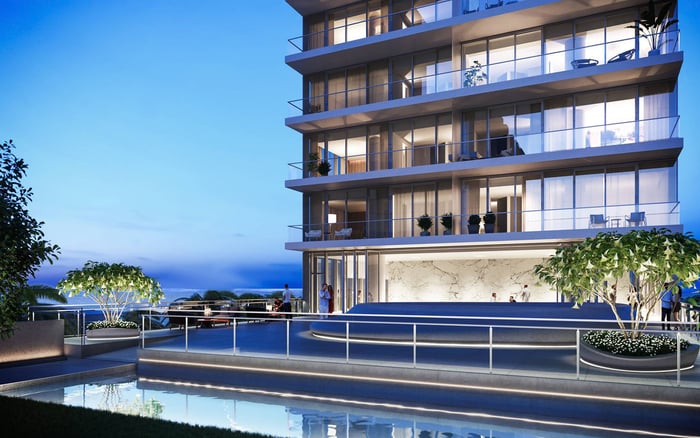
For buyers and owners at 2000 Ocean, estate planning begins with intended use, exact deed language, and family circumstances. Florida's property-tax exemption and estate-law homestead protections must be evaluated separately, while ownership structure can materially affect survivorship and inheritance.
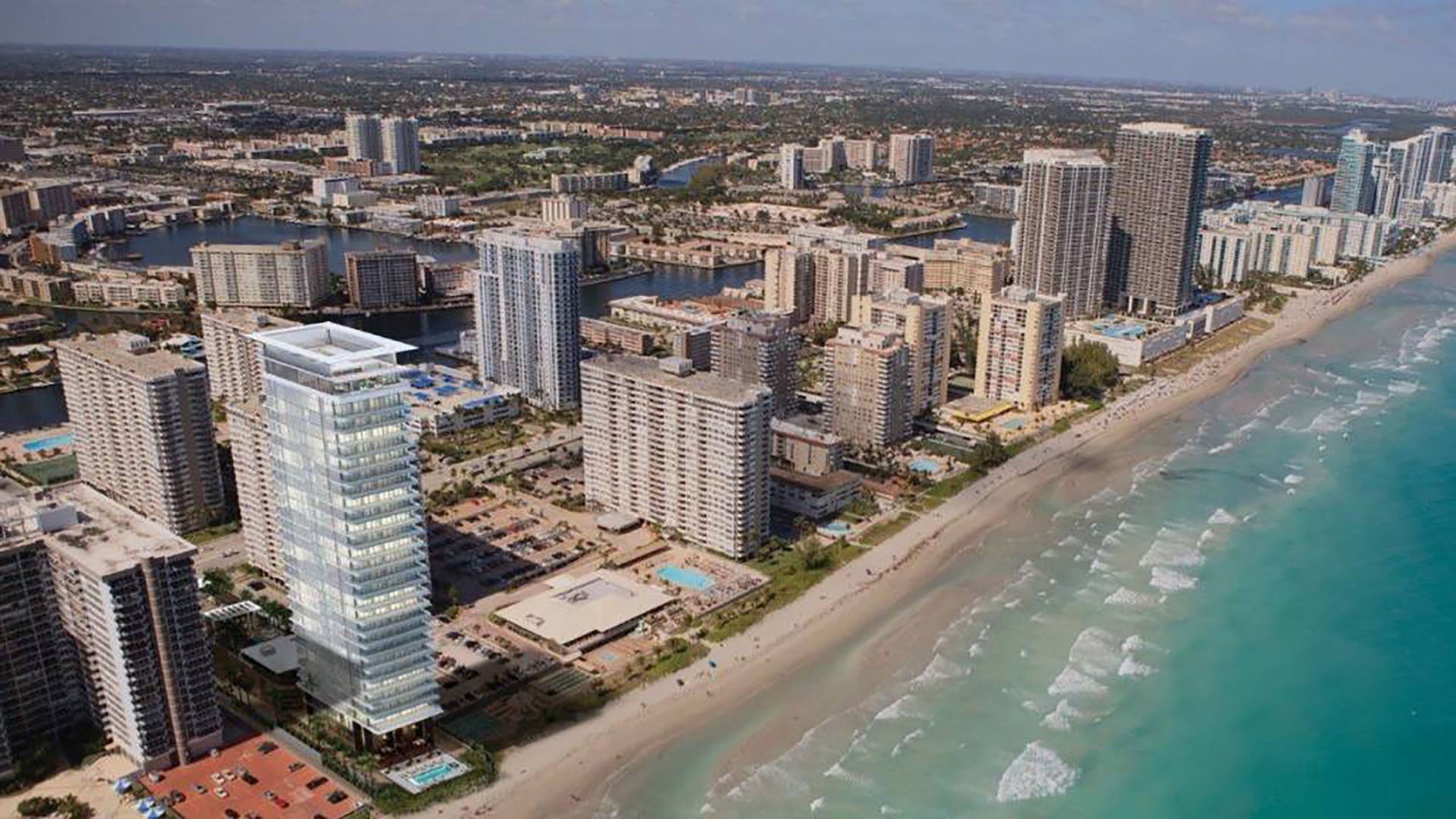
At 2000 Ocean Hallandale Beach, estate planning is not an abstract exercise to reserve for a later date. Located at 2000 S. Ocean Drive in Hallandale Beach, the slender 38-story tower comprises 64 luxury condominium residences. At this scale, a home can become a family gathering place, a primary Florida residence, or a significant component of a multigenerational balance sheet.
Each possibility calls for a different plan. The first questions are practical: Will the condominium become the owner's permanent residence? Who will appear on the deed? Is there a spouse or minor child? Will relatives occupy the residence regularly, or will it remain a seasonal retreat?
Neither an oceanfront setting nor a luxury designation determines homestead treatment. Florida law looks to residency, ownership, and family circumstances. For a second-home or investment acquisition, intended use should therefore be discussed before closing-not after the family has established a pattern that conflicts with its legal documents.
Florida's property-tax homestead exemption generally requires legal or beneficial title and use of the property as a permanent residence as of January 1. A condominium reserved for vacations, rentals, or occasional family visits generally will not satisfy that requirement.
The tax exemption should not be treated as interchangeable with Florida's constitutional and estate-law homestead protections. The concepts are related, but they answer different questions. One addresses property-tax eligibility; the others can affect devise restrictions, creditor issues, and who receives a protected residence at death.
For internationally mobile and multistate families, this distinction warrants particular care. A residence may feel like the family's Florida home without meeting every applicable legal standard. Because the analysis is fact-specific, personal records, declarations, ownership documents, and actual use should tell a consistent story.
The deed's exact language matters. Individual, joint, spousal, and trust ownership can produce materially different survivorship and inheritance outcomes. A qualifying married couple may consider holding the residence as tenants by the entirety, allowing it to pass automatically to the surviving spouse at the first spouse's death, subject to Florida's constitutional homestead rules.
No single form of title is universally preferable. The appropriate structure depends on the marriage, descendants, creditor considerations, tax planning, and the broader estate plan. A trust may be useful in some circumstances. Specialized irrevocable-trust planning under Florida law may also be considered when an owner seeks to avoid a default homestead succession result. Such structures require individualized legal advice.
The same discipline applies across a South Florida portfolio. Someone considering Shell Bay by Auberge Hallandale alongside a beach residence, or Auberge Beach Residences & Spa Fort Lauderdale elsewhere in Broward, should not assume one deed format suits every property. Each residence may have a distinct purpose, use pattern, financing profile, and succession objective.
Florida generally restricts the devise of protected homestead when the owner is survived by a spouse or minor child. An owner survived by a spouse but no minor child may devise the homestead to that spouse. If protected homestead is not validly devised and the owner leaves a spouse and descendants, the spouse generally receives a life estate, while the descendants receive the vested remainder.
The surviving spouse may instead elect an undivided one-half interest as a tenant in common, with the other half passing to the decedent's descendants. That choice can reshape control, occupancy, carrying-cost discussions, and the family's eventual disposition of the residence.
This is why informal promises such as “the children can always use it” are insufficient. The estate plan should establish who may occupy the condominium, who pays expenses, whether a sale is anticipated, and how decisions will be made if several family members hold interests. These questions become especially important when an expansive residence is intended to host adult children and grandchildren. One penthouse offered at the address was described as approximately 6,781 square feet, with five bedrooms, six full bathrooms, and one half bathroom-illustrating the scale at which family-use expectations can become central.
A Hallandale Beach home may form part of a broader property collection. An owner comparing 2000 Ocean with Jade Signature Sunny Isles Beach should evaluate each asset individually while keeping the overall plan coherent. Permanent residence, occasional use, rental activity, and ownership entities should remain clearly distinguished.
Before acquiring, gifting, or retitling a unit, coordinate with a Florida estate-planning attorney, tax adviser, and title professional. They should review the proposed deed, existing wills and trusts, marital and descendant circumstances, and the condominium's intended use. Retitling after purchase can affect survivorship, creditor protection, taxes, and consistency with the estate plan.
Protected homestead is generally treated as outside the probate estate, but administration may still demand clarity. In a Florida estate proceeding, interested parties may seek an Order Determining Homestead Status to establish whether the property qualified and identify those entitled to it. For that determination, the decedent must have owned the real property at death.
The more refined approach is preventive: align the deed, residence facts, family arrangements, and estate documents while the owner can explain the intended result. Precision at acquisition is far more elegant than asking heirs to reconstruct intent later.
Can a vacation condominium at 2000 Ocean receive Florida's homestead tax exemption? Vacation or occasional use generally does not meet the permanent-residence requirement.
Does oceanfront luxury status determine homestead eligibility? No. Residency, title, and family circumstances are the relevant considerations.
Must the owner hold title to claim the property-tax exemption? The claimant generally must hold legal or beneficial title and maintain permanent residence as of January 1.
Are property-tax homestead and estate-law homestead the same? No. They are related concepts, but different rules and consequences can apply.
Can protected homestead be left to anyone in a will? Not always. A surviving spouse or minor child can trigger restrictions on devise.
What can happen when an invalid devise leaves a spouse and descendants? The spouse generally receives a life estate, and the descendants receive the vested remainder, subject to the spouse's statutory election.
What alternative may a surviving spouse elect? The spouse may elect an undivided one-half interest as a tenant in common, with the other half passing to the descendants.
Can tenants by the entirety ownership provide survivorship? For a qualifying married couple, it can allow title to pass automatically to the surviving spouse, subject to homestead rules.
Can a trust own the condominium? Trust ownership may be considered, but its language and interaction with homestead law require individualized review.
When should an owner review the estate plan? Review should occur before a purchase, gift, or retitling, and whenever residence or family circumstances change.
If you'd like a private walkthrough and a curated shortlist, connect with MILLION.
If branded residences are on your mind — as a home or as an allocation — we would be glad to share what we are seeing, privately.
Begin a quiet conversation