For San Francisco buyers establishing a Downtown Miami base, collection care belongs in the purchase decision. Plan for conditioned storage, verified backup power, specialist transport and insurance that addresses each stage of the move.
A South Florida base should make arriving from San Francisco feel effortless. For buyers bringing significant art or wine, that ease begins before the interiors are installed. The purchase brief should address not only where a collection will live, but how its environment, access and insurance will be managed while the owner is elsewhere.
In Downtown Miami, make collection care a distinct due-diligence track alongside layout, views and finishes. A residence at Aston Martin Residences Downtown Miami belongs in that conversation as a purchase candidate-not an assumed answer to storage or resilience requirements. Obtain property-specific confirmation rather than inferring capabilities from the address.
The distinction is simple: a beautiful setting is not a verified preservation plan. Bring the insurance adviser, collection specialist and building representative into the discussion before committing to a move date.
Start with a proposed inventory for specialist review. For art, assemble photographs, identifying details, valuations and existing condition documentation. For wine, discuss an inventory that captures what your storage operator and insurer need, including bottle identity, quantity and value. These are planning recommendations, not prescribed local requirements.
Then divide the collection by intended use. Which works belong in the Miami residence? Which bottles are for near-term enjoyment? Which pieces could remain in San Francisco or move into specialist storage? Settle those decisions before cabinetry, hanging plans and shipping reservations.
Ask the receiving building about delivery appointments, loading access, elevator dimensions, contractor documentation and any installation restrictions. For buyers evaluating One Thousand Museum Downtown Miami, request those details directly rather than assuming a preferred mover can arrive on the desired day.
Have the transport specialist define packing, handoffs, condition checks and contingency arrangements. Make responsibility explicit at every transition, especially if the residence is not ready when the shipment arrives.
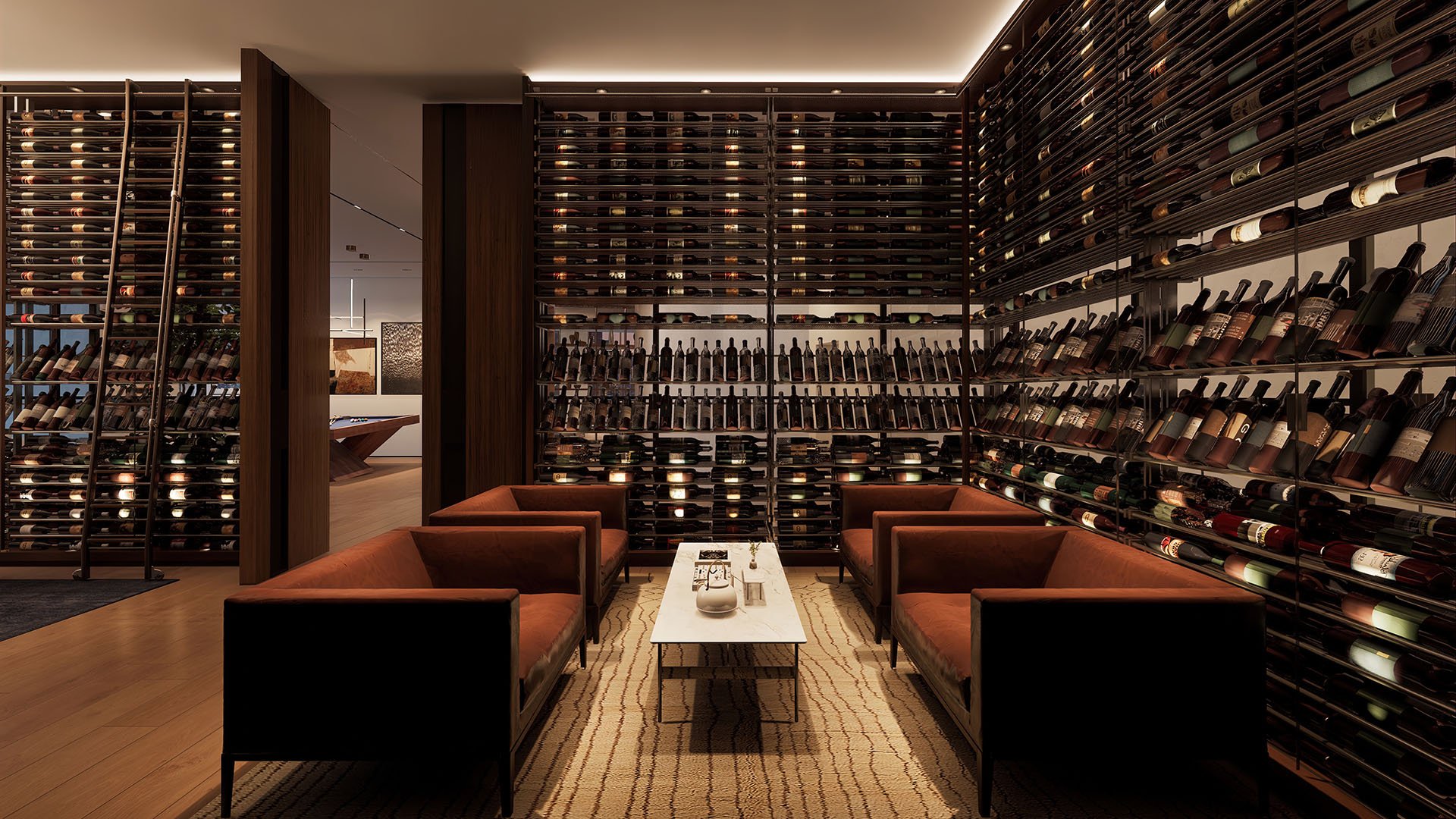
“Climate-controlled” should open a conversation, not close one. Ask a conservator or wine-storage specialist to establish environmental requirements for the actual collection. Then ask each prospective operator to document what it maintains, measures and records.
Cover temperature and humidity ranges, permitted fluctuations, monitoring frequency, alarm thresholds and response procedures. Clarify whether monitoring means security surveillance, environmental monitoring or both. These services are not interchangeable.
Request details on backup power, outage response, emergency access and transfer arrangements. Confirm availability, pricing and contractual responsibilities before scheduling transport. An advertised amenity is no substitute for written operating specifications.
Apply the same discipline to storage within a condominium. When considering Casa Bella by B&B Italia Downtown Miami, ask whether the proposed storage location can meet your specialist's requirements. Neither a residential address nor air conditioning establishes collection-grade performance.
A generator discussion is incomplete until it identifies the equipment served. Ask building management or the relevant technical representative for written clarification of supported loads, fuel arrangements, expected operating duration under stated conditions and maintenance procedures.
For a residence housing a collection, the questions must extend beyond common areas. Does emergency power support unit-level cooling? Does it serve the circuit intended for wine refrigeration? What happens to humidity control, environmental alarms and remote communications during an interruption? Verify each answer separately.
When comparing Waldorf Astoria Residences Downtown Miami with other candidates, apply the same checklist. The project name is not evidence of generator capacity, fuel endurance or private-residence HVAC backup.
Ask your specialists to define what should trigger a response if environmental control stops. The plan should identify who receives an alert, who can enter safely and who can authorize action while you are in California. Do not depend on a single unconfirmed capability.
Florida homeowners policies generally cover wind damage, subject to exclusions and deductibles. Flood damage requires separate coverage, and storm surge is a flood exposure. Do not assume hurricane wind protection also covers rising water.
For a condominium purchase, have an insurance adviser review the association's master policy alongside the proposed unit-owner and collection coverage. Establish what each contract addresses rather than assuming the building's insurance protects privately owned contents.
Hurricane deductibles are commonly expressed as a percentage of the insured dwelling limit. Ask the adviser to identify the applicable basis in your policy and translate the deductible into dollars. Plan around the potential out-of-pocket obligation, not merely the percentage.
Personal-property coverage can carry specific limits for art and collectibles. Individually scheduling valuable works may address insufficient basic coverage, but a schedule alone does not establish agreed-value settlement or protection during transit and temporary storage.
Request written answers on wine spoilage, temperature excursions, valuation, exclusions and diminution in value. Ask how coverage applies at each location and during every handoff. An inventory, a valuation and an insurance contract serve different purposes; they should align without being mistaken for one another.
A second residence needs an operating plan for unoccupied periods. Designate a local contact, confirm authorized access and agree on how building notices and environmental alerts will reach the right person. Ask the insurer whether occupancy patterns create conditions you must meet.
Before buying, review the property's flood-zone designation. Arrange local emergency notifications and maintain an evacuation or inland relocation plan. Backup power is no substitute for household safety planning and no reason to ignore protective instructions.
Review the building's storm-protection procedures for windows and doors, including applicable approved-shutter arrangements. Keep outage supplies, including flashlights, accessible. After flooding, photograph damage when safe, and treat standing water and downed electrical lines as serious hazards. Collection recovery must remain secondary to personal safety.
Before closing, clarify storage suitability, building access, emergency-power scope and insurance responsibilities. Before dispatch, confirm the receiving location, transport arrangements, policy effective dates and the procedure for a delayed delivery. Before leaving Miami, test the agreed notification and contact arrangements with the people responsible.
Keep the instructions concise enough to use under pressure. A designated representative should know whom to call, what decisions they may make and where inventory and policy records are held. Revisit those instructions when the collection, residence or coverage changes.
The goal is not to turn a Miami home into a warehouse. It is to resolve preservation and operational questions early enough to enjoy the residence as intended.
Explore Downtown Miami residences with MILLION and make collection care part of your purchase brief.
If branded residences are on your mind — as a home or as an allocation — we would be glad to share what we are seeing, privately.
Begin a quiet conversationBegin before committing to a move date, ideally during purchase due diligence. Storage requirements, delivery access and insurance terms should inform the relocation plan.
No. Storm surge is a flood exposure, and flood damage requires separate coverage rather than an assumption of protection under wind insurance.
Ask the insurance adviser to identify the applicable insured limit and convert any percentage deductible into dollars. Confirm the actual terms of the proposed policy.
No. Scheduling can address insufficient basic coverage, but valuation and settlement terms require separate confirmation.
Do not assume it will. Ask for written confirmation of coverage during transit, handoffs and any temporary storage.
Request documented environmental ranges, monitoring practices, alarm thresholds and response procedures. Also verify backup power, access, availability and contractual responsibilities.
Do not assume that it does. Obtain written confirmation of the specific circuits and equipment supported by emergency power.
Not necessarily. Discuss intended use and preservation needs with specialists before deciding what belongs at home, in specialist storage or in San Francisco.
Designate an authorized local contact and establish clear notification, access and decision-making procedures. Confirm whether the insurance policy imposes conditions related to occupancy.
Photograph damage when it is safe to do so for insurance documentation. Avoid hazards involving standing water or downed electrical lines, and prioritize personal safety over collection recovery.