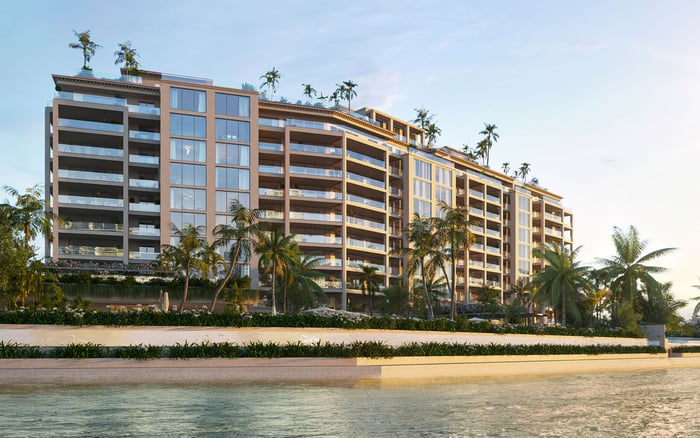
For Geneva-based buyers, a Fisher Island residence and a Florida yacht base require parallel planning. Berth confirmation, vessel relocation, controlled island access, crew arrangements, and written hurricane instructions should be resolved as distinct decisions.

For a Geneva-based buyer, establishing a Fisher Island home requires as much coordination as property selection. The residence, yacht, crew, and household should function together, but each requires its own permissions and arrangements. The central discipline is simple: a residential purchase is not confirmation of a berth or a complete marine operating plan.
When considering Palazzo del Sol Fisher Island, keep the residential brief separate from the captain’s requirements. One concerns how the household wants to live; the other, where the vessel can berth, how it will arrive, and who can manage it when the owner is abroad.
Geneva identifies the buyer’s home base, not the yacht’s location. Begin with the vessel’s actual position and intended Florida use. A seasonal visit and a continuing South Florida base call for different questions, even before transport quotations are requested.
A marina’s general capacity is not an offer of accommodation for a particular yacht. Before committing to relocation, request written confirmation of berth availability, eligibility, permitted occupancy dates, and terms of use. Ask whether the proposed arrangement depends on membership or another approval; do not assume the residence resolves those questions.
Give marina management the vessel’s exact length, beam, draft, shore-power requirements, and insurance details. Request written acceptance of those particulars, together with current charges, contractual conditions, and any restrictions on tenders or service work. Keep an alternative berthing proposal available until the preferred arrangement is confirmed.
The same discipline applies when evaluating Palazzo della Luna Fisher Island. Assess the residence on its own merits, then establish the yacht arrangement independently. A captain should also verify the intended approach, navigation constraints, and arrival procedures. Neither a waterfront setting nor a general description of ocean access substitutes for vessel-specific passage planning.
Treat relocation as a separate brief for the captain, transport specialists, insurer, and appropriate legal advisers. Record the departure location, desired arrival window, vessel condition, and any maintenance needed before movement. Then compare feasible transport and delivery options without assuming a standard route from Switzerland.
Require each proposal to distinguish transport charges from preparation, handling, insurance, arrival services, and any onward movement. Request the assumptions behind the timetable and the consequences of delay. The household’s arrival date should not become an inflexible vessel deadline if conditions or logistics make that imprudent.
Have qualified advisers establish the customs, documentation, and crew-entry requirements applicable to the vessel and people involved. The owner’s nationality or place of residence alone is not sufficient to determine those obligations. The result should be a coordinated arrival plan with named responsibilities, confirmed permissions, and a fallback berth if timing changes.
Fisher Island Club is accessible by yacht or private, 24-hour passenger ferry, and its transportation department operates around the clock throughout the year. Marine transport is therefore integral to daily life, not merely the final stage of arrival. Round-the-clock operation does not, however, mean unrestricted access or uninterrupted service during severe weather.
Owners and Club equity members with approved identification have automatic access, while guests, employees, and vendors remain subject to applicable clearance requirements. Ferry frequency also varies by time. Confirm arrangements for the household’s actual movements rather than relying on the broad description of 24-hour operation.
For buyers considering The Residences at Six Fisher Island, a practical viewing agenda should include these everyday questions. Who registers visiting guests? How are replacement staff cleared? Which terminal should each person use? Resolve those details before the first extended stay.
Do not assume household access arrangements cover yacht crew or marine contractors. Confirm clearance procedures, terminal assignments, parking, accommodation permissions, and after-hours contacts for each group. With separate mainland and island terminals, including east and west facilities, precise instructions matter.
Delivery dimensions deserve particular attention. Ferry limits for private passenger vehicles specify under 24 feet in length and 8 feet in width, subject to applicable rules. Member vehicle-and-trailer combinations have separate limits of under 40 feet in length and 8 feet in width. Confirm how those limits and any delivery permissions apply before dispatching equipment.
Build the crew brief around ordinary operating needs: provisioning, spare parts, maintenance visits, shift changes, and unexpected repairs. Identify who can authorize a contractor and who receives a delivery when the captain is away. Settle these questions directly; do not assume the services are included with a home or berth.
A hurricane plan should specify who decides, who acts, and when movement must begin. A 72-hour preparation horizon offers a planning benchmark, not a confirmed Fisher Island deadline or a guarantee that movement will remain safe. Obtain the marina’s current storm policy and the insurer’s requirements, then agree vessel-specific triggers with the captain.
Confirm whether the yacht may remain, must relocate, or could be reassigned within the marina. Identify a suitable alternative destination and secure the necessary arrangements before deteriorating conditions narrow the options. Move early while safe; do not assume a final departure window will remain available.
The preparation checklist should address exposed equipment, including bimini tops, dinghies, outboards, and deck furniture. It should also cover windows, doors, hatches, seacocks, unvalved through-hulls, cockpit drains, batteries, charging systems, bilge pumps, and electrical connections, as applicable to the vessel.
Finally, document spending authority, communication procedures, and crew safety arrangements. The captain should not have to wait for an owner in Geneva to approve an already agreed protective action. Confirm local closure and access triggers directly; another marina’s timetable is not Fisher Island’s policy.
Whether the residential shortlist includes The Links Estates at Fisher Island or another island address, test the plan against an ordinary week without the owner present. Can the household receive an authorized contractor? Can crew reach the vessel? Can a weather decision proceed without a chain of unanswered calls?
Before scheduling the first season, assemble written berth confirmation, an agreed relocation brief, access instructions, delivery arrangements, and a storm plan aligned with the marina and insurer. Keep household and yacht contacts coordinated, but their responsibilities distinct. The objective is not more administration. It is a South Florida base whose daily operation has been considered as carefully as its setting.
For a considered approach to choosing your Fisher Island residence, explore MILLION.
If branded residences are on your mind — as a home or as an allocation — we would be glad to share what we are seeing, privately.
Begin a quiet conversationDo not treat the purchase as berth confirmation. Obtain written acceptance covering availability, eligibility, vessel dimensions, and contractual terms separately.
Begin with the yacht’s actual location. The owner’s Geneva home base does not establish the vessel’s departure point or a suitable transport route.
Provide exact length, beam, draft, shore-power requirements, and insurance details. Request written confirmation that the proposed berth can accommodate the vessel.
Access is by yacht or private, 24-hour passenger ferry. Applicable identification and clearance requirements still apply.
No. Ferry frequency varies by time, so confirm the schedule relevant to the household’s and crew’s intended movements.
Confirm access clearance, terminal assignments, parking, accommodation permissions, and after-hours procedures. Do not assume household permissions automatically cover crew and contractors.
Published limits specify under 24 feet in length and 8 feet in width for private passenger vehicles, and under 40 feet in length and 8 feet in width for member vehicle-and-trailer combinations. Confirm applicability and delivery permissions before dispatch.
No. It is a municipal preparation benchmark, not a confirmed Fisher Island rule; obtain the marina’s current policy and the insurer’s requirements.
Address exposed equipment, openings, seacocks, through-hulls, drains, batteries, charging systems, bilge pumps, and electrical connections as applicable. Establish safe movement decisions and crew arrangements with the captain in advance.
Agree written decision triggers, spending authority, communication procedures, and responsibilities before leaving. The captain should be able to carry out agreed protective actions without waiting for fresh approval.