A discreet buyer’s guide to evaluating doorman culture, privacy protocols, guest handling, and service boundaries before purchasing at Edgeworth West Palm Beach.
At the upper end of the West Palm Beach market, privacy is not defined only by walls, glass, elevators, or guarded entrances. It is defined by judgment. For buyers considering Edgeworth West Palm Beach, the doorman function deserves to be evaluated as a central part of daily life, not as a decorative amenity at the front desk.
A sophisticated doorman understands when to greet, when to step back, when to recognize a guest, and when to ask a question without making the exchange feel transactional. That rhythm shapes the residential experience. In a luxury building, discretion is the difference between service that feels protective and service that feels performative.
This is especially important for buyers who value quiet arrivals, frequent guests, family offices, household staff, medical providers, drivers, stylists, art handlers, chefs, or security teams. A building may offer impressive finishes, but the lobby is where privacy is tested every day.
The best doorman culture is highly observant without becoming overly familiar. Buyers should ask how staff are trained to recognize residents, family members, regular guests, and authorized service providers. The goal is not celebrity treatment. The goal is continuity.
A resident should not have to explain the same standing authorization repeatedly. At the same time, staff should not announce personal details, comment on travel schedules, or discuss who has been seen in the building. Recognition should reduce friction, not create a social record.
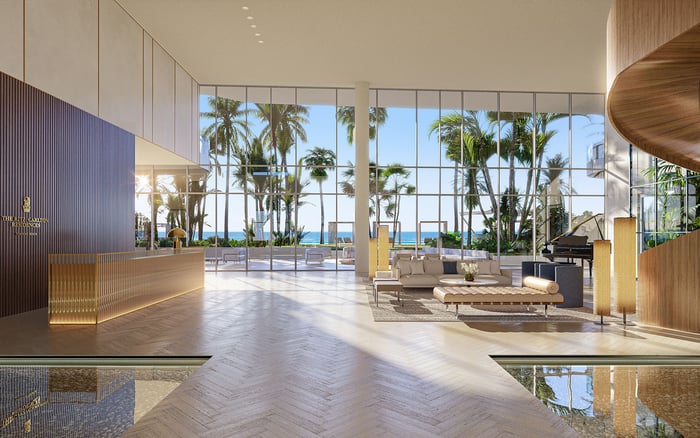
During a private tour, pay attention to the tone at the entrance. Does the greeting feel calm and controlled? Are names used carefully? Are conversations kept low? Is the lobby treated as a transitional space rather than a public salon? These subtle cues reveal whether discretion is embedded in the culture or merely promised.
Guest handling is one of the most revealing subjects a buyer can raise. A polished building should have a clear approach to expected guests, unexpected arrivals, overnight visitors, private dining attendees, and professional visitors. The details matter because they determine how much privacy a resident retains at the threshold.
Ask how guests are announced, whether advance authorization is accepted, and how last-minute changes are handled. If a guest arrives while the resident is unreachable, what happens? If a resident wants certain visitors admitted without repeated confirmation, is that possible? If privacy requires that a visitor’s name not be spoken aloud in a busy lobby, can staff accommodate that preference?
Buyers should also ask whether the building distinguishes between social guests and service providers. A dinner guest, a physical therapist, a personal assistant, and an art installer may all enter through the same lobby, but each requires a different level of handling.
Discretion is often compromised not by guests, but by logistics. Packages, floral deliveries, garment bags, catered dinners, wine shipments, design samples, and contractor visits can create a visible pattern of life. In a luxury residence, that pattern should be managed with care.
Ask where deliveries are received, how residents are notified, and whether high-value or sensitive items receive special handling. If a household employs regular staff, determine how access is documented and updated. If a vendor has authorization for one day, ask how that authorization expires.
For buyers maintaining more than one residence, this becomes even more important. A vacant home with frequent vendor activity should not become a subject of lobby conversation. A well-run building keeps logistics moving while revealing as little as possible.
A doorman is not merely a concierge, and security is not merely a camera system. In the most refined buildings, service and security overlap without becoming intrusive. Buyers should understand who controls access, who monitors entries, who has authority to refuse access, and how concerns are escalated.
This is not about creating a fortress atmosphere. It is about defining accountability. If a driver is unknown, if a vendor arrives outside the approved window, or if a guest claims to be expected but is not on record, staff should have a precise response. Residents should not be forced into awkward phone decisions every time a minor access issue arises.
The right standard feels almost invisible. People who belong are received smoothly. People who do not belong encounter a calm, professional barrier.
Many buyers think about discretion as a matter of manners, but records are equally important. Ask what information is recorded when guests, vendors, deliveries, and service providers enter the building. Ask who can see those records and how long they are retained. Also ask whether residents can set preferences for recurring visitors.
The objective is not to avoid documentation. In a serious residential environment, documentation can protect residents. The question is whether records are handled with discipline and whether access to them is limited to those with a legitimate operational role.
Buyers who employ personal staff or coordinate through assistants should confirm whether those assistants may manage guest lists, deliveries, and authorizations. If so, the building should have a procedure that avoids informal workarounds.
West Palm Beach buyers often evaluate privacy alongside daily convenience, cultural access, and a refined residential pace within Palm Beach County. That context makes front-of-house behavior especially important because arrivals, vendors, deliveries, and guests can be part of ordinary life.
A buyer evaluating Edgeworth West Palm Beach should therefore ask not only what the building offers, but how the building behaves. Does it understand the difference between hospitality and exposure? Does it protect family routines? Does it support quiet comings and goings? Does it make guests feel welcome without turning arrivals into events?
The most useful due diligence focuses on lived experience rather than labels. A buyer should consider whether the entrance, lobby, service paths, and staff protocols support the level of privacy expected from a luxury South Florida residence.
A showing can reveal more than a brochure. Arrive a few minutes early and watch the entrance. Notice whether staff maintain eye contact with the door, whether they continue private conversations in front of residents, and whether they remain composed when several people arrive at once.
Observe how packages are staged. Look for clutter, visible labels, exposed garment bags, or delivery congestion. A luxury lobby should not disclose residents’ daily lives through unattended items. If the building has a separate service entry or package procedure, ask how it functions in practice.
Also consider acoustics. In some lobbies, a simple conversation at the desk carries farther than expected. In others, layout and material choices help protect privacy naturally. A buyer should stand where guests would stand, where staff would stand, and where residents would wait for an elevator. The spatial choreography matters.
Before moving forward, buyers should ask a focused set of questions. Who trains front-of-house staff? Are doorman and concierge duties separate or combined? How are temporary staff briefed? What is the policy for guest authorization? How are vendors credentialed? How are complaints about discretion handled?
It is also reasonable to ask how the building manages unusual situations. These may include media attention, high-profile guests, security details, family disputes, private events, or repeated unannounced visitors. The answers should be calm, specific, and procedural rather than improvised.
A truly discreet building will not need to boast. It will be able to explain its standards plainly. The language should be measured, the responsibilities clear, and the tone consistent with the way the staff actually behave in the lobby.
Quiet luxury is often discussed in terms of materials, architecture, and location. Yet in daily residential life, quiet luxury is largely operational. It is the package that appears without a scene, the guest who is received without confusion, the driver who is handled without a public exchange, and the staff member who remembers a preference without discussing it.
For Edgeworth West Palm Beach, the essential question is not simply whether there is a doorman. It is whether the doorman function has the discipline, training, and culture to protect the life a buyer intends to live there. In a market where privacy has become a defining amenity, that may be one of the most important questions of all.
Why should buyers ask about doorman discretion? Because the doorman often controls the first layer of privacy, access, and daily residential experience.
Is doorman discretion the same as security? No. Security is about protection and access control, while discretion is about judgment, restraint, and confidentiality.
What is a key question about guest arrivals? Ask how expected and unexpected guests are announced, authorized, admitted, or declined.
Should buyers ask about delivery handling? Yes. Deliveries can reveal patterns of life, so high-value and sensitive items should be managed carefully.
How can a buyer evaluate staff culture during a showing? Watch how staff greet residents, handle simultaneous arrivals, and speak in shared lobby areas.
Are records of guests and vendors important? Yes. Records can support security, but buyers should understand who can access them and how they are managed.
What matters for residents with household staff? The building should have a clear process for recurring authorizations, updates, and revocations.
Can a polished lobby still lack discretion? Yes. Finishes may impress, but discretion depends on training, procedures, and consistent behavior.
Should temporary or substitute staff be discussed? Yes. Buyers should ask how temporary personnel are briefed on privacy standards and resident preferences.
What is the best sign of excellent doorman discretion? The best sign is service that feels seamless, calm, and protective without drawing attention to itself.
For a discreet conversation and a curated building-by-building shortlist, connect with MILLION.
If branded residences are on your mind — as a home or as an allocation — we would be glad to share what we are seeing, privately.
Begin a quiet conversation