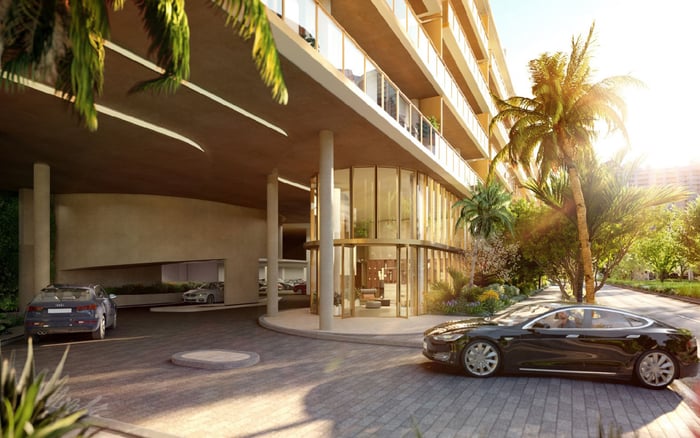
A buyer-focused guide to weighing Downtown Miami and Brickell through the lens of airport access, daily rhythm, neighborhood character, privacy, dining, and long-term livability.
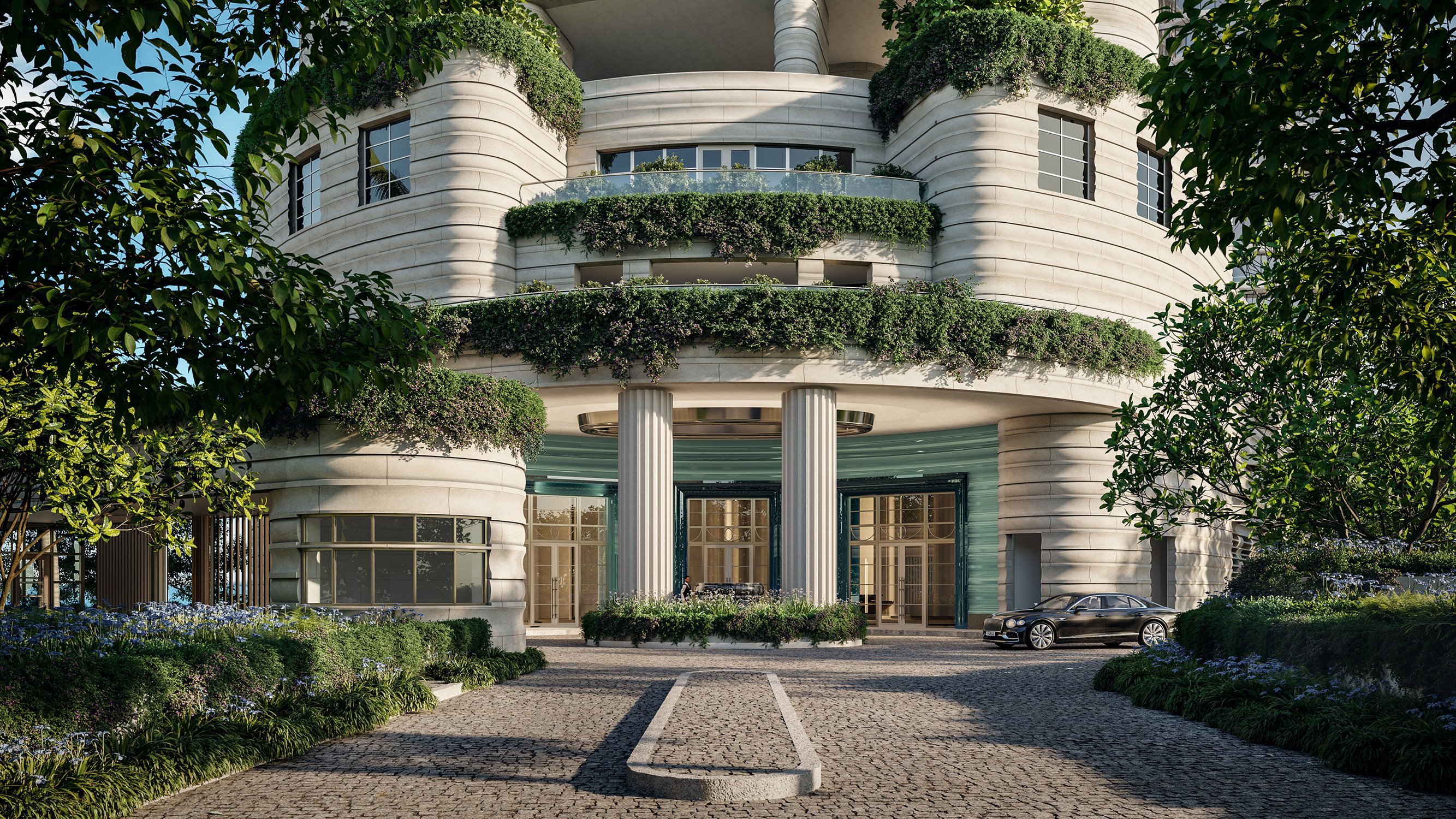
For frequent travelers, the instinct is understandable: choose the home that makes the airport easiest. In Miami, however, the more refined decision is not simply Downtown versus Brickell as a route to departures. It is whether airport access can be absorbed into a fuller way of living without becoming the dominant reason to buy.
Downtown and Brickell both serve buyers who value urban proximity, bayfront orientation, private amenities, dining, and quick movement across Miami’s core. Yet they do so with different temperaments. Downtown has a broader civic and cultural character, with major skyline energy and a more layered sense of arrival. Brickell is more polished and residentially concentrated, with a daily cadence that can feel self-contained. The airport question matters, but it should be weighed against how often one actually travels, when those trips typically occur, and what the home needs to accomplish on the other six days of the week.
Downtown is compelling for buyers who want the city to feel expansive rather than singular. It can suit those who enjoy the texture of a true urban center: the waterfront, performance venues, restaurants, offices, galleries, and a skyline that shifts from morning to evening. The lifestyle is less about one repeated loop and more about access to multiple versions of Miami.
For the airport-focused buyer, Downtown can make sense when travel is frequent but not the only priority. A residence such as Aston Martin Residences Downtown Miami speaks to the appeal of a central, vertical address where the home itself carries the weight of the decision. In this context, airport access is valuable because it supports a broader life of movement, not because it replaces the pleasure of being at home.
Downtown can also favor buyers who entertain guests from multiple parts of the city, want cultural proximity, or prefer an address connected to Miami’s larger civic identity. The tradeoff is that the energy can vary from block to block. Buyers should study the exact building approach, valet sequence, surrounding street life, and how the neighborhood feels at different hours.
Brickell is often the clearer choice for buyers who want daily life to feel composed. Its appeal lies in convenience: residential towers, restaurants, wellness offerings, offices, and services clustered into a dense, walkable environment. For owners who travel often, that concentration can be calming. The airport may be accessible, but the more meaningful luxury is not needing a car for every appointment, dinner, or errand once one is back home.
A project like 2200 Brickell reflects the neighborhood’s attraction for buyers who want Brickell without sacrificing a more residential sensibility. Meanwhile, St. Regis® Residences Brickell illustrates the continued pull of branded, service-rich living in an area where privacy, amenities, and immediate urban access are expected to coexist.
Brickell is particularly persuasive for owners whose professional, dining, and social lives already orbit the neighborhood. In that case, airport access becomes one convenience among several rather than the decisive advantage. The principal caution is density. The best Brickell purchase is not simply in Brickell; it is in the right micro-position, with the right entry experience, elevator ratio, view corridor, terrace depth, and separation from the most intense pedestrian flows.
A sophisticated buyer should begin with a weekly calendar, not a map. How many mornings start with school, training, meetings, or calls from home? How often does dinner happen nearby? Are weekends spent on the water, in Miami Beach, in Coconut Grove, in Palm Beach, or away entirely? Is the airport used weekly, monthly, or seasonally?
If flight days are rare but the home is used constantly, over-indexing on airport access can produce a technically rational but emotionally poor purchase. Conversely, if the owner flies repeatedly, returns late, and values a swift re-entry into a full-service building, access becomes a legitimate lifestyle feature. The goal is not to ignore the airport. It is to size its importance correctly.
Downtown may reward the buyer who wants a larger canvas and a more metropolitan sense of Miami. Brickell may reward the buyer who values a high-functioning daily circuit. Both can work beautifully, but only one is likely to feel intuitive after the novelty of the purchase fades.
In the ultra-premium segment, the building often determines whether Downtown or Brickell truly works. Lobby choreography, valet capacity, private dining, wellness facilities, elevator privacy, resident-only programming, pet circulation, package handling, and staff quality can matter as much as the address itself.
In Downtown, Waldorf Astoria Residences Downtown Miami appeals to buyers drawn to architectural presence and a globally recognized hospitality sensibility. Nearby, Casa Bella by B&B Italia Downtown Miami offers another version of Downtown living, one that emphasizes design language and a central urban setting.
In Brickell, the question may be less about whether amenities exist and more about how gracefully they are managed. A luxury buyer should ask how the building performs on a busy Friday evening, during seasonal occupancy, and after a late return from travel. The best building makes the city feel available without making the owner feel exposed to it.
Airport access is a logistical variable. Arrival at home is emotional. A buyer deciding between Downtown and Brickell should pay close attention to the final five minutes: the approach, the porte cochère, the valet rhythm, the lobby volume, the elevator ride, and the first view upon entering the residence.
Downtown can offer dramatic skyline and bay perspectives that feel cinematic. Brickell can offer a more polished urban waterfront mood, with a sense of immediacy that appeals to residents who want to step directly into the neighborhood. Neither is inherently superior. The difference is psychological: Downtown may feel broader and more theatrical; Brickell may feel more curated and efficient.
For many buyers, the correct choice becomes obvious only after seeing the same residence at different times of day. Morning light, evening congestion, restaurant noise, marina activity, and weekend patterns can all alter the impression. A luxury purchase should be tested as lived experience, not only as a showing.
Resale should be considered, but not allowed to flatten the decision. Both Downtown and Brickell have deep name recognition with domestic and international buyers. The stronger long-term position usually comes from combining a respected building, desirable line, protected view, intelligent floor plan, credible service model, and a neighborhood fit that will remain relevant to the next owner.
The airport-access narrative can help resale when it is part of a larger convenience story. It is less powerful if it is the only argument. Buyers should be wary of choosing a home because it solves one friction point while creating others: longer walks to preferred dining, a less inspiring view, a building culture that feels mismatched, or a daily routine that subtly irritates.
The best purchase is the one that makes travel easier while making home more compelling. In Miami, that balance is available in both Downtown and Brickell, but it must be curated carefully.
Is Downtown Miami better than Brickell for airport access? Not universally. The better choice depends on the exact building, travel schedule, and the buyer’s daily lifestyle pattern.
Should frequent flyers automatically choose the closest-feeling neighborhood? No. Frequent flyers should also weigh arrival experience, service quality, privacy, and how the home functions between trips.
Who is usually better suited to Downtown? Downtown often suits buyers who want cultural texture, skyline drama, and a broader urban Miami setting.
Who is usually better suited to Brickell? Brickell often suits buyers who want dense convenience, dining access, polished amenities, and a self-contained daily routine.
Does the building matter more than the neighborhood? In luxury real estate, it often can. Service, privacy, views, access, and resident experience may define livability more than the district name.
How should buyers compare airport convenience? They should consider actual travel frequency, usual departure times, return patterns, and how the route affects the rest of their week.
Is Brickell too dense for luxury living? Not necessarily. The right building, line, arrival sequence, and amenity management can create a composed experience within a dense district.
Can Downtown feel residential enough for a primary home? Yes, particularly in buildings with strong service, privacy, amenities, and a residence layout that supports daily routines.
What is the biggest mistake in this decision? Overvaluing one logistical advantage while undervaluing the emotional and practical experience of living in the home every day.
Which neighborhood has stronger resale appeal? Both can be compelling when the residence combines a respected building, strong view, efficient plan, and enduring lifestyle relevance.
If you'd like a private walkthrough and a curated shortlist, connect with MILLION.
If branded residences are on your mind — as a home or as an allocation — we would be glad to share what we are seeing, privately.
Begin a quiet conversation