A discreet buyer’s guide to choosing between Downtown Miami and Brickell when nightlife proximity matters, but privacy, daily rhythm, and residential quality matter more.
For a certain Miami buyer, proximity to nightlife is not a novelty. It is part of the city’s appeal: the ability to move from a private dinner to a late lounge, from a gallery opening to a nightcap, without making the evening feel logistically heavy. Yet the most sophisticated version of this lifestyle is not club dependency. It is optionality.
That distinction matters when comparing Downtown and Brickell. Both place a buyer near the city’s high-energy social circuit, but they express that energy differently. Brickell tends to feel more polished, vertical, and routine-driven, with a stronger sense of residential momentum. Downtown offers a wider urban canvas, often better suited to buyers who like being near culture, performance, sports, dining, and spontaneous movement.
The objective is not to live above the party. It is to live close enough to participate, and far enough away to recover. That is where building selection, floor height, arrival sequence, acoustic separation, and private outdoor space become more important than the name of the nearest venue.
Brickell suits the buyer who wants a refined, walkable-feeling base where evenings can be social without every day becoming nocturnal. The neighborhood’s appeal is strongest for residents who value a clean transition from workday to dinner, from wellness to drinks, and from weekday structure to weekend spontaneity.
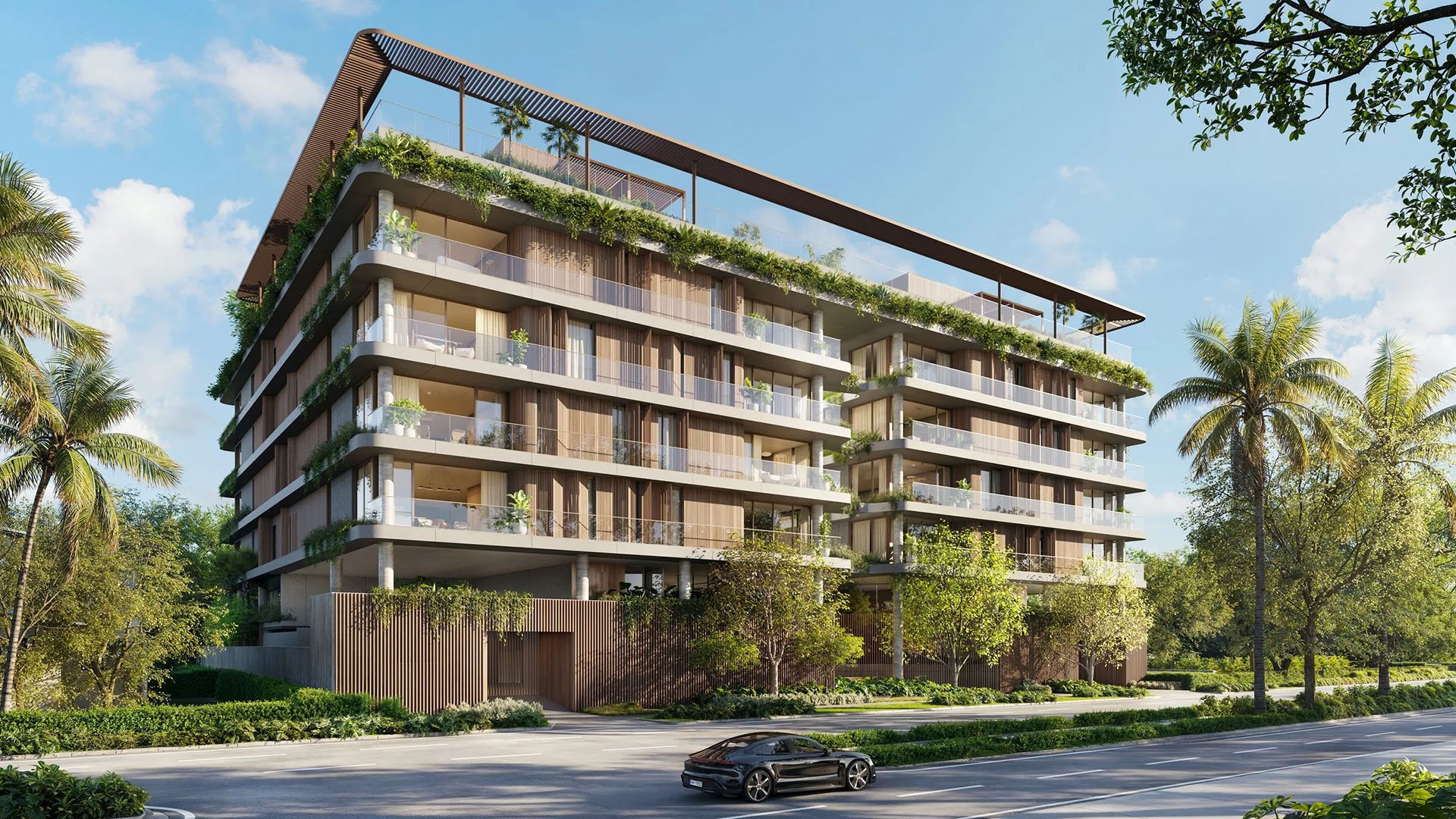
This is where a project such as 2200 Brickell enters the conversation naturally: not because a buyer should choose a building for nightlife alone, but because Brickell living is often about layering convenience, design, and neighborhood access into one controlled residential setting. The best Brickell choice should feel composed at 8 a.m. and still relevant at midnight.
For buyers drawn to a more fashion-forward, statement-oriented address, 888 Brickell by Dolce & Gabbana speaks to a different register of the same decision. It places branding, hospitality cues, and visual identity at the center of the living experience. That may appeal to owners who entertain frequently or want their residence to carry a social signature, but the core question remains: can the private side of the building remain truly private?
Brickell is often the more intuitive answer for buyers who want their social life close, but their home life organized. Bars, restaurants, lounges, and late dinners may be part of the pattern, but they should not become the foundation of the purchase.
Downtown can be the more interesting choice for buyers who enjoy a larger city texture. It is less about one defined lifestyle corridor and more about proximity to multiple forms of urban energy. That breadth can feel liberating for a buyer who wants to be close to entertainment and culture without feeling tied to one social orbit.
The tradeoff is that Downtown requires sharper building selection. A residence here should be evaluated not only for views and finishes, but for how it handles transition: from street to lobby, from lobby to elevator, from elevator to residence, from activity to silence. The arrival should feel resolved, not improvised.
In that sense, Aston Martin Residences Downtown Miami represents the kind of address buyers often consider when they want the Downtown skyline experience with a luxury residential identity. Nearby, Waldorf Astoria Residences Downtown Miami points to another preference: the desire for hospitality association and a recognizable vertical landmark in the Downtown conversation.
Downtown is best for the buyer who likes being near momentum, but does not require the neighborhood itself to feel curated at every hour. It rewards residents who are comfortable with contrast and who choose the building as their sanctuary.
A club-adjacent lifestyle becomes fragile when the location is doing too much work. If the only reason a residence appeals is the promise of nightlife, the purchase can feel less durable over time. The stronger choice is a home that works even when the buyer stays in.
Start with the private experience. Does the residence support quiet mornings? Is there enough separation between entertaining areas and bedrooms? Does the floor plan allow guests to gather without overwhelming the private zones? Can a late return home feel discreet rather than exposed?
Then consider the building’s social programming. Amenity spaces can be powerful, but they should not turn the building into a perpetual venue. For some owners, a vibrant amenity deck is a benefit. For others, it can blur the line between residence and scene. The correct answer depends on temperament.
New-construction buyers should be especially thoughtful here. Newness can seduce with renderings and amenities, but the enduring value is in how the building will live after the first season of attention passes. A calm lobby, strong service culture, thoughtful circulation, and well-managed shared spaces may matter more than theatrical design gestures.
Choose Brickell if your life is structured, but social. You value proximity to dining, fitness, offices, and friends, yet you want your residence to support routine. You may host, but you do not want your building to feel like an extension of the night.
Choose Downtown if you prefer a broader cultural radius and a more metropolitan mood. You are comfortable with energy nearby, and you enjoy the sense that different versions of the city are available at once. Your ideal building gives you a private retreat above that movement.
For a more hospitality-inflected Brickell option, Cipriani Residences Brickell may appeal to buyers who want service, familiarity, and a dining-forward sensibility woven into the address. Again, the key is not whether the building feels social. It is whether the residence can still feel personal.
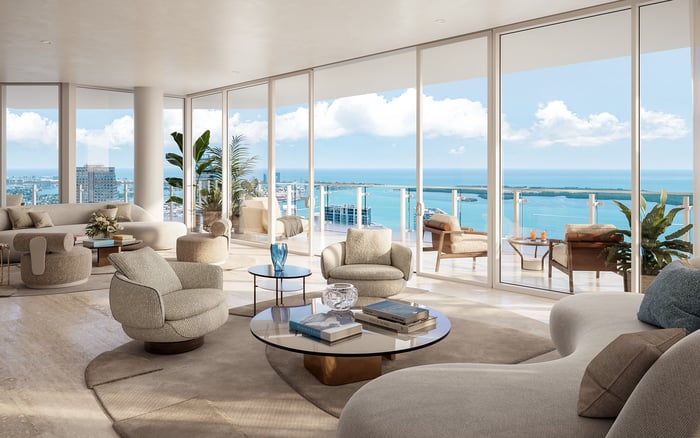
The first inspection is acoustic. High floors can help create a psychological and practical remove from street-level energy, but height alone is not a complete answer. Buyers should consider glazing, balcony orientation, bedroom placement, and how sound may travel through amenity areas or arrival spaces.
The second inspection is privacy. A club-adjacent life often involves guests, drivers, reservations, and late arrivals. The building should make all of that feel graceful. Look for an arrival sequence that does not turn every entrance into a performance.
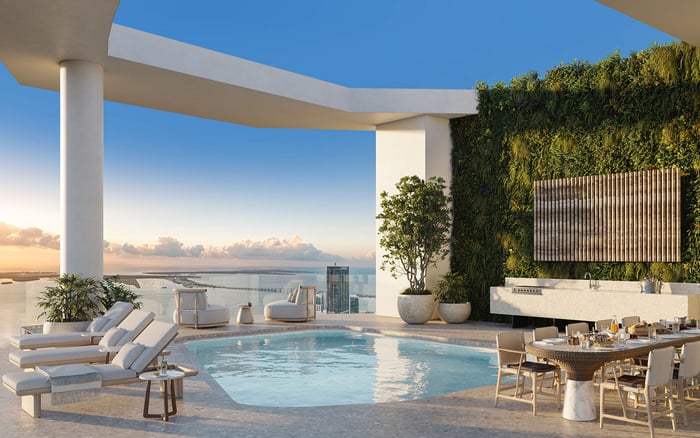
The third inspection is outdoor space. Terrace living can be one of the great pleasures of Miami, but a terrace should be judged by usability, exposure, and mood. A dramatic view is valuable. A place where one can actually sit quietly the next morning is rarer.
Finally, think about resale language. A residence that can be described only by its nightlife access is narrow. A residence that offers design, privacy, service, views, and access is much stronger. The best club-adjacent homes are not dependent on the club at all.
Downtown and Brickell are not opposites. They are two different answers to the same luxury question: how close do you want to be to Miami’s energy, and how completely do you want to control your retreat from it?
Brickell is the cleaner choice for buyers who want a polished daily framework with nightlife as a convenient extension. Downtown is the more expansive choice for buyers who like the feeling of an urban stage and are willing to be more selective about the building that protects their privacy.
In both cases, the winning residence is the one that makes going out easy, staying in desirable, and returning home effortless.
Is Brickell better than Downtown for a club-adjacent lifestyle? Brickell may suit buyers who want a more structured residential rhythm with social access nearby. It often feels more polished and routine-oriented.
Is Downtown better for buyers who want more urban energy? Downtown can suit buyers who prefer a broader city canvas and a stronger sense of metropolitan movement. Building selection becomes especially important.
Should nightlife be the main reason to buy in either area? No. Nightlife should be an accessory to the purchase, not its foundation.
What matters most in a club-adjacent building? Privacy, acoustics, arrival sequence, elevator experience, and amenity management matter most. The residence should feel calm even when the neighborhood is active.
Are high floors always better for this lifestyle? High floors can add separation and perspective, but they are not the only consideration. Layout, glazing, and orientation also matter.
Is a terrace important in Downtown or Brickell? A terrace can be highly desirable if it feels usable and private. The best outdoor space supports quiet mornings as much as evening entertaining.
Can a social building still feel private? Yes, if circulation, service, and amenity placement are thoughtfully handled. The private residence must remain distinct from the building’s social spaces.
What is the risk of choosing too close to nightlife? The home may feel exciting at first but tiring over time. A better choice offers access without constant exposure.
Do bars nearby improve long-term value? Nearby bars can support lifestyle convenience, but they should not define the value story. Design, privacy, service, and location depth are more durable.
How should buyers compare Downtown and Brickell in one day? Visit both during the day and again in the evening. The right choice should feel appealing in both moods.
For a tailored shortlist and next-step guidance, connect with MILLION.
If branded residences are on your mind — as a home or as an allocation — we would be glad to share what we are seeing, privately.
Begin a quiet conversation