At 619 Residences in Brickell, the advertised Nobu dining program extends beyond a waterfront restaurant. For buyers, the meaningful distinctions are between meals delivered home, private-chef services, residents-only venues, and the terms that will govern each experience.
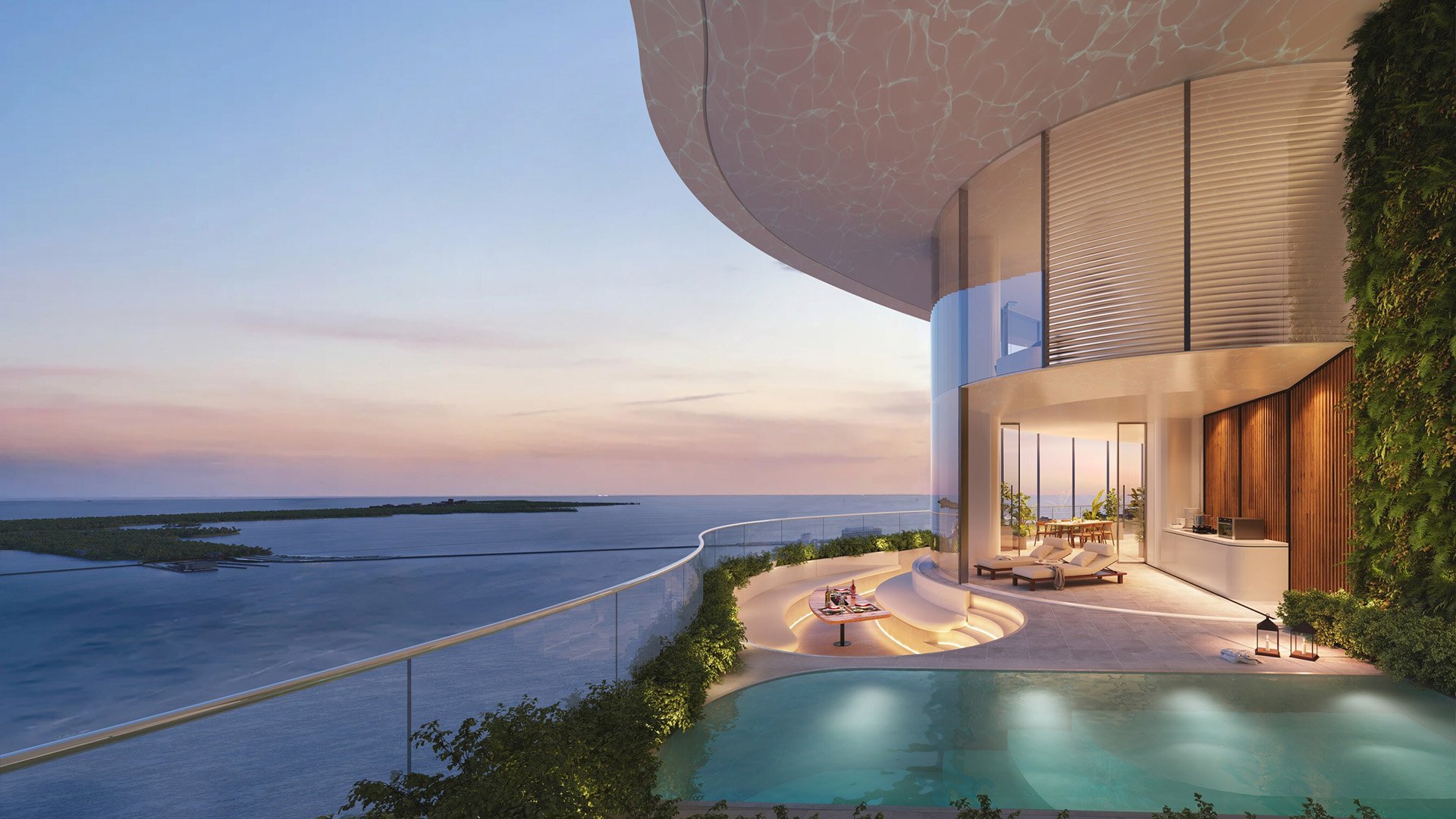
The most revealing question about dining at 619 Residences is not whether a Nobu restaurant is planned downstairs. It is what dinner might look like when an owner prefers to stay home. A quiet meal after a flight, a carefully paced evening with friends, and a family supper call for different kinds of service. A restaurant address alone does not meet those needs.
Planned for 619 Brickell Avenue overlooking Biscayne Bay, 619 Residences by Foster + Partners + Nobu Hospitality advertises Nobu in-residence dining and service, private-chef services, and a broader collection of dining spaces. The distinction matters: a meal delivered to a residence is not the same as a chef preparing dinner inside it, and neither necessarily includes the arrangements required for a private event.
The appeal lies in choosing among those experiences without making every evening a restaurant occasion. The buyer’s task is to establish exactly how that choice will work.
619 Brickell is marketed as residential-only, rather than a hotel, despite its hospitality offering. It is also presented as Nobu Hospitality’s first residential project in Miami. That combination makes it especially important not to mistake familiar hotel expectations for residential entitlements.
In-residence dining and service is an advertised amenity. Private-chef services are advertised separately, while signature Nobu dining to-go is another listed offering. Treat these as three distinct services until current documents explain their relationship.
For delivered meals, ask whether service means a handoff at the door, table setup, or something more extensive. For to-go dining, establish the ordering and collection arrangements. For a private chef, request details on preparation, staffing, service, and cleanup. None of those operational details should be inferred from an amenity name.
Buyers also considering Cipriani Residences Brickell can apply the same discipline: assess the documented service attached to each home, not simply the associations a name evokes.
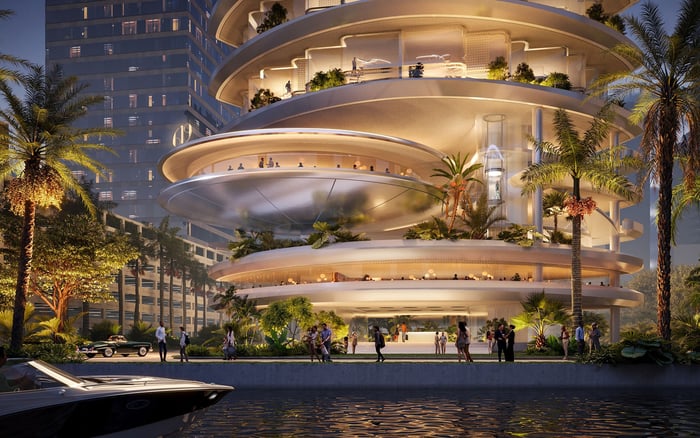
The planned public-facing Nobu restaurant serves a different purpose from dining delivered upstairs. It is envisioned on the waterfront boardwalk at the tower’s base, with an associated private dining room. That room should not be confused with a private-chef experience inside an owner’s residence.
The plans also include a residents-only Nobu dining venue distinct from the public restaurant, plus a residents-only Nobu Café and bar with bay views and poolside positioning. A poolside café is also listed among the amenities. Buyers should confirm the final configuration rather than assume every description represents a separate, independently operated outlet.
Access deserves its own conversation. Ask which spaces residents may reserve, whether guests can accompany them, and whether any reservation priority applies at the public restaurant. A residents-only venue does not, by itself, establish guest allowances, seating availability, or unrestricted use of an associated private room.
For entertaining, clarify capacity, minimum spending, cancellation terms, and whether menus can be adapted. These are questions to resolve, not confirmed features of the offering.
Foster + Partners is designing the project with Sieger Suarez Architects; the developers are 13th Floor Investments and Key International. For a buyer focused on dining, the architectural conversation should extend beyond the tower’s identity to the practical details of the selected residence.
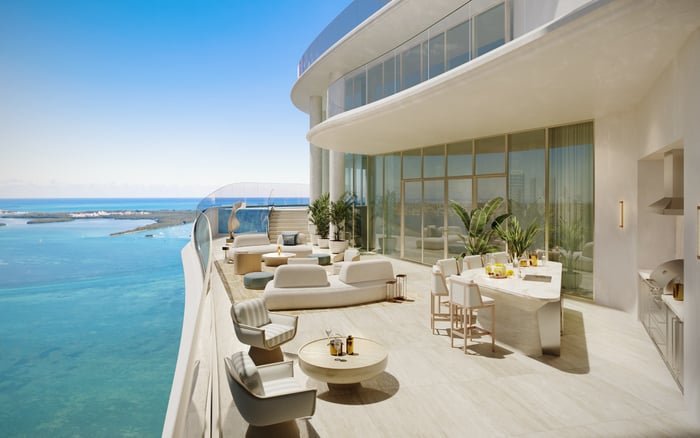
Review the route between the kitchen, dining area, and terrace. Consider where staff would prepare or stage a meal, how dishes would be cleared, and whether service would interrupt guests. A generous entertaining area and a workable service arrangement are related, but they are not interchangeable.
Select residences are marketed with private outdoor summer kitchens. That qualification is essential: the feature should not be assumed to accompany every home. Confirm the selected residence’s specifications and any rules governing outdoor cooking or staff access.
Ask, too, whether an outside chef may work in the home and what approvals, insurance, or scheduling requirements would apply. An advertised private-chef service does not answer every question about an owner’s preferred culinary team.
More than 90,000 square feet of amenities are advertised across wellness, dining, and lifestyle services. The program includes concierge and lifestyle management, with housekeeping and butler assistance also marketed. Those offerings may support hosting, but buyers should establish which responsibilities belong to each team.
Who coordinates a dinner involving food delivery, table service, and post-event cleaning? Does the owner make one request or several bookings? Are any elements included in regular charges, or is each arranged separately? The advertised dining descriptions do not settle these questions.
Hours are equally consequential. In-residence dining should not be treated as confirmed 24-hour room service. Request the proposed service schedule, advance-order requirements, minimum orders, delivery charges, and holiday arrangements. For dietary needs, ask how allergies and other accommodations would be handled rather than assuming restaurant and residential menus will be identical.
A buyer weighing ORA by Casa Tua Brickell alongside 619 can use the same household-first approach. Define the evenings that matter most, then evaluate each offering against those needs without assuming equivalent services.
All of these dining venues and services should be understood as planned or advertised, not operating amenities or guaranteed contractual entitlements. Request current written materials that distinguish the vision from the obligations attached to ownership.
A useful review includes sample menus, service and fee schedules, booking windows, cancellation policies, guest rules, and private-chef terms. Ask what is established today, what remains subject to final operating arrangements, and where each commitment appears in the applicable documents.
Have counsel examine how dining services are addressed, including any provisions governing changes. If a particular service materially influences the purchase decision, its documentation deserves the same attention as the residence’s physical specifications.
The strongest case for dining at home is not the longest amenity description. It is a clear fit between the household’s habits and the services ultimately delivered. Some owners will prioritize an uncomplicated meal upstairs; others will care more about private entertaining or a residents-only setting beyond their front door.
At 619, the advertised range invites that distinction. Evaluate each experience separately, confirm its terms, and reserve judgment on convenience until the practical arrangements are clear.
For a discreet conversation about matching a South Florida residence to the way you live and entertain, connect with MILLION.
If branded residences are on your mind — as a home or as an allocation — we would be glad to share what we are seeing, privately.
Begin a quiet conversationThe project, also marketed as 619 Brickell, is planned for 619 Brickell Avenue in Miami’s Brickell district, overlooking Biscayne Bay.
Foster + Partners is designing the project with Sieger Suarez Architects. The developers are 13th Floor Investments and Key International.
It is marketed as residential-only rather than a hotel, despite its advertised Nobu hospitality services.
Yes, Nobu in-residence dining and service is advertised. Buyers should confirm the menu, delivery arrangements, service scope, and fees.
Private-chef services are advertised separately from in-residence dining. Their booking terms, staffing, preparation, and cleanup arrangements should be confirmed.
The available details do not establish service hours. Buyers should not assume the offering includes 24-hour room service.
Plans describe a waterfront public Nobu restaurant, an associated private dining room, a residents-only dining venue, and a residents-only café and bar. Buyers should confirm their final configuration and access rules.
No building-wide provision is established. Private outdoor summer kitchens are marketed for select residences, so buyers should check their chosen home’s specifications.
Request service and fee schedules, minimum orders, reservation rules, cancellation terms, and private-chef booking conditions. Dietary accommodations and guest access also warrant confirmation.
They should be treated as planned or advertised offerings, not guaranteed contractual entitlements. Buyers should review current project documents and applicable commitments with counsel.