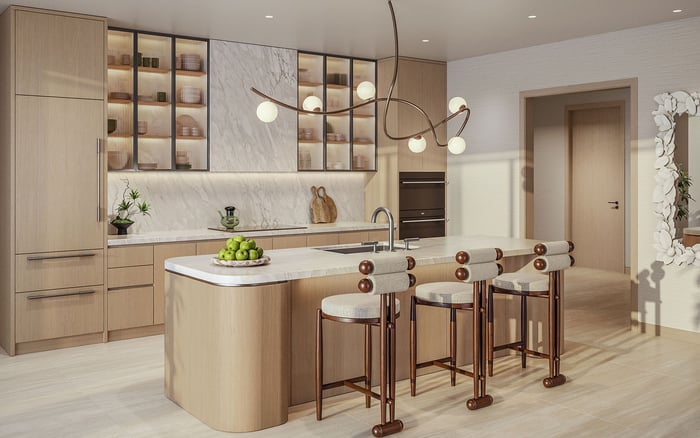
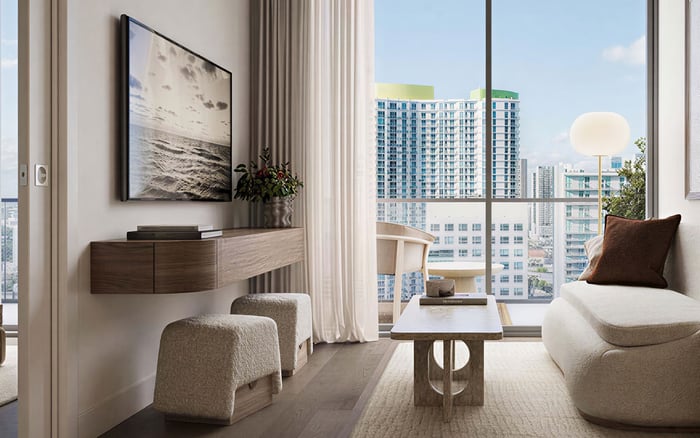
A buyer-focused look at why documented private-dining reservation rights can influence value, lifestyle, and daily convenience at Delano Residences & Hotel Miami.
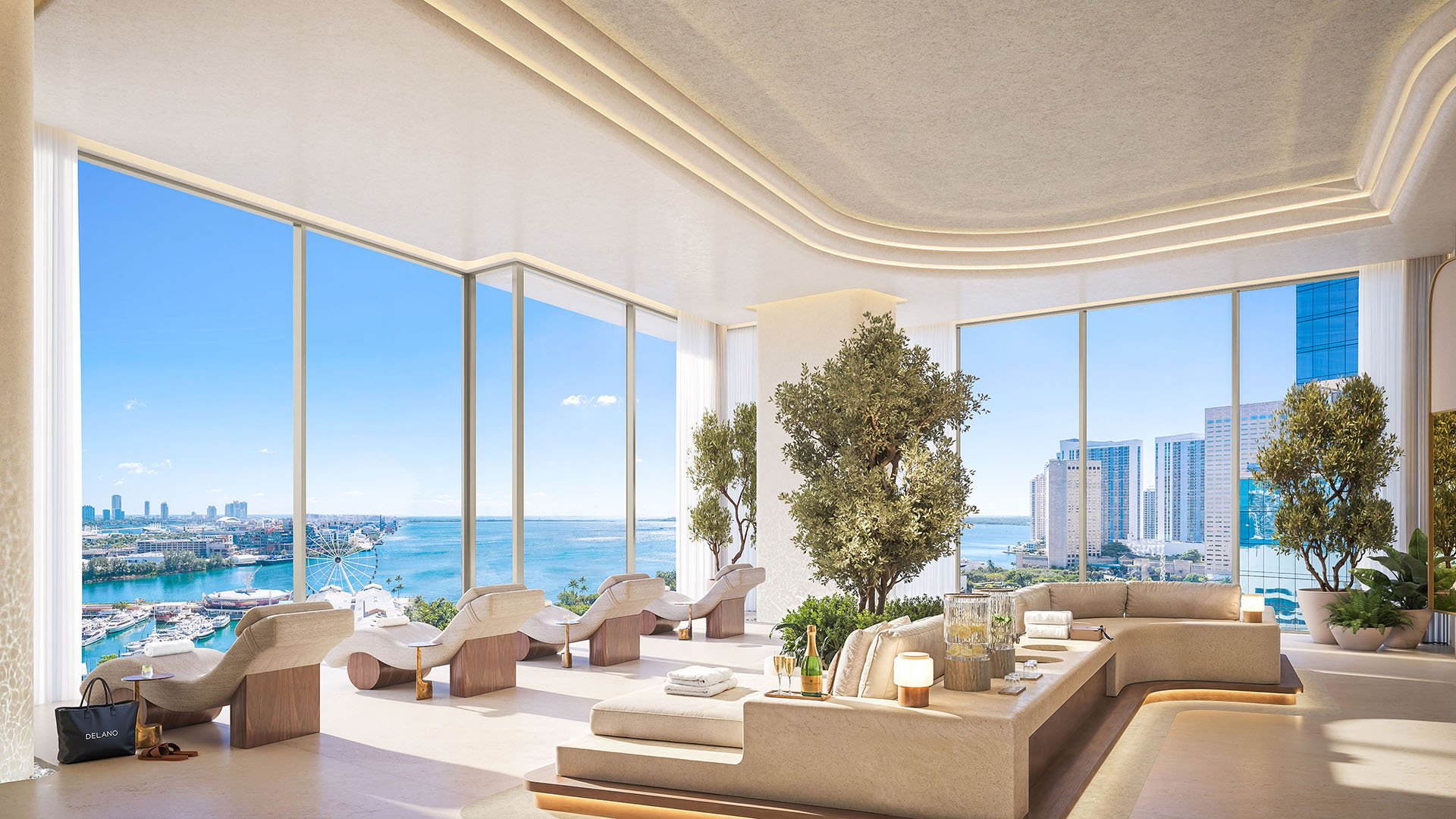
For a certain South Florida buyer, the most important amenity is not always the most visible one. A panoramic terrace, a sculptural lobby, and a beautifully composed spa all matter. Yet the privilege that changes daily life may be quieter: the ability to secure a table, a private room, or a hosted culinary moment when Miami is at its most in demand.
That is why private-dining reservation rights deserve serious attention when evaluating Delano Residences & Hotel Miami. The decision is not simply whether a dining venue exists. It is whether an owner receives a defined, durable, and genuinely useful form of access that can improve how the residence functions as a primary home, pied-à-terre, or social base.
In luxury real estate, convenience compounds. A buyer may be weighing location, architecture, finishes, service, and brand alignment. But when dining access is meaningful, it solves a recurring problem: how to host beautifully without turning every evening into logistics.
Buyers should separate ambiance from entitlement. An amenity is something residents may enjoy when it is available. A right is a documented benefit that defines priority, process, and limits. That distinction can shape both lifestyle satisfaction and confidence in the purchase decision.
In practice, private-dining reservation rights should be evaluated like any other premium ownership feature. What is the advance booking window? Are certain days restricted? Does the right apply to a private room, a chef's table, a restaurant table, in-residence dining, or a combination? Are minimum spends, cancellation rules, guest limits, blackout dates, or owner tiers involved? Can the privilege be used by family, guests, tenants, or only the titled owner?
The point is not to reduce hospitality to legal language. The point is to ensure the promise can hold up during peak season, cultural events, holiday weekends, and the everyday demands of an active household.
Miami is a reservation-driven city at the high end. The best table is not just a meal. It is a setting for family introductions, business conversations, birthdays, art-week evenings, post-yacht dinners, and quiet nights when a buyer wants the city without the friction of the city.
For buyers accustomed to private clubs, family offices, aviation lounges, and relationship-based service, priority access feels familiar. It belongs to a broader expectation that luxury should remove uncertainty. The residence becomes more persuasive when it can deliver not only a beautiful address, but also a reliable rhythm of living.
This is especially relevant for second-home owners who arrive with compressed schedules. If a buyer is in Miami for four nights, losing one evening to poor planning feels disproportionate. A clearly defined private-dining pathway can turn a short stay into a seamless one.
Luxury buyers often decide through a blend of rational analysis and emotional rehearsal. They imagine the first holiday dinner, the spontaneous Friday arrival, the client breakfast, the family celebration, and the night when friends visit from out of town.
Private-dining rights make those scenarios more concrete. They help the buyer see how the residence will perform under pressure. That matters because the most valuable homes do not merely look exceptional when empty. They function beautifully when life is full.
For shorthand comparison, buyers may group opportunities by lifestyle markers such as Miami Beach, Brickell, South of Fifth, condo-hotel, new construction, and investment. Dining access cuts across those categories because it speaks to use. It answers a direct question: will this property make my life easier when I actually want to be there?
The most important question is whether the right is written into purchase materials, owner documents, membership terms, or hospitality policies. Verbal enthusiasm is not enough. In the ultra-premium market, value depends on clarity.
A sophisticated buyer should ask for the mechanics. How many reservations can be held at one time? How far in advance can an owner book? Is there a dedicated concierge or dining liaison? Are private rooms subject to event fees? Are owners prioritized over hotel guests, public patrons, or outside members? What happens during fully committed dates?
Transferability is also essential. If the residence is sold, does the benefit follow the unit, the owner, or a separate membership? If the home is leased, can the tenant use the access? If adult children or household staff coordinate reservations, is that permitted? These questions can determine whether the benefit has lasting utility or only personal convenience.
Private-dining reservation rights can justify greater buyer attention when three conditions align. First, the dining concept must be compelling enough that access is actually desirable. Second, the right must be specific enough to be reliable. Third, the buyer's lifestyle must include enough hosting, entertaining, or short-stay use to make the benefit recurring rather than occasional.
For some buyers, this may be a deciding factor. For others, it is a tie-breaker between comparable residences. A family that entertains frequently may read the benefit differently than an investor focused primarily on long-term appreciation. A buyer who views the residence as a Miami social headquarters may assign more weight than one who values privacy above all else.
The key is calibration. Dining rights should not overshadow fundamentals such as floor plan, exposure, service standards, ownership structure, carrying costs, and resale context. But when the fundamentals are strong, hospitality access can become the emotional accelerant.
Private-dining access may also influence how future buyers perceive the residence, provided the benefit remains documented and transferable. The appeal is not merely culinary. It is the promise of belonging to a managed ecosystem where service, arrival, dining, and entertaining feel integrated.
For rental-minded owners, caution is appropriate. A hospitality benefit that is personal to the owner may not translate to a tenant. A benefit that extends to approved occupants could become more meaningful. Either way, the terms matter more than the marketing language.
This is where the branded-residence buyer must think like both a resident and a steward of capital. A privilege that sounds glamorous but cannot be used during peak periods may have limited value. A privilege that is discreet, consistent, and easy to activate may become part of the property's lived identity.
A buyer considering Delano Residences & Hotel Miami should treat private-dining reservation rights as one part of a wider lifestyle audit. Compare the benefit with the full service model, the arrival sequence, wellness programming, privacy controls, parking and valet operations, guest policies, and the interaction between hotel and residential components.
The best comparison is not simply which property has more amenities. It is which property removes the most friction from the way the buyer actually lives. For some, that means direct beach access. For others, it means a discreet elevator sequence, a quieter location, a larger terrace, or a hospitality team that understands how to host without spectacle.
Private dining sits at the intersection of convenience and identity. It says something about how a buyer expects to gather, entertain, and belong in Miami. When that expectation is matched by specific rights, it can move from decorative perk to purchase logic.
What are private-dining reservation rights? They are documented privileges that may give an owner priority or defined access to dining spaces, private rooms, or related hospitality experiences.
Why can they affect a buyer decision? They can make hosting easier, reduce planning friction, and strengthen the sense that the residence functions as a complete lifestyle platform.
Should buyers rely on marketing language alone? No. Buyers should review the written terms, restrictions, booking process, and whether the benefit is tied to the owner or the residence.
What details matter most? Booking windows, blackout dates, guest limits, fees, transferability, and priority during peak periods are central details.
Are private-dining rights the same as restaurant access? Not necessarily. A right may apply to a specific room, table type, event format, or concierge process, so the scope should be confirmed.
Can this benefit influence resale value? It may influence buyer perception if it is desirable, reliable, and transferable, but it should be considered alongside core real estate fundamentals.
Does the benefit matter for second-home owners? Yes. Owners with limited time in Miami may value the ability to secure dining experiences without extensive advance planning.
What if an owner rarely entertains? Then the benefit may be less important than privacy, floor plan, views, carrying costs, or long-term ownership considerations.
Can tenants use private-dining privileges? That depends on the governing terms. Buyers should confirm whether approved occupants, guests, or family members can access the benefit.
What is the best way to shortlist comparable options for touring? Start with location fit, delivery status, and daily lifestyle priorities, then compare stacks and elevations to validate views and privacy.
If you'd like a private walkthrough and a curated shortlist, connect with MILLION.
If branded residences are on your mind — as a home or as an allocation — we would be glad to share what we are seeing, privately.
Begin a quiet conversation