A buyer’s framework for verifying generator endurance, elevator operation and private refrigeration at Baccarat Residences Brickell, with a focus on written specifications, unit-level coverage and extended-outage planning.
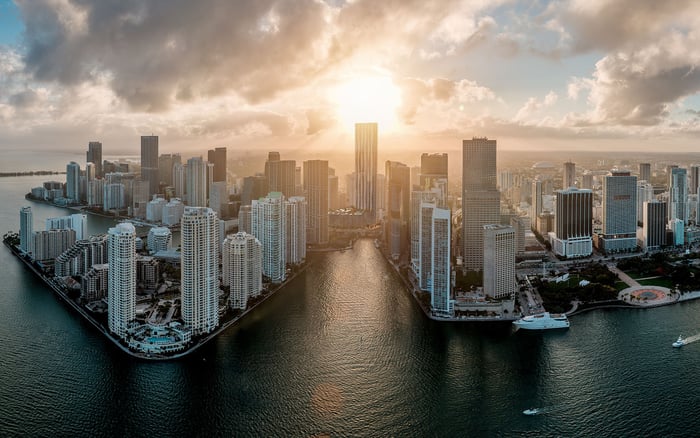
At Baccarat Residences Brickell, marketed at 444 Brickell Avenue on the Miami River, the appeal is architectural and personal: private elevator arrivals, carefully specified kitchens and a substantial amenity program. For a buyer considering an extended power interruption, however, the decisive question is not what the residence contains. It is which services remain available, for how long and under what restrictions.
Generator endurance, elevator outage behavior and private refrigeration backup are not established here. That does not establish that these capabilities are absent. They should remain open diligence items, not assumed benefits of ownership.
With completion targeted for 2027, not guaranteed, buyers should distinguish advertised features from design commitments and, ultimately, commissioned performance. The standard is straightforward: translate every consequential assurance into a document tied to the building, the specific residence and an explicit operating condition.
A useful answer about generator endurance combines capacity, connected loads and fuel assumptions. Generator capacity, fuel type, usable storage and runtime at a stated load remain unverified. Without those details, a duration claim cannot answer the buyer’s practical question.
Request generator specifications, any redundancy provisions and the emergency and standby load schedules. Ask the engineering team to identify which services its runtime calculation includes-and which it excludes. A calculation covering essential shared equipment does not confirm support for private refrigeration, cooling or unrestricted elevator use.
The written response should address:
Usable fuel capacity, rather than an unexplained storage figure.
Calculated runtime at explicitly identified loads.
Any operating restrictions or load reductions assumed in that calculation.
The contingency if equipment or its fuel supply becomes unavailable.
Fuel replenishment deserves a separate review. Obtain written refueling arrangements, delivery-access assumptions during flooding and the contingency if deliveries or utility gas service are interrupted. Do not assume a particular fuel type before the specifications confirm it.
For the purchase decision, distinguish endurance before replenishment from any longer duration dependent on continuing supply. Ask that both be documented with their assumptions. This makes the assurance assessable, not merely reassuring.
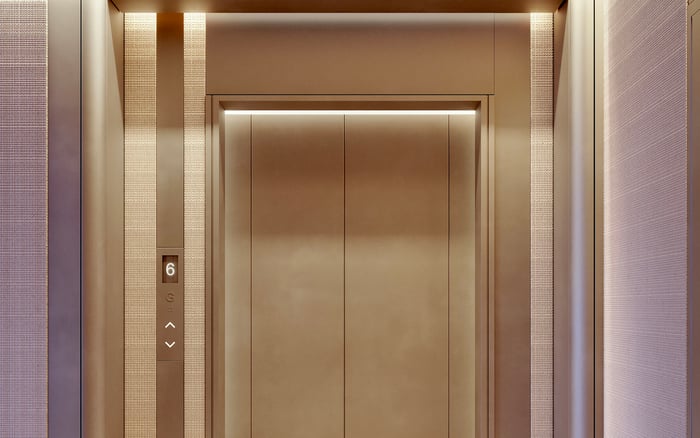
Advertised features include private key-activated elevator access and entry vestibules, with two elevators opening directly into each residence. These are arrival and access features. They do not establish which cars receive standby power or whether residents can use them throughout an extended outage.
Request the project-specific sequence of operations, addressing utility-power failure and fire-alarm recall separately. The response should explain transfer sequencing, available cars, resident-use restrictions and access to private vestibules in the applicable operating modes.
Do not accept a general statement about code compliance as a substitute for those answers. Compliance alone does not establish an elevator-per-bank arrangement, a particular resident service level or unit-level electrical coverage.
A buyer also considering Cipriani Residences Brickell should apply the same questions independently, without assuming that advertised private arrivals imply comparable outage performance. The useful comparison is documented operation, not the number of elevator doors in a floor plan.
Advertised kitchen appliances include Sub-Zero refrigerator/freezers and Sub-Zero wine storage, a Wolf induction cooktop, Wolf M-series oven with steam function and Cove dishwasher. These specifications identify appliances, not their backup-power connections.
For the specific residence under consideration, obtain panel schedules or circuit-level written confirmation covering the refrigerator/freezer and wine storage separately. Ask which circuits are backed up, what restrictions apply and whether the confirmation reflects the current design or a tested installation. A broad reference to “unit power” is not a complete answer.
Neither guaranteed refrigeration continuity nor inevitable loss of refrigeration has been established. Keep both conclusions out of the purchase analysis until the relevant documentation is available.
If shared wine storage is part of the purchase conversation, verify its cooling separately. An assurance about an amenity cellar cannot substitute for confirmation about private wine-storage equipment. For a collector, these are distinct diligence questions requiring distinct written answers.
A residence intended for intermittent occupancy needs an operating plan that goes beyond appliance circuits. Request an electrical one-line diagram and a backed-up load list covering domestic water pumps, sewage ejectors, access controls, garage gates, communications and any cooling.
The advertised impact-resistant, energy-efficient floor-to-ceiling glass and sliding doors do not establish backup cooling. Ask explicitly whether any cooling is supported and which spaces or equipment that support covers.
Similarly, smart-building prewiring and interfaces for concierge, security, lighting and audiovisual services do not establish backup power for internet, Wi-Fi or telecom equipment. Connectivity continuity remains unverified.
Review advertised 24-hour attended security and controlled access alongside written extended-outage staffing commitments and storm procedures. Buyers who expect to be away should ask how management plans to communicate service restrictions and access arrangements. Treat the answers as proposed operating commitments until their status is clear.
At this stage, organize the diligence file into three categories: design documentation, written operating commitments and performance verification. Each answers a different question. A planned connection is not equivalent to a completed test; a staffing commitment is not an electrical specification.
Request commissioning results and available test records, together with the planned maintenance schedule. If a relevant test has not yet occurred, ask when the result is expected and who will provide it. Keep unresolved items visible rather than treating a future deliverable as a completed assurance.
For every priority service, record its coverage, operating restrictions, duration assumptions and supporting document. Where statements differ, request a reconciled written response before relying on the more favorable interpretation.
Owner-installed equipment is not an automatic fallback. Verify association rules and engineering approval requirements before assuming a private battery or backup-cooling system is permissible. Any contemplated addition belongs in the diligence process, not in an unwritten plan to resolve uncertainty after purchase.
When comparing Baccarat with The Residences at 1428 Brickell, apply the same service questions and evidence standard to each. Nothing in this comparison establishes equivalent backup capabilities.
The purchase decision should distinguish confirmed provisions, conditional provisions and unresolved items. Buyers can then decide which uncertainties are acceptable and which require clarification before proceeding. Luxury here is not an unsupported promise of uninterrupted life. It is a clear understanding of what the residence is designed and documented to deliver.
For a discreet perspective on South Florida residences and buyer priorities, explore MILLION.
If branded residences are on your mind — as a home or as an allocation — we would be glad to share what we are seeing, privately.
Begin a quiet conversationThe project is marketed at 444 Brickell Avenue, on the Miami River in Miami’s Brickell neighborhood.
The estimated completion date is a 2027 target, not a guaranteed delivery date.
Generator runtime is not established here. Request capacity, fuel type, usable fuel storage and calculated runtime at explicitly stated loads.
Obtain written refueling arrangements, delivery-access assumptions during flooding and contingencies for interrupted deliveries or utility gas service.
Resident elevator availability during an extended outage is not established. Advertised private access and two elevators opening into each residence do not confirm standby-powered service.
Request the project-specific sequence of operations distinguishing utility-power failure from fire-alarm recall. It should address transfer sequencing, available cars and resident-use restrictions.
The appliance specifications do not establish backup power for either circuit. Obtain panel schedules or circuit-level written confirmation for the specific residence.
No. Advertised energy-efficient, impact-resistant glass and sliding doors do not establish backup cooling capability.
No. The described prewiring and service interfaces do not specify generator or battery support for internet, Wi-Fi or telecom equipment.
Permission is not established here. Verify association rules and engineering approval requirements before relying on an owner-installed solution.