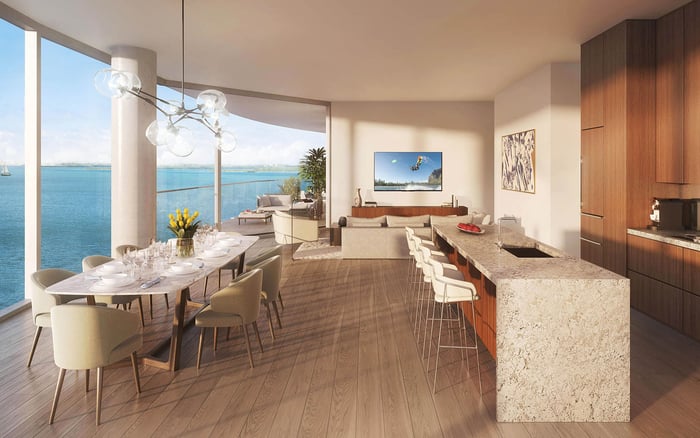
A buyer-focused framework for assessing Miami walkability, club privileges, private dining access, and the rules that determine whether an amenity adds daily value.
For a Miami buyer in 2026, walkability means more than reaching a restaurant on foot. It is the alignment of home, daily routines, preferred social settings, and the practical realities of moving through the city. Club privileges and private dining can add another layer of convenience, but only when access is clearly defined and genuinely useful.
The strongest comparison begins with a personal itinerary. List the places that shape an ordinary week: morning coffee, fitness, waterfront time, business lunches, groceries, cultural engagements, schools, medical appointments, and evening dining. Then distinguish what should be walkable from what can reasonably require a car. This reframes the search around lived value rather than an abstract neighborhood label.
This buyer's guide also treats access as a due-diligence question. A beautifully presented amenity has limited value if reservations are difficult, guest policies are restrictive, or privileges do not transfer as expected.
A meaningful walkability review begins at the building entrance, not at the center of a postal code. Walk the likely routes yourself, noting shade, crossings, traffic intensity, lighting, curb conditions, construction activity, and the comfort of returning after dinner. A short distance on a map may feel entirely different at midday, during rain, or late in the evening.
Test the area at several relevant hours. A business district can feel animated during the week yet quieter on a weekend morning; a hospitality-led area may follow the opposite rhythm. Evaluate the final few blocks between each destination and the residence as well, since that segment often determines whether walking becomes habitual.
In Brickell, a comparison might place Cipriani Residences Brickell and ORA by Casa Tua Brickell within the buyer's broader route study. The purpose is not to assume identical surroundings or privileges, but to test each address against the same recurring schedule.
Miami luxury is often framed through proximity, yet proximity and entitlement are distinct. A residence may sit near desirable bars, restaurants, hotels, marinas, or members' venues without conveying preferred entry. Conversely, a building may offer substantial on-site services that reduce the need to leave at all.
Create two columns for each property. The first should cover the surrounding district: destinations, walking routes, transportation options, and the quality of the public realm. The second should cover access controlled by the building or an affiliated operator: lounges, dining rooms, beach facilities, wellness areas, events, and reservation services. This prevents an appealing neighborhood from obscuring limitations within the ownership proposition.
For Miami Beach, buyers evaluating Five Park Miami Beach can apply the same two-column exercise. Record what is part of the residence, what is merely nearby, and what depends on a separate agreement. That distinction is central to an accurate lifestyle comparison.
The word club can describe markedly different arrangements. Before assigning value, request the governing language and identify who receives the privilege. Confirm whether access belongs to the unit, the named owner, household members, tenants, or guests. Determine whether it is automatic, optional, revocable, capacity limited, or subject to a separate application.
Costs warrant equal scrutiny. Identify initiation charges, recurring dues, minimum spending, service charges, assessments, parking costs, and fees for guests or special events. Also establish what happens upon resale, leasing, transfer to a trust or entity, and temporary occupancy by family members.
Operational details can matter more than the brochure. Review opening hours, dress expectations, age policies, reservation windows, cancellation terms, blackout periods, and reciprocal arrangements. If a privilege is material to the purchase, obtain its terms in writing and have the appropriate legal and financial advisers review them.
Private dining access may mean a residents-only room, in-residence service, preferred reservations, event catering, or entry to a separate venue. These experiences are not interchangeable. Ask exactly where food is prepared, who operates the service, which meals are available, how far in advance reservations open, and whether minimums apply.
Consider the intended use. A couple seeking spontaneous weeknight dining has different needs from an owner hosting business dinners or extended-family celebrations. Clarify party-size limits, menu customization, beverage policies, staffing, cleanup, gratuities, service elevators, and the use of terraces or common rooms.
In Coconut Grove, The Well Coconut Grove can be included in a residence-by-residence review without presuming any particular dining or club right. The disciplined approach is to verify the current offering, contractual basis, and operating terms for the specific purchase under consideration.
Use one scorecard for every shortlisted residence. Assign separate ratings to daytime walking, evening walking, essential errands, dining variety, social access, privacy, arrival experience, and dependence on a car. Then assess club and dining privileges for clarity, transferability, availability, cost, and likely frequency of use.
Avoid collapsing these considerations into a single headline number too early. One buyer may accept lower everyday walkability in exchange for privacy; another may prioritize moving between home, work, and dinner without coordinating a driver. The scorecard should reveal those trade-offs rather than conceal them.
Finally, repeat the test shortly before committing. Neighborhood conditions, operating programs, and access rules can change. The most valuable amenity is not necessarily the most elaborate. It is the one whose terms, location, and service pattern fit the owner's actual calendar.
What does walkability mean for a Miami luxury buyer? It means being able to complete personally important routines comfortably on foot at the hours when the buyer will actually use them.
Should I rely on a neighborhood walkability score? Use it only as a starting point, then test exact routes from the building entrance under realistic conditions.
How many times should I walk a prospective neighborhood? Visit during the distinct periods relevant to your routine, such as weekday mornings, evenings, and weekends.
Does living near a private club provide access? No assumption should be made. Proximity does not establish membership, preferred entry, or transferable privileges.
What club documents should a buyer request? Request current membership terms, fee schedules, guest rules, operating policies, and any provisions tied to ownership or resale.
Can club access transfer when a residence is sold? Transferability depends on the controlling terms and should be confirmed in writing for the specific residence and purchaser.
What should I verify about private dining? Confirm the operator, venue, hours, reservation process, menu scope, charges, guest limits, and cancellation policy.
How should seasonal use affect the decision? Test whether desired services and walking routes work during the months and days when the home will be occupied.
Is on-site dining a substitute for neighborhood walkability? It can reduce daily friction, but its hours, variety, and availability must align with the buyer's habits.
Who should review amenity and access terms? Appropriate legal, financial, and property advisers should review material obligations before a buyer relies on them.
To compare the best-fit options with clarity, connect with MILLION.
If branded residences are on your mind — as a home or as an allocation — we would be glad to share what we are seeing, privately.
Begin a quiet conversation